|
Evertype Publishing
Wonderland & Carrolliana
Middle-earth & Tolkieniana
Oz & Baumiana
Books in Cornish, Breton, & Welsh
Books in Irish, Gaelic, & Manx
Books in Scots
Books in English dialects
Constructed Languages
Books in Esperanto
Books in Volapük
Books in African languages
Books in Germanic languages
Books in Indo-Iranian languages
Books in Polynesian languages
Books in Romance languages
Books in Slavic & Baltic languages
Books in Turkic & Caucasian languages
Books in Uralic languages
Fiction in English
Children’s books
Language & Linguistics
Philosophy & Religion
Poetry
Cookery
Nonfiction
Complete catalogue
|
|
Wonderland and Carrolliana
|
|
Books by Lewis Carroll, translations, and books inspired by Carroll’s Wonderland.
|
|
|
The Hunting of the Snark: An edition printed in the Nyctographic Square Alphabet devised by Lewis Carroll
By Lewis Carroll, Illustrated by John Tenniel, Foreword by Alan Tannenbaum
2024. ISBN 978-1-78201-330-3
Charles Lutwidge Dodgson, a.k.a Lewis Carroll, invented a special writing instrument he called “the Nyctograph” on 24 September 1891, in frustration at the process of “getting out of bed at 2 a.m. in a winter night, lighting a candle, and recording some happy thought which would probably be otherwise forgotten”. This edition of The Hunting of the Snark is written entirely in the author’s unique night-time alphabet.
|
|
|
The Millennium Snark Trilogy: Snarkmaster, Atchafalaya Boojum, Murder by Boojum. Tales inspired by Lewis Carroll’s The Hunting of the Snark
By Byron W. Sewell
2024. ISBN 978-1-78201-329-7
Snarkmaster is a unique, gripping tale of a power struggle between good and evil, concluding with the development of an unusual intermediate state. Most of the story takes place prior to the traditional Snark voyage (described in verse in Lewis Carroll's "The Hunting of the Snark"), but becomes inextricably linked with it-unless it isn't... The literary structure of "Snarkmaster" reveals some influence of Carroll's Sylvie and Bruno tales, as the characters (including the great Charles Dodgson himself) experience dream states and the appearance of at least one fairy. The comprehensive glossary and painstakingly hand-detailed maps of each of the islands in the archipelago may not be essential to follow the story, but they certainly enhance it. The meticulously hand-inked illustrations emphasize some of the important aspects of the story and provide a tropical ambiance for the text. While not necessarily a prerequisite, knowledge of Carroll's original poem is likely to make "Snarkmaster" more enjoyable for most readers. In the novella Atchafalya Boojum, four teenagers and two alligator hunters encounter a terrifying Boojum deep in the Atchafalaya Swamp near Morgan City, Louisiana. Murder by Boojum is the tale of a brutal serial killer stalks members of the Southern California branch of The American Lewis Carroll Society, targeting members of a mysterious and highly secretive Snark Club within the Society that meets once a year in San Diego's fabled Hotel del Coronado to celebrate and appreciate Carroll's epic nonsense poem, "The Hunting of the Snark". After the first few murders, the killer, who intentionally leaves Snarkian clues, is tagged by the media as "The Boojum", since the monster's victims, collectors of rare editions of Carroll's classic nonsense work, figuratively "vanish" when the killer strikes. Who is the Boojum? What is the Boojum's motive? Will all ten hapless members of this strange group die before the police can stop this Snarkian reign of terror? Is it even safe for anyone in the Society to own more than one copy of Carroll's darkest work?
|
|
|
Engaging the Snark: A Textual Commentary on The Hunting of the Snark
By Lewis Carroll, with an introduction and Notes by Selwyn Goodacre
2024. ISBN 978-1-78201-311-2
This textual commentary looks at Through the Looking-Glass quite simply, as a children’s novel, investigating the book’s narrative structure, analysing how Carroll successfully constructed a pioneering book for children that was to stand the test of time, remaining remarkably relevant to the present day. There are many depths and subtleties in this book that can only be properly appreciated by examining the text line by line. The writing is supremely skilful, and will stand the closest scrutiny-even virtually to every line of the narrative. Most books would crumble under such close analysis. It is testimony to the strength, depth, and quality of Through the Looking-Glass that the book comes through such intense examination and survives triumphantly. Selwyn Goodacre has a large Lewis Carroll collection including over 2000 copies of the Alice books. He is a past chairman of the Lewis Carroll Society, and edited the Society journal from 1974-1997. For years he has pursued a special interest in the text of the Alice books, which has led to his current commentary on, and analysis of, the way they were written.
|
|
|
Приключения Алисы в Стране Чудес: Русско-английское двуязычное издание
Alice's Adventures in Wonderland: Russian-English Bilingual Edition
First edition. By Lewis Carroll, translated into Russian by Yury Nesterenko
2022. ISBN 978-1-78201-310-5
Перевод Алисы в Стране чудес Юрия Нестеренко (2000), доступный в течение многих лет в Интернете, впервые публикуется в виде бумажной книги, с классическими иллюстрациями Джона Тенниела. Из предисловия переводчика: «Все русские переводы Алисы, с которыми мне довелось ознакомиться, достаточно далеки от оригинала. Честнее всего поступил Заходер, прямо назвавший свой вариант пересказом; но и переводчики, не сделавшие такой оговорки, позволили себе весьма вольное обращение с авторским текстом. Не стану утверждать, будто то, что у них получилось, никуда не годится; напротив, вариант Заходера, к примеру, написан более живым языком, чем оригинал, но есть одна маленькая проблема—Кэрролл писал не это. Итак, моей целью было сделать как можно более точный перевод—разумеется, настолько, насколько позволяют различия между английским и русским языком.» Юрий Нестеренко (1972 г.р.), поэт и фантаст, живёт во Флориде.
|
|
|
Eachtraí Eilíse i dTír na nIontas: Eagrán Dátheangach Gaeilge-Béarla
Alice's Adventures in Wonderland: Irish-English Bilingual Edition
By Lewis Carroll, translated into Irish by Nicholas Williams
2007. ISBN 978-1-78201-309-9
Is seoid de litríocht na bpáistí an leabhar Béarla Alice’s Adventures in Wonderland a foilsíodh den chéad uair sa bhliain 1865. Is iomaí sin teanga a bhfuil aistriúchán den scéal le fáil inti. Foilsíodh aistriúchán Gaeilge le Pádraig Ó Cadhla (1875-1948) sa bhliain 1922 ach ní fhacthas leagan ar bith eile i nGaeilge go dtí anois. Is aistriúchán nua ar fad an leagan seo thíos. K. Verschoyle a rinne na léaráidí le haghaidh aistriúchán Uí Chadhla. Is iad na pictiúir cháiliúla a rinne Sir John Tenniel agus a bhí sa chéad eagrán Béarla atá le feiceáil sa leabhar seo.
|
|
|
Aventurs Alys in Pow an Anethow: Dyllans Dywyêthek Kernowek-Sowsnek
Alice's Adventures in Wonderland: Cornish-English Bilingual Edition
By Lewis Carroll, translated into Cornish by Nicholas Williams
First edition. 2015. ISBN 978-1-78201-286-3
Alice's Adventures in Wonderland, jowal bian a lien an flehes, a veu dyllys rag an kensa prës in 1865. Trailyansow dhe lies tavas re apperyas dhia an vledhen-na. I’n vledhen 1994 Kesva an Tavas Kernowek a dhyllas versyon a’n whedhel, trailys dhe Gernowek Kebmyn gans Ray Edwards in dadn an tîtel Alys y’n Vro a Varthusyon. Darn in mes a’n versyon-na a vëdh gwelys i’n present trailyans (gwelyr folednow 26-27). Remant an lyver-ma yw screfys i’n spellys gelwys Kerowek Standard (KS) pò in Sowsnek Standard Cornish. Yma an spellyans-na ow clena yn stroth orth spellyans tradycyonal an tavas hag yth ywa fonetyk yn tien kefrës. Y fëdh gwelys awoles fatell usy KS owth ûsya sînys diacrîtek a-ugh lytherednow dhe verkya dyffransow in geryow spellys i’n kerth fordh pò dhe dhysqwedhes an sonyow a vogalednow a’s teves moy ès udn leveryans. Abàn yw KS heb dowt vëth an gwella spellyans bythqweth a veu darbarys rag an tavas dasvewys, yma va comendys obma rag oll descoryon hag oll cowsoryon a Gernowek. Y fëdh gwelys i’n lyver-ma an delînyansow a brîs gwrës gans Syr John Tenniel rag an kensa dyllans in Sowsnek.
|
|
|
L'Aventuri di Alicia en Marvelia
By Lewis Carroll, translated into Ido by Gonçalo Neves
2020. ISBN 978-1-78201-281-8
Lewis Carroll es plum-nomo: Charles Lutwidge Dodgson esis la reala nomo dil autoro, olima matematikala lektoro che Christ Church, Oxford. Dodgson komencis la rakonto ye la 4ma di julio 1862, dum pasajar en rem-batelo sur fluvio Thames an Oxford, ensemble kun reverendo Robinson Duckworth, kun Alice Liddell (lore evanta dek yari), la filiino dil dekano di Christ Church, e kun elua du fratini, Lorina (lore evanta dek e tri yari) ed Edith (lore evanta ok yari). Quale klare indikesas en l’introdukta poemo, la tri pueri pregis Dodgson rakontar ulo, ed il, unesme nevolunte, komencis naracar a li l’unesma versiono dil rakonto. Esas multa mi-celita aludi pri ca kin personi tra la tota texto di la libro, qua fine publikigesis en 1865.
|
|
|
Приключения Алисы в Стране Чудес (Prikliucheniia Alisy v Strane Chudes)
First edition. By Lewis Carroll, translated into Russian by Nina Demurova
2018. ISBN 978-1-78201-280-1
Перевод Алисы в Стране Чудес, созданный Ниной Михайловной Демуровой (Кэрролл, 1967, 1978), стал классическим для нескольких поколений русских читателей и переиздавался более 200 раз. Переводчица—которая является также крупнейшим специалистом по творчеству Льюиса Кэрролла—сама подробно объясняла сложную историю этого перевода и его принципы (Демурова, 1970, 1978; Demurova, 1995).
|
|
|
Through the Looking-Glass and What Alice Found There: An edition printed in Dyslexic-Friendly Fonts
By Lewis Carroll
2020. ISBN 978-1-78201-264-1
The fonts used in this edition of Through the Looking-Glasshave been designed with the intention of making reading easier for people with dyslexia. OpenDyslexic3 (used for the body text) and OpenDyslexic (used for its italics) were designed by Abelardo Gonzalez and Lexia Readable (used for the chapter titles drop-caps, and headers) was designed by Keith Bates. Research suggests that dyslexic-friendly fonts are not always effective for all readers; it hoped nevertheless that this edition may help at least some readers to enjoy Alice's adventures.
|
|
|
Aventurile lui Alice în Țara Minunilor
By Lewis Carroll, translated into Romanian by Claudia E. Stoian
2020. ISBN 978-1-78201-260-3
Lewis Carroll este pseudonimul folosit de Charles Lutwidge Dodgson. Acesta a fost lector de matematică la universitatea Christ Church, Oxford. Dodgson a început povestea pe 4 iulie 1862, când a întreprins o călătorie într-o barcă cu vâsle pe râul Tamisa (Isis) din Oxford împreună cu reverendul Robinson Duckworth, cu Alice Liddell (în vârstă de zece ani), fiica decanului universității, și cu cele două surori ale acesteia, Lorina (treisprezece ani) și Edith (opt ani). După cum reiese din poezia de la începutul cărții, cele trei fete i-au cerut lui Dodgson o poveste iar, acesta, cu reticență, a început să le spună prima versiune a poveștii de față. Cartea a fost publicată în cele din urmă în 1865, conținând numeroase referințe oarecum ascunse la cei cinci călători. Cartea Alice’s Adventures in Wonderland a fost tradusă pentru prima dată în limba română în anii 40. De atunci, mai mult de douăzeci de traduceri au fost publicate, pe lângă diverse repovestiri și prescurtări. Traducerea de față își propune să contribuie la varietatea românească de traduceri cu o versiune mai modernă și actualizată, în tendință cu publicul actual.
|
|
|
Throwe the Keekin-Gless an Fit Ailice Found There
By Lewis Carroll, translated into North-east Scots by Derrick McClure
2021. ISBN 978-1-78201-255-9
For a general introduction to the literary and cultural background of the present translation, and to the North-East Scots dialect itself, see the introduction to my translation of Carroll's previous book, Ailce's Anters in Ferlielann. As there, I have used a conservative form of the dialect, checking the words and pronunciations against classic literary texts (and this time also against the earlier translation, to ensure consistency). As there too, I have endeavoured to find a specific equivalent for every joke, pun, allusion and other trick of style in the original. The metrical and rhyme patterns of the poems are maintained: as always in poetic translations of any kind, this procedure necessitates some departures from the original wording; and in one instance, namely the sequence of thirteen rhymes on "toe" in the closing section of the White Knight's song, I have assumed the licence to treat Carroll's lines with complete freedom. --Derrick McClure
|
|
|
Alicia's Adventuras en Wonderlandia
Alice’s Adventures in Wonderland in Spanglish
By Lewis Carroll, translated into Spanglish by Ilan Stavans
2021. ISBN 978-1-78201-252-8
Esta versión de Alice’s Adventures in Wonderland en Spanglish es el result de years de trabajo. Empezó, without yo knowing it, cuando yo transladé, in 1999, el first capítulo de Part I de Don Quixote. Since then, mi interés en esta hybrid lengua, un back-ad-forth entre el español and English que es neither español o English, se ha incrementado substantially. Spanglish es un global fenómeno that responde a la unavoidable condición del present: la immigración.
|
|
|
Алисэ телъыджэщӏым зэрыщыӏар (Alisė Telʺydzhėshchḣym zėryshchyḣar)
By Lewis Carroll, translated into Kabardian by Murat Temyr and Murat Brat.
2019. ISBN 978-1-78201-242-9
«Кэрролл Льюис»—инджылыз тхакӏуэ цӏэрыӏуэщ, Оксфорд университетым и Крайст Чёрч колледжым хьисэпымкӏэ и егъэджакӏуэщ, Чарлз Латвидж Додсон (1832–1898) и цӏэлейщ. Колледжым и унафэщӏ икӏи и ныбжьэгъуфӏ Лидделл Генри и унагъуэм щыхьэщӏэкӏэ, абы таурыхъ яжриӏэт и ныбжьэгъум ипхъу Алисэ цӏыкӏурэ (1852 гъэм къэхъуащ), абы и шыпхъу нэхъыжьхэу Лоринэрэ Эдитрэ. Зэгуэрым—1862 гъэм—гъэмахуэкум и еплӏанэм Кэрроллрэ, абы и ныбжьэгъу щихъ Дакуорт Робинсонрэ, хъыджэбз цӏыкӏуищри я гъусэу, ежьахэщ кхъухьжьейкӏэ псыгъунэм есылӏэу зыщагъэпсэхун я мураду. Мис а зэманым техуэу Кэрролл пщащэхэм яжриӏащ хъыджэбз цӏыкӏу Алисэ теухуа псысэ гъэщӏэгъуэныр: а пщащэр тхьэкӏумэкӏыхьыгъуэм ихуэу абы Телъыджэщӏым и деж къыщыщӏахэр. Алисэ Кэрроллым елъэӏуащ а таурыхъыр итхыжыну, икӏи зэман куэд темыкӏыу ӏэрытхыр хьэзыр хъуащ. Иужькӏэ нэгъуэщӏ гуэрэхэр хагъэхъуэжри, тхылъыр 1865 гъэм къыдэкӏащ. Алисэ Телъыджэщӏым зэрыщыӏар а заманым къыщегъэжьауэ тхылъыр бзэ зэщымыщ куэдми ирагъэуващ. Мы флъагъур а тхылъыр Ищхъэрэ Кавказым и курыкупсэм ит Къэбэрдей-Балъкъэр, Къэрэшей-Шэрджэс республикэхэм щызэрахьэ адыгэбзэкӏэ (адыгэбзэм и къэбэрдей псалъэкӏэ) зэдзэкӏащ.
|
|
|
Алиса Къужур Дунияны Къыдырады (Alisa Qujur Duniyanı Qıdıradı)
By Lewis Carroll, translated into Karachay-Balkar by Magomet Gekki
2019. ISBN 978-1-78201-241-2
Льюис Кэрролл—айтхылыкъ ингилиз жазыучуну, Оксфордну университетини Крайст Чёрч колледжинде математикадан устазыны, Чарлз Латвидж Додсонну (1832–1898), жашырын атыды. Генри Лидделлни, колледжни ректоруну юйюрюню къаршы шуёху эди, 1852 жылда туугъан Алисагъа бла аны абадан эгечлерине, – Лориннге бла Эдитге, – жомакъла айтыучу эди. Бир жол – 04.07.1862 жылда – Кэрролл, аны шуёху – жюйюсхан Робинсон Дакуорт, юч къызчыкъ, – къайыкъ бла айлана кетип, – сууну жагъасында «суху тойчукъ» къурайдыла. Ол кезиуде Кэрролл бир къызчыкъны, Алисаны, къоянны тешигине ташайгъанын, уча барып, бир Къужур Дуниягъа тюшгенин, анда сейирлик-тамаша хапарларын айтады. Алиса Кэрроллдан бу жомакъны жазып беририн тилейди, кёп сакъламай Алиса жомакъ къоллу болады. Артдаракъда жомакъгъа къошулгъан да этиледи, сюрмеленеди, 1865 жылда уа энчи китап болуп чыгъады. Андан бери Алисаны жомагъы жер жюзюнде халкъланы тиллерине кёчюрюлгенлей барады. Кезиу къарачай-малкъар тилге жетгенине аллыгъызда китап шагъатлыкъ этеди.
|
|
|
Attravierzo ’o specchio e cchello c’Alice ce truvaie
By Lewis Carroll, translated into Neapolitan by Roberto D'Ajello
2019. ISBN 978-1-78201-238-9
Alice dint’ ’o Paese d’ ’e Maraveglie è nu cunto ’e ll’està, prubbecato ’a Lewis Carroll (Charles Lutwidge Dodgson) p’ ’a primma vota ’int’ ’o mese ’e luglio d’ ’o 1865. Nu cuófeno d’ ’e perzunagge e de ll’avventure dint’a chistu libbro tèneno a cche fa’ cu nu mazzo ’e carte. Attravierzo ’o specchio e chello c’Alice ce truvaie è nu cunto d’ ’o vierno, che Carroll prubbecaie p’ ’a primma vota a decembre 1871. Dint’a chisto sicondo cunto ’e perzunagge ’e ll’avventure girano attuorno a na partita ’e scacche.
|
|
|
Alicia in Terra Mirabili
By Lewis Carroll, translated into Latin by Clive Harcourt Carruthers
2018. Hardcover ISBN 978-1-78201-233-7
Hōc in librō offertur lēctōrī nova ēditiō fābulae Alicia in Terrā Mīrābilī in Latīnum annō 1964ō ā Clive Harcourt Carruthers conversae. Differt ā prīmā ēditiōne duābus praecipuīs rēbus: cum quod discrīmen nunc servātur inter i litteram vōcālem et j litteram vim cōnsonantis habentem, tum quod omnēs vōcālēs longae sunt līneolīs superscrīptīs ōrnātae. Omnium vōcālium longitūdinēs dīligenter exquīsītae sunt, etiam in syllabīs positiōne longīs. In pauciōribus syllabīs, quārum vōcālium longitūdinēs aut nunc incertae sunt, aut manifestē etiam antīquīs temporibus vacillābant, vōcālēs sine līneolīs scrīptae sunt.
|
|
|
Alicia in Terra Mirabili
By Lewis Carroll, translated into Latin by Clive Harcourt Carruthers
2018. Paperback ISBN 978-1-78201-232-0
Hōc in librō offertur lēctōrī nova ēditiō fābulae Alicia in Terrā Mīrābilī in Latīnum annō 1964ō ā Clive Harcourt Carruthers conversae. Differt ā prīmā ēditiōne duābus praecipuīs rēbus: cum quod discrīmen nunc servātur inter i litteram vōcālem et j litteram vim cōnsonantis habentem, tum quod omnēs vōcālēs longae sunt līneolīs superscrīptīs ōrnātae. Omnium vōcālium longitūdinēs dīligenter exquīsītae sunt, etiam in syllabīs positiōne longīs. In pauciōribus syllabīs, quārum vōcālium longitūdinēs aut nunc incertae sunt, aut manifestē etiam antīquīs temporibus vacillābant, vōcālēs sine līneolīs scrīptae sunt.
|
|
|
O Mice an Men
By John Steinbeck, translated into North-East Scots by Sheena Blackhall
2018. ISBN 978-1-78201-229-0
A horrifeein tale o fleg that’ll bumbaze an dumfouner its readers. Haud awa frae the licht settins o’t that ye’ve seen in films an gaither yer virr tae gyang intae the psychological grue o Jekyll and Hyde. It’s in Lunnon that the buik is supposedly set, bit ilkie page is drookit in the oorie air o Embro—far Robert Louis Stevenson wis born. Is’t a Freudian fable, a morality parable, or a sexual allegory? Its up tae yersel tae decide.
|
|
|
Reflecting Alice: A Textual Commentary on Through the Looking-Glass
By Lewis Carroll, with an introduction and Notes by Selwyn Goodacre
2021. ISBN 978-1-78201-223-7
This textual commentary looks at Through the Looking-Glass quite simply, as a children’s novel, investigating the book’s narrative structure, analysing how Carroll successfully constructed a pioneering book for children that was to stand the test of time, remaining remarkably relevant to the present day. There are many depths and subtleties in this book that can only be properly appreciated by examining the text line by line. The writing is supremely skilful, and will stand the closest scrutiny-even virtually to every line of the narrative. Most books would crumble under such close analysis. It is testimony to the strength, depth, and quality of Through the Looking-Glass that the book comes through such intense examination and survives triumphantly. Selwyn Goodacre has a large Lewis Carroll collection including over 2000 copies of the Alice books. He is a past chairman of the Lewis Carroll Society, and edited the Society journal from 1974-1997. For years he has pursued a special interest in the text of the Alice books, which has led to his current commentary on, and analysis of, the way they were written.
|
|
|
Alice’s Adventures in Wonderland: An edition printed in QR Codes
By Lewis Carroll, Illustrated by John Tenniel
2018. ISBN 978-1-78201-222-1
QR Code was designed in 1994 for the Japanese automotive industry. Its purpose was to track vehicles during manufacturing; it was designed to allow high-speed component scanning. QR Codes are used around the world to enable people to get to websites quickly. They are also used for advertisements. This edition of Alice’s Adventures in Wonderland is presented in 114 QR Codes which have an average character count of 1281. You can decode each page easily with a free QR Code reader on any smartphone.
|
|
|
De Aventure Alisu in Mirvizilànd
First edition. By Lewis Carroll, translated into Uropi by Bertrand Carette & Joël Landais
2018. ISBN 978-1-78201-221-4
Lewis Carroll se u skrivinom: Charles Lutwidge Dodgson sì de veri nom de skrivori we sì profesor matematiki be Christ Church in Oxford. Dodgson inizì de storij be 4i Ʒul 1862, wan he pasitì in u remibark su riv Isis in Oxford sam ki Reverend Robinson Duckworth, ki Alice Liddell (10 jare), dota de Dekani od Christ Church, id ci du sestas, Lorina (13 jare), id Edith (8 jare). Wim je se klar in de poèm be inìz de bibi, de tri ʒikas pragì a Dodgson retalo u storij id, gonvolim prim, he inizì retalo lo de pri versiòn de storiji. Je ste mole mij-celen reperade a da pin persone tra tal de bibiteksti som, we vidì fendim publizen in 1865. Uropi se u struen linga wen i av som kreaten; je se u sintèz Indeuropan lingus, klarim bazen su de komùn Indeuropan rode.
|
|
|
Alice sine opplevingar i Eventyrlandet
By Lewis Carroll, translated into Nynorsk by Sigrun Anny Røssbø
2020. ISBN 978-1-78201-220-7
Lewis Carroll er eit pseudonym: Charles Lutwidge Dodgson var forfattarens eigentlege namn. Han var foreleser i matematikk i Christ Church i Oxford. Dodgson byrja historia 4. juli 1862, då han ferda i ein robåt på elva Isis i Oxford saman med Pastor Robinson Duckworth, med Alice Liddell (ti år) – dottera til Diakon av Christ Church, samt hennar to søstre Lorina (13 år) og Edith (åtte år). Som det kjem fram i diktet i byrjinga av boka, spurde dei tre jentene Dodgson om ei forteljing og motviljeg starta han å fortelje dei den fyrste versjonen av historia. Det er mange referansar halvvegs gøymd igjennom heile boka, som då endeleg vart publisert i 1865. Det er med stor gledje eg tilbyr versjon nummer to av Sigrun Anny Røssbø si nynorske omsetjing som fyrst vart publisert i 2003 under tittelen Alice på Eventyr under Jorda. Denne tittelen tilhøyrer originalt den hand-skrivne versjonen Carroll gav til Alice Liddell Alice's Adventures under Ground, som her har vorte endra til Alice sine opplevingar i Eventyrlandet. Myndigheit for dette kjem frå omsetjinga i seg sjølv: i kapittel X, fortel den Forlorne Skilpadda til Alice; «Come, let’s hear some of your adventures» – her omsett til «Lat oss no få høyra noko av det du har opplevd»; óg i kapittel XII vert ordet «Wonderland» omsett to gongar til «Eventyrlandet»
|
|
|
Сыр Алиса Попэя кэ Чюдэнгири Пхув (Sir Alisa Popeja ke Čudengiri Phuv)
By Lewis Carroll, translated into North Russian Romani by Viktor Shapoval
2018. ISBN 978-1-78201-219-1
Льюисо Кэрролло—адава сы псевдонимо, а лэскиро чячюно кхарибэн сыс Чарлзо Латвиджо Додсоно (1832–1898), английско писателё, джиндло пирэ нонсэнс-литература, и сыклякирибнари пирэ математика дро колледжо «Крайст Чёрч» (Христоскири кхангэри) ко университето Оксфордо. Ёв сыс лачё друго Генрискэ Лидделлоскэ, адалэ колледжоскирэ ректороскэ, и лэскирэ барэ семьякэ. Кэрролло роспхэнэлас байки тыкнэ Алисакэ (сыс бияндлы дрэ 1852 бэрш) и дуе пхурэдырэ пхэненгэ Лоринакэ и Эдитакэ. Екх моло—дро 4-то июлякиро 1862-то б.—Кэрролло, лэскиро друго рашай Робинсоно Дакуорто и трин тыкнэ ранорья выкэдынэпэ прэ лодка тэ погулинэн прэ природа и скэрдэ пикнико про рэкакиро брэго.
|
|
|
Alicia in Terra Mirabili: Ēditiō Bilinguis Latīna et Anglica
Alice's Adventures in Wonderland: Latin-English Bilingual Edition
By Lewis Carroll, translated into Latin by Clive Harcourt Carruthers
2018. ISBN 978-1-78201-212-2
Hōc in librō offertur lēctōrī nova ēditiō fābulae Alicia in Terrā Mīrābilī in Latīnum annō 1964ō ā Clive Harcourt Carruthers conversae. Differt ā prīmā ēditiōne duābus praecipuīs rēbus: cum quod discrīmen nunc servātur inter i litteram vōcālem et j litteram vim cōnsonantis habentem, tum quod omnēs vōcālēs longae sunt līneolīs superscrīptīs ōrnātae. Omnium vōcālium longitūdinēs dīligenter exquīsītae sunt, etiam in syllabīs positiōne longīs. In pauciōribus syllabīs, quārum vōcālium longitūdinēs aut nunc incertae sunt, aut manifestē etiam antīquīs temporibus vacillābant, vōcālēs sine līneolīs scrīptae sunt.
|
|
|
Alice's Adventures in Wonderland: Illustrated by J. Michael Rolen
By Lewis Carroll, with a Foreword by Michael Everson
2017. ISBN 978-1-78201-210-8
This edition of Alice’s Adventures in Wonderland has found its way into print because the publisher liked the illustrations, which he found out about from a conversation he and I had earlier this year. Thank goodness he asked to publish them; he’s a real publisher, and I have wandered in the publishing desert ever since J. Michael Rolen drew the illustrations for me long ago, in 1977, back before the Internet came into being.
|
|
|
Приключения Алисы в Стране Чудес (Prikliucheniia Alisy v Strane Chudes)
First edition. By Lewis Carroll, translated into Russian by Yury Nesterenko
2018. ISBN 978-1-78201-209-2
Перевод «Алисы в Стране чудес» Юрия Нестеренко (2000), доступный в течение многих лет в Интернете, впервые публикуется в виде бумажной книги, с классическими иллюстрациями Джона Тенниела. Из предисловия переводчика: «Все русские переводы “Алисы”, с которыми мне довелось ознакомиться, достаточно далеки от оригинала. Честнее всего поступил Заходер, прямо назвавший свой вариант пересказом; но и переводчики, не сделавшие такой оговорки, позволили себе весьма вольное обращение с авторским текстом. Не стану утверждать, будто то, что у них получилось, никуда не годится; напротив, вариант Заходера, к примеру, написан более живым языком, чем оригинал, но есть одна маленькая проблема—Кэрролл писал не это. Итак, моей целью было сделать как можно более точный перевод—разумеется, настолько, насколько позволяют различия между английским и русским языком.» Юрий Нестеренко (1972 г.р.), поэт и фантаст, живёт во Флориде.
|
|
|
Алисакӧд Шемӧсмуын лоӧмторъяс (Аlіsаkӧd Šemӧsmuyn loӧmtorʺjas)
First edition. By Lewis Carroll, translated into Komi-Zyrian by Evgenіі Tsypanov (text) and Elena Eltsova (verse)
2018. ISBN 978-1-78201-207-8
Англия литератураысь Россияын и Коми муын медся тöдса, дерт, Вильям Шекспир аслас ворсанторъяснас, сы бöрын мунö Льюис Кэрролл (1832–1898) да сылöн Алиса нывка йылысь гижöдыс. Нималана гижысьыслöн збыль нимыс вöлöма Чарлз Латвидж Додсон (рочöн гижöны Доджсон), сiйö велöдлöма математикаö Оксфорд университетса Крайст Чёрч колледжын, ёртасьлöма велöдчанiнса декан Генри Лиделлкöд, кодлöн вöлöма куим чой, на пиысь медiчöтыс Алиса нима нывка (чужлöма 1852-öд воын), ыджыдджыкъясыс Лорина да Эдит. Öтчыдысь 1862-öд вося ода-кора тöлысь 4-öд лунö Кэрролл, Робинсон вежаай да куим чой петасны голлясьны-джывъявны пыжöн да сувтасны шойччыны вадорö, пестасны бипур да нуръясясны. Сэки Льюис медводдзаысь висьталас Алиса нывка йылысь мойдсö, кыдзи нывкаыс вöтчас Горткöч бöрся да усяс пыдi гуö, сэтчöс шемöсмöдана лоöмторъяс йывсьыс. Алисаыс сэсся корöма Кэрзоллöс гижны сылы мойдсö, и регыд мысти тайö лои вöчöма. Сёрöнджык сы дорö гижысьыс содталöма мыйсюрö да 1865-öд воö лои йöзöдöма «Алисакöд шемöсмуын лоöмторъяс» небöг, кодöс сэсся вуджöдалöмаöсь мусяр пасьтала 200 сайö кывйö. Тiян водзын тайö нималана небöгсö медводдза комиöдöм.
|
|
|
Әлисәнең Сәйерстандағы мажаралары (Ӓlisӓneñ Sӓyerstandağı majaraları)
First edition. By Lewis Carroll, translated into Bashkir by Güzӓl Sitdykov
2016. ISBN 978-1-78201-201-6
Льюис Кэрролл—атаҡлы инглиз яҙыусыһы һәм Оксфорд университеты Крайст Чёрч колледжының математика уҡытыусыһы Чарлз Латвидж Додсондың (1832–1898) псевдонимы. Ул колледж ректоры Генри Лидделл ғаиләһенең яҡын дуҫы булған һәм үҫмер Элис (1852 йылғы) менән уның Лорина һәм Эдит тигән апаларына әкиәттәр һөйләй торған булған. Бер мәл—1862 йылдың 4 июлендә—Кэрролл, уның дуҫы, рухани Робинсон Дакуорт һәм өс ҡыҙ бала кәмәлә йөрөргә сығып китәләр ҙә яр буйында табын ҡороп ултыралар. Шул сәфәр ваҡытында Кэрролл Әлисә исемле ҡыҙыҡайҙың йорт ҡуяны өңөнә осоп төшөүе һәм уның шундағы сәйер илдә шаҡ ҡатырғыс мажараларға тарыуы тарихын һөйләй ҙә инде. Элис был әкиәтте Кэрроллдың яҙып биреүен үтенә, бер аҙҙан ҡулъяҙма әҙер ҙә була. Һуңғараҡ уға төҙәтмәләр индерелә һәм тулыландырыла, һәм 1865 йылда китап баҫылып сыға. Шунан бирле «Әлисәнең Сәйерстандағы мажаралары» әкиәтенең төрлө версиялары донъя йөҙөндәге башҡа телдәрҙә сығып тора. Әҫәр элегерәк йәш тәржемәсе А. Әхмәҙиева тарафынан башҡорт теленә әйләндерелгәйне инде.
|
|
|
Соня в царстве дива (Sonia v tsarstve diva): A new edition of the first Russian translation of Alice's Adventures in Wonderland
By Lewis Carroll
2017. ISBN 978-1-78201-198-9
The first Russian translation of Alice’s Adventures in Wonderland appeared in Moscow in 1879. It bore the title Sonia in a Kingdom of Wonder. The text was printed in old Russian orthography (that is, using the old letters “і” and “ѣ”, and “ъ” at the ends of words, etc.) which was supplanted by the spelling reform of 1918. No name of the author, illustrator, or translator appeared on the title page. There is strong new evidence that the translator was Ekaterina Boratynskaya (née Timiryazeva), who later became an accomplished translator of children’s literature from English, a friend of Lev Tolstoy, and the first teacher of Boris Pasternak. According to Nina Demurova, “There are now many Russian translations of Alice, but Sonia is the first, and the only one done within Carroll’s lifetime, presumably with his knowledge, and thereby must be accorded a place of honour in the canon.” This is the first printing of Sonia in modern Russian orthography. The book has been edited by Victor Fet, whose introduction, essays, and notes supply much scholarship and commentary to the volume.
|
|
|
אַליסעס אַװאַנטורעס אין װוּנדערלאַנד (Alises Avantures in Vunderland)
By Lewis Carroll, translated into Yiddish by Adina Bar-El
2018. ISBN 978-1-78201-194-1
דער מחבר פֿון אַליסעס אַװאַנטורעס אין װוּנדערלאַנד איז געװען לואיס קאַראָל, דער פּסעװדאָנים פֿון טשאַרלס לוטװידזש דאָדזשסאָן פֿון אָקספאָרדער אוניװערסיטעט אין ענגלאַנד. דאָס בוך איז צום ערשטן מאָל דערשינען אין יאָר 1865, און פון דעמאָלט אָן איז עס איבערגעזעצט געוואָרן אויף אַ סך שפּראַכן איבער דער וועלט. די ערשטע איבערזעצונג פֿון דעם בוך אױף ייִדיש האָב איך פֿאַרענדיקט אין יאָר 2012 [צור־אות־פֿאַרלאַג, ירושלים]. Evertype גיט יעצט אַרױס די דאָזיקע אױסגעבעסערטע אױפֿלאַגע. בשעת איבערזעצן אױף ייִדיש, איז מײַן ציל געװען צו בלײַבן געטרײַ צו דעם ענגלישן מקור: צו דעם סיפור־המעשה, צו די העלדן און זײערע כאַראַקטערס; און דער הױפּט איבערצולאָזן די טיפֿקײט און דעם גײַסט פֿון דעם בוך. פֿונדעסטװעגן האָט מען באַדאַרפֿט צופּאַסן די שפּאַס־לידער, די װערטלעך, די אידיאָמען, און בעיקר לואיס קאַראָלס װערטשפּילן, צו דער ייִדישער שפּראַך און צו דעם לעבנס־שטײגער װאָס איז באַקאַנט צו די לײענערס. װײַל ײדיש איז געװען פֿאַרשפּרײט איבער מיזרח־אייראָפּע, זענען פֿאַראַן אין דער שפּראַך װערטלעך און אױסדרוקן װאָס שפּיגלען אָפּ די ייִדישע איבערלעבונגען אין דער געגנט אין די פֿריערדיקע יאָרהונדערטער.
|
|
|
Alises Avantures in Vunderland
First edition. By Lewis Carroll, translated into Yiddish by Adina Bar-El
2018. ISBN 978-1-78201-195-8
Der mekhaber fun "Alises Avantures in Vunderland" iz geven Lewis Carroll, der psevdonim fun Charles Lutwidge Dodgson fun Oksforder Universitet in England. Dos bukh iz tsum ershtn mol dershinen in yor 1865, un fun demolt on iz es ibergezetst gevorn oyf a sakh shprakhn iber der velt. Di ershte iberzetsung fun dem bukh oyf yidish hob ikh farendikt in yor 2012 (Zur-Os Farlag, Yerusholaim). Evertype git yetst aroys di dozike oysgebeserte oyflage. Beshas iberzetsn oyf yidish, iz mayn tsil geven tsu blaybn getray tsu dem englishn moker: tsu dem siper-hamayse, tsu di heldn un zeyere kharakters; un der hoypt ibertsulozn di tifkayt un dem gayst fun dem bukh. Fundestvegn hot men badarft tsupasn di shpas-lider, di vertlekh, di idyomen, un beiker Lewis Carrolls vertshpiln, tsu der yidisher shprakh un tsu dem lebns-shteyger vos iz bakant tsu di leyeners. Vayl yidish iz geven farshpreyt iber mizrekh-Eyrope, zenen faran in der shprakh vertlekh un oysdrukn vos shpiglen op di yidishe iberlebungen in der gegnt in di frierdike yorhunderter. — Adina Bar-El.
|
|
|
Алисаның қайғаллығ Черинде полған чоруқтары (Alisanıñ qayğallığ Çerinde polğan çoruqtarı)
By Lewis Carroll, translated into Shor by Liubovʹ Arbaçakova
2017. ISBN 978-1-78201-189-7
Льюис Кэрролл теп псевдонимы полтур, шын ады тезе Чарлз Латвидж Додсон (1832–1898), ол аттығ-шаптығ пасчыба анаң пӧгин пичиктиң ӱргедикчизы полуп, Оксфорд теп университеттиң Крайст Черч колледжинде иштептир. Ол колледжтиң ректоразынма—Генри Лидделлгебе маттап чағын арғыштар полтурлар. Қачен Льюис Кэрролл ыларға аймақтап парғанда, Генри Лидделлғаның қыстарынға: пойдаң Алисаба (1852 туген ч.) анаң ааң Лоринебе Эдитке теп улуғ қыс қарындаштарынға маң-сайа ныбақтар ызыб-одуртыр. Пир қатнап—1862 чылдың пичен айының 4 кӱннеринде—Кэрроллба ааң арғыжы улуғ (преподобный) Робинсон Дакворт, анаң ӱш қызычақ кебеге одур-келип, суғба тӱжӱп, суғ қажында пикник иштептирлер. Ол чоруқтың теминде Кэрролл пойуңнуң ныбағын, қайде Алиса пир инге кел-тӱжӱп, анаң қайғаллығ Черинде полған чоруқтарын ыларға ыс-пертир. Алиса по Кэрролл чооқтап-перген ныбақты аға пас-перзин теп сураптыр. Че, қанче-қанче тем эрткен соонда Кэрроллдың ысқан чооғу пазыл-партыр. Ааң соонда Кэрролл аға қоже пазып, полған чооғун арий пашқарақ эт-келип, анаң 1865 ч. ол ном издательствадаң шықтыр. Анаң пеере Алисаның қайғаллығ Черинде полған чоруқтары теп ныбақ маттап кӧп версийлербе пашқа-пашқа қааннардың тиллеринге кӧчӱрӱл-келип, шықтыр. Слердиң қолунда паштапқы шор тилинге кӧчӱрген ныбақ.
|
|
|
Alice and the Boy who Slew the Jabberwock
By Allan William Parkes
2016. ISBN 978-1-78201-184-2
One day the thought occurred to me: Why should the splendid jokes and poems strewn throughout Lewis Carroll’s gigantic novel Sylvie and Bruno languish ignored and forgotten, when they could be put into the mouths of the Alice characters we all know and love? After all, the same wit and humour underpins them. And so, Carpenter-like, I began sawing and assembling; and, Walrus-like, began selecting the oysters of nonsense of the largest size. And now in your hands you hold the result. By using the Key found in Sylvie and Bruno the door has been opened for a new adventure for Alice. A new Alice book that is 95% pure Carroll. -- Allan William Parkes
|
|
|
Las Aventuras de Alisia en el Paiz de las Maraviyas
Second edition. By Lewis Carroll, translated into Ladino by Avner Perez
2016. ISBN 978-1-78201-179-8
Lewis Carroll es un psevdonimo: Charles Lutwidge Dodgson era el nombre real del autor i el era profesor de matematika en Christ Church, Oxford. Dodgson empeso el kuento el 4 de djulio de 1862, kuando viajo en una barka de remos en el rio Thames en Oxford djunto kon el reverendo Robinson Duckworth, kon Alice Liddell (diez anyos de edad) la ija del dekano de Christ Church, i kon sus dos ermanas, Lorina (tredje anyos de edad), i Edith (ocho anyos de edad). Komo lo vemos klaramene en el poema al prinsipio del livro, las tres djovenas pidieron a Dodgson ke les kontara un kuento; i sin gana, al prinsipio, este empeso a kontarles la primera version del kuento. En el livro ke finalmente fue publikado en 1865, existen munchas referensias a estos sinko personajes, ke aparesen medio-eskondidas a lo largo de todo el teksto.
|
|
|
לאס אב׳ינטוראס די אליסייה אין איל פאאיז די לאס מאראב׳ילייאס (Las Aventuras de Alisia en el Paiz de las Maraviyas)
By Lewis Carroll, translated into Ladino by Avner Perez
2016. ISBN 978-1-78201-178-1
לואיס קארול איס און פסיב׳דונימו: טשארלס לוטואיג׳ דודג׳סון אירה איל נומברי ריאל דיל אאוטור אי איל אירה פרופ׳יסור די מאטימאטיקה אין קראייסט ג׳ירג׳, אוקספ׳ורד. דודג׳סון אימפיסו איל קואינטו איל 4 די ג׳ולייו די 1862, קואנדו ב׳ייאז׳ו אין אונה בארקה די רימוס אין איל ריאו טימז אין אוקספ׳ורד ג׳ונטו קון איל ריב׳ירינדו רובינסון דוקואורט, קון אליס לידיל (דייז אנייוס די אידאד) לה איז׳ה דיל דיקאנו די קראייסט ג׳ירג׳, אי קון סוס דוס אירמאנאס, לורינה (טריג׳י אנייוס די אידאד), אי אידית (אוג׳ו אנייוס די אידאד). קומו לו ב׳ימוס קלאראמינטי אין איל פואימה אל פרינסיפייו דיל ליב׳רו, לאס טריס ג׳וב׳ינאס פידיירון אה דודג׳סון קי ליס קונטארה און קואינטו; אי סין גאנה, אל פרינסיפייו, איסטי אימפיסו אה קונטארליס לה פרימירה ב׳ירסייון דיל קואינטו. אין איל ליב׳רו קי פ׳ינאלמינטי פ׳ואי פובליקאדו אין 5681, איגזיסטין מונג׳אס ריפ׳ירינסייאס אה איסטוס סינקו פירסונאז׳יס, קי אפאריסין מידייו-איסקונדידוס אה לו לארגו די טודו איל טיקסטו.
|
|
|
Кайкалдыҥ Јеринде Алисала болгон учуралдар (Kaykaldıñ Cerinde Alisala bolgon uçuraldar)
By Lewis Carroll, translated into Altai by Küler Tepukov
2016. ISBN 978-1-78201-177-4
Азияныҥ чике ӧзӧгинде теҥкейишкен Алтайдыҥ кырларында јуртаган эл-јон—алтайлар бу тергениҥ ӧс калыгы. Алтай тил тӱрк тилдердиҥ кыпчак бӧлӱгине кирет. Ого јуук тилдер—кыргыс ла карачай-балкар тилдер. Арасей Федерацияныҥ Алтай Республиказында алтай тил—экинчи государстволык тил. Эл-јонныҥ калганчы тооалыжын кӧргӧжин, су-алтай тилле куучындап тургандардыҥ тоозы јетен муҥ кижи. Алтай литература фольклорыла, јебреннеҥ бери тузаланган башка-башка бичик-билигиле байлык. Оныҥ ӧзӱмин тӧрт јаан бӧлӱкке (период) бӧлип темдектегилейт: јебрен тӱрк ӧй, ол IV-XII чч. келижет; тӱрк-моҥол ӧй—XIII-XVIII чч.; XIX ч. экинчи јарымынаҥ ала XX ч. бажына јетиреги ӧй; эмдиги ӧй – XX-XXI чч. Орус тилдеҥ ле СССР-дыҥ калыктарыныҥ литературазынаҥ алтай тилге сӱреен кӧп бичиктер кӧчӱрилген; бого балдарга да учурлаган чӱмдемелдер кирет. Улу англичан бичиичиниҥ—Льюис Кэрроллдыҥ Alice’s Adventures in Wonderland / Кайкалдыҥ Јеринде Алисала болгон учуралдар (Kaykaldıñ Cerinde Alisala bolgon uçuraldar) деп чӧрчӧги алтай тилге кӧчӱрилгени алтай литератураныҥ база бир јаан једими болуп јат.
|
|
|
Алисанын Кызыктар Өлкөсүндөгү укмуштуу окуялары (Alisanın Kızıktar Ӧlkosündogü ukmuştuu okuyaları)
By Lewis Carroll, translated into Kyrgyz by Aida Egemberdieva
2016. ISBN 978-1-78201-176-7
Кыргыздар—Азиянын эң эле борборундагы Тянь-Шань тоолорун жердеген түпкүлүктүү эл. Кыргыз тили борбордук түрк тилдер үй-бүлөсүнүн кыпчак бутагына кирген тил жана Кыргызстан катары дагы белгилүү болгон Кыргыз Республикасынын мамлекеттик тили болуп саналат. Кыргыз тилин алып жүрүүчүлөрдүн саны 4 миллиондон ашык адамды түзөт. Кыргыз адабияты көлөмү жагынан дүйнөдө теңдешсиз (500,000 сап) атактуу Манас эпосун камтыган (18-кылым) фольклордук жана 128 өлкөдө дүйнөнүн 176 тилине 100 млн. дон ашык нуска менен которулган атактуу Чыңгыз Айтматовдун чыгармаларын камтыган жазма бай салтка ээ. Чыңгыз Айтматовдон мурда-кийин адабиятка агедил кызмат өтөгөн Касым Тыныстанов, Түгөлбай Сыдыкбеков, Мукай Элебаев, Аалы Токомбаев, Касымалы Жантөшев, Жоомарт Бөкөнбаев, Узакбай Абдукаимов, Казат Акматов сыяктуу ондогон ысымдар бар. Кыргыз тилине дүйнөлүк адабияттын көптөгөн чыгармалары которулган. Кыргыз элинин кайталангыс улуу акыны Алыкул Осмонов которгон грузин элинин залкары Шота Руставелинин Жолборс терисин жамынган баатыры кыргыздар үчүн кымбат чыгарма. Улуу англис жазуучусу Льюис Кэрроллдун кыргыз тилине Алисанын Кызыктар Өлкөсүндөгү укмуштуу oкуялары (Alisanın Kızıktar Ӧlkosündogü ukmuştuu okuyaları) Alice’s Adventures in Wonderland деген аталышта которулган жомогун кыргыз адабиятынын дагы бир жетишкендиги деп саноого болот.
|
|
|
Әлисәнің ғажайып елдегі басынан кешкендері (Älïsäniñ ğajayıp eldegi basınan keşkenderi)
By Lewis Carroll, translated into Kazakh by Fatima Moldashova
2016. ISBN 978-1-78201-175-0
Льюис Кэрролл лақап аты: Автордың шын есімі Чарльз Лютвидж Доджсон; ол Оксфордта Крайст -Черчте математикадан дәріс берген. Бұл шығарманың басы 1862 жылы 4 шілдеде Доджсон Оксфордта Темза өзені бойымен қайық есу сапарына шыққанда басталған еді. Сапарда онымен бірге Мәртебелі Робинсон Дакворт, Краист-Черчтің деканының қызы Әлисә Лидделл (он жаста), және оның апасы Лорина (он үш жаста), сіңлісі Эдис (сегіз жаста) болатын. Кітаптың басындағы өлеңде айтылғандай, үш қыз Доджсоннан әңгіме айтып беруді өтініп, ол алғашында шығарманың алғашқы нұсқасын айта бастады. Кітаптағы кейбір жасырын сілтемелер сол бесеуге қатысты еді; ол өз алдына басылым боп 1865 жылы шықты.
|
|
|
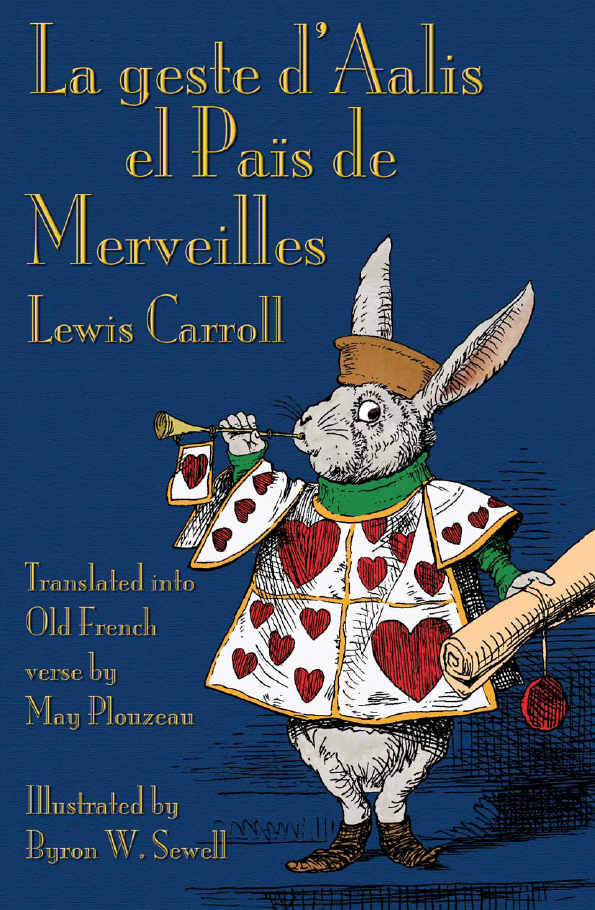
La geste d’Aalis el Païs de Merveilles
Second edition. By Lewis Carroll, translated into Old French by May Plouzeau
2016. ISBN 978-1-78201-174-3
L’ancien français, qui se parla et s’écrivit, grossièrement, du milieu du 9e siècle au milieu du 14e siècle, connut de multiples variations selon temps et lieux, et nous en conservons des textes innombrables. — Old French was spoken and/or written in many parts of what is now France, very roughly north of the Loire, and in parts of Belgium ; it was also used in numerous circles in England, notably after the Norman conquest. It extended roughly from the middle of the ninth century to some time in the fourteenth century. It never stopped evolving, and there was much regional variation. Innumerable texts are written in that language, which gave birth to many literary genres. Aalis is written in a western variation of French, composed ca 1250 in the form of a chanson de geste which is versified in stanzas of assonanced decasyllables.
|
|
|
Lès paskéyes d’Alice è payis dès mèrvèyes
First edition. By Lewis Carroll, translated into Central Walloon by Bernard Louis
2016. ISBN 978-1-78201-173-6
Lewis Carroll, di s’ vrê nom Charles Lutwidge Dodgson, a v’nu au monde à Daresbury (Cheshire) li 27 di janvier è 1832, èt il a moru l’ 14 dè minme mwès è 1898, à Guilford. Il èsteut mêsse di matématiques è Christ Church College à Oxford. I s’a intèrèssé ossi al fotografîye. Li 4 di julèt´ è 1862, i fêt one porminâde dins one bârque su l’ Tamise avou lès trwès fèyes dau dwèyin Henry Liddell dè Christ College, Édith (8 ans), Lorina (13 ans) èt Alice (tot jusse 10 ans ç’ djoû-là), èt co on soçon, li révérind Robinson Duckworth qui tint lès rames. Lès soûs lî d’mandèt dèlzî raconter one istwêre èt il èmantche li fauve d’one pitite Alice qui toume dins l’ tèréye d’on lapin. Alice li va soyî po qu’i mète tot ça d’ssu papî. Li scrîjeû va bin sûr ajouter totes sôtes d’afêres à s’ conte. I l’ofrit à Alice po s’ Noyé è 1864 èt l’anéye d’après, Alice’s Adventures in Wonderland èst publiyî avou dès dèssins da John Tenniel.
|
|
|
Sun-hee’s Adventures Under the Land of Morning Calm
: A Korean tale inspired by Lewis Carroll’s Alice's Adventures in Wonderland
By Victoria J. Sewell and Byron W. Sewell
2012. ISBN 978-1-78201-172-9
While on a business assignment in the Republic of Korea in 1985–86 Byron and Victoria Sewell immersed themselves in Korean culture and eventually loosely adapted and beautifully illustrated Lewis Carroll’s classic Alice’s Adventures in Wonderland into a uniquely bilingual English-Korean version of Lewis Carroll’s famous tale. The first edition has been long out of print and is basically unattainable. Evertype has arranged for the republication of the Sewells’ adaptation, making once again available both the English and Korean texts in separate editions. In this English version, An Sun-hee (a name meaning “fairyland girl”) takes the place of Alice. She follows a White Rabbit wearing a traditional jeogori robe down a rabbit hole at the base of a tumulus (the traditional hemispherical-shaped Korean grave), where she has a number of adventures encountering the inhabitants of this underground world beneath the Land of Morning Calm.
|
|
|
Алисаның Хайхастар Чирінзер чорығы (Alïsanıñ Hayhastar Çïrinzer çorığı)
By Lewis Carroll, translated into Khakas by Maria Çertykova
2017. ISBN 978-1-78201-171-2
Льюис Кэрролл—ол саблығ англия писательі паза Оксфорд университедіндегі Крайст Чёрч колледжтің математика ÿгретчізі Чарлз Латвидж Додсонның (1832–1898) позы аданған солазы. Ол колледж ректоры Генри Лидделлнің сöбірезінің чағын нанӌызы полған. Сöбіреде öсчеткен Алисаа (1852 чылда тöреен) паза аның пиӌелері Лоринге паза Эдитке ол удаа нымахтар чоохтаӌаң. Пірсінде—1862 чылның от айының 4-чі кÿнінде—Кэрролл, аның арғызы, Робинсон Дакуорт абыс, паза пу ÿс хызыӌах суғӌа кимеліг иніп, чарда тынанғаннар. Ана іди тынанчатхан туста Кэррол кічіг ööрелеріне Алиса аттығ хызыӌахтаңар улуғ чоох оңдайлығ нымах чоохтап пирген, хайди ол Кроликтің інінӌе Хайхастар Чирінзер тÿс парып, анда пасхаӌыл, таңнастығ киректерде араласхан. Алиса Кэрроллнаң пу нымахты позына пас пирерге сурынған. Нинӌе-де тус пазынаң чаӌында пазылған нымах тимде полған, анаң анда хай пірее тÿзедіглер иділгеннер паза хайзы чардыхтар хоза пазылғаннар. Соонаң пу нымах 1865 чылда чарых кöрген. Ол тустаң пеер «Алисаның Хайхастар Чирінзер чорығы» чир ÿстÿндегі кöп аймах тіллерге тілбестелген. Амды сірернің алныңарда аның хакас тіліне пастағы тілбестее.
|
|
|
Ma Loko o ke Aniani Kū a me ka Mea i Loaʻa iā ʻĀleka ma Laila
By Lewis Carroll, translated into Hawaiian by R. Keao NeSmith
Second edition 2017. ISBN 978-1-78201-170-5
He moʻolelo ʻo Nā Hana Kupanaha a ʻĀleka ma ka ʻĀina Kamahaʻo no ke kau wela i hoʻopuka ʻia e Lewis Carroll (Charles Lutwidge Dodgson) no ka manawa mua ma Iulai o ka 1865. Ua pili nā kānaka he nui o loko o ia puke i ka pāʻani pepa. He moʻolelo ʻo Ma Loko o ke Aniani Kū a me ka Mea i Loaʻa iā ʻĀleka ma Laila no ke kau anu i hoʻopuka ʻia e Carroll no ka manawa mua i Kēkēmapa o ka 1871. Ma kēia moʻolelo ʻelua, ua pili nā kānaka o ka moʻolelo i ka pāʻani he mū kākela. Ma ka pau ʻana o ka puke, aia kekahi māhele o ka moʻolelo i hoʻokāpae ʻia, ʻo “Ka Nalo Hopeʻō ma ka Lauoho Kuʻi”. I kinohi, ua manaʻo ʻia e lilo ia i māhele o Ma Loko o ke Aniani Kū. ʻAʻole naʻe i hoihoi ʻo John Tenniel, ka mea nāna i kaha i nā kiʻi o ka puka mua ʻana o nā puke ʻelua, i kēia māhele, a no laila, ua kāpae ʻia akula. Ua kaha ʻia ke kiʻi uʻi e hoʻowehiwehi nei i kēia mokuna ma ke ʻano kaila o Tenniel e Ken Leeder ma ka 1977.
|
|
|
Nā Hana Kupanaha a ʻĀleka ma ka ʻĀina Kamahaʻo
By Lewis Carroll, translated into Hawaiian by R. Keao NeSmith
Second edition 2017. ISBN 978-1-78201-166-8
ʻO Lewis Carroll ka inoa kākau puke o Charles Lutwidge Dodgson (1832-1898), he mea kākau puke ʻo ia ma ke ʻano hoʻopohihihi ʻōlelo a he loea makemakika pū ʻo ia ma Christ Church ma ke Kulanui o Oxford ma ʻEnelani. He hoa kamaʻāina ʻo ia no ka ʻohana Liddell: Ua nui nā keiki a Henry Liddell, a ʻo ia ke Poʻo o ke Kulanui. He hahaʻi moʻolelo ka hana a Carroll i ke kaikamahine ʻōpiopio loa, ʻo Alice (hānau ʻia i ka 1852), a me kona mau kaikuaʻana ʻelua, ʻo Lorina lāua ʻo Edith. I kekahi lā-ʻo ia ka lā 4 o Iulai 1862-ua hele aku ʻo Carroll, kona hoaloha, ʻo ke Kahu, ʻo Robinson Duckworth, a me nā kaikāmahine ʻekolu i ka huakaʻi hoehoe waʻapā no ka pāʻina awakea ma kapa muliwai. Ma kēia huakaʻi ma ka muliwai, ua hahaʻi aku ʻo Carroll i kekahi moʻolelo no kekahi kaikamahine, ʻo Alice kona inoa, a me kāna mau hana kupanaha i lalo o kekahi lua lāpaki. Ua noi aku ʻo Alice iā ia e kākau i ia moʻolelo nāna, a i ke au ʻana o ka manawa, ua paʻa ka mana hoʻāʻo mua o ka moʻolelo. Ma hope o ke kākau hou ʻana, ua puka akula ka puke ma ka 1865, a mai ia manawa mai, ua puka nā mana like ʻole o Alice's Adventures in Wonderland ma nā ʻōlelo like ʻole he nui.
|
|
|
Ocolo id Specule ed Quo Alice Trohv Ter
By Lewis Carroll, translated into Sambahsa by Olivier Simon
2016. ISBN 978-1-78201-165-1
Ia Aventures as Alice in Daumsenland est un lientnarn publien ye id prest ker ab Lewis Carroll (Charles Lutwidge Dodgson) in Jul 1865. Plurs im persons ed aventures in tod buk deile con un cartenpack. Ocolo id Specule ed Quo Alice Trohv Ter (Through the Looking-Glass and What Alice Found There) est un ghimnarn, quod Carroll prest-ye publicit in December 1871. In tod dwoter narn, i persons ed aventures sont basen ep schakhleik. Ocolo id Specule mathmount meis jinas ed logic paradoxa quem in Alice. Yinjier est meis un buk pro adults quem id prever wehrg. Est eti un buk meis difficil uperwehrttu, kam pleisti tarjmants schahide dayir to, maghses ob Carroll hat-se strohnct ad id buwes subtiler ed meis dienghia. Id Sambahsa tarjem ab Olivier Simon est un admirable riawdals, quod hamraht schungjin-ye Ia aventures as Alice in Daumsenland.
|
|
|
Through the Looking-Glass and What Alice Found There (𐐛𐑉𐐭 𐑄 𐐢𐐳𐐿𐐮𐑍-𐐘𐑊𐐰𐑅 𐐰𐑌𐐼 𐐐𐐶𐐲𐐻 𐐈𐑊𐐮𐑅 𐐙𐐵𐑌𐐼 𐐜𐐯𐑉): An edition printed in the Deseret Alphabet
By Lewis Carroll
2016. ISBN 978-1-78201-164-4
Alice's Adventures in Wonderland is a summer tale published by Lewis Carroll (Charles Lutwidge Dodgson) for the first time in July 1865. Many of the characters and adventures in that book have to with a pack of cards. Through the Looking-Glass and What Alice Found There is a winter tale, which Carroll first published in December 1871. In this second tale, the characters and adventures are based on the game of chess. This book contains the famous illustrations of Sir John Tenniel, which first appeared in the original English edition. The Deseret alphabet was developed in the mid-19th century by the board of regents of the University of Deseret (later the University of Utah) under the direction of Brigham Young, second president of the Church of Jesus Christ of Latter-day Saints. It was intended to help make learning to write English easier. This wasn't very successful, though the alphabet does have interesting phonemic features, as well as being a fascinating part of Mormon history. This edition of Through the Looking-Glass is written entirely in that same alphabet, with fonts specially designed by John H. Jenkins and Michael Everson.
|
|
|
ელისის თავგადასავალი საოცრებათა ქვეყანაში (Elisis t’avgadasavali saoc’rebat’a k’veqanaši)
By Lewis Carroll, translated into Georgian by Giorgi Gokieli
2016. ISBN 978-1-78201-160-6
ლუის კეროლი ფსევდინიმია. ავტორის ნამდვილი სახელი და გვარი კი ჩარლზ ლატუიჯ დოდსონი იყო და იგი გახლდათ მათემატიკის მასწავლებელი ოქსფორდის ქრაისტ-ჩერჩის კოლეჯში. დოდსონმა წამოიწყო ამ ამბის მოყოლა 1862 წლის 4 ივლისს იმ დროს, როცა ნავით სეირნობდა მდინარე აისისზე, ოქსფორდში, თავის კოლეგა რობინსონ დაკუორთთან, ქრაისტ-ჩერჩის დეკან ლიდელის ათი წლის ქალიშვილ, ელისთან, და მის ორ დასთან: ცამეტი წლის ლორინასთან და რვა წლის ედითტან ერთად. როგორც წიგნის შესავალი ლექსიდან ჩანს, სამმა გოგონამ დოდსონს ამბის თხრობა მოსთხოვა, ისიც იძულებული იყო, დაჰყოლოდა და წამოიწყო ბავშვებისთვის ამ ზღაპრის პირველი ვერსიის მოყოლა. ამ ხუთ ადამიანზე მრავალ ნახევრად ფარულ მინიშნებას შეხვდებით წიგნის ტექსტში, რომელიც საბოლოოდ 1865 წელს გამოქვეყნდა. ელისის თავგადასავალი საოცრებათა ქვეყანაში ქართულ ენაზე მეორედ ითარგმნა 1997 წელს. გიორგი გოკიელმა გადაამუშავა თავისი თარგმანი და 2013 წელს ახლად თარგმნილ სარკისმიღმეთთან ერთად გამოაქვეყნა. 2014 წელს ამ წიგნმა ლიტარატურული პრემია „საბა“ დაიმსახურა საქართველოში „წლის საუკეთესო თარგმანისთვის“. ეს ახალი გამოცემა „ევერტაიპისთვის“ კიდევ ერთხელ იქნა შესწორებული 2016 წელს გამოსაქვეყნებლად. სარკისმიღმეთის გამოცემა გაისად, 2017 წელს მოჰყვება.
|
|
|
Aliz kalandjai Csodaországban (𐲀𐳖𐳐𐳯 𐳓𐳀𐳖𐳀𐳙𐳇𐳒𐳀𐳐 𐲆𐳛𐳇𐳀𐳛𐳢𐳥𐳁𐳍𐳂𐳀𐳙): An edition printed in the Old Hungarian Alphabet
By Lewis Carroll, translated into Hungarian by Anikó Szilágyi, illustrated by John Tenniel
2014. ISBN 978-1-78201-159-0
A rovásírás egy rúnajellegű írás a magyar nyelv lejegyzésére; a rovásírás név rövidített formája, a rovás is használatos. Első feljegyzésünk róla a késő 13. századból való, az első fennmaradt jelsor körülbelül 1490 és 1526 közé tehető. A 20. század során több kísérlet is történt a történelmi ábécé kibővítésére annak érdekében, hogy az jobban igazodjon a modern magyar íráshoz. Ez a kiadás Szilágyi Anikó teljes fordítását rovásírásban tartalmazza Michael Everson által tervezett betűtípusokból szedve. ---- The Old Hungarian alphabet is a runiform script used to write the Hungarian language. It is first mentioned in a written account of the late 13th century; the first surviving alphabetical listing dates to between 1490 and 1526. In the twentieth century several attempts have been under taken to extend the historic alphabet so that it corresponds better to modern Hungarian orthography. This edition of Anikó Szilágyi's translation of "Alice's Adventures in Wonderland" is written entirely in that same alphabet, with fonts specially designed by Michael Everson.
|
|
|
Алиса и Машина Времени (Alisa i Mashina Vremini)
by Victor Fet, translated into Russian by the author, with illustrations by Byron W. Sewell.
2016. ISBN 978-1-78201-157-6
Дарвин улыбнулся... “У мистера Уэллса есть аппарат, позволяющий путешествовать в прошлое.” “Неужели?” рассмеялась Алиса. “Это похоже на волшебные сказки, которые придумывает мистер Додсон!” На страницах этой книги 14-летняя Алиса, ученица Чарльза Дарвина, встречает мистера Уэллса. Он прибыл из конца столетия для обсуждения срочных и тревожных проблем, связанных с Приключениями Алисы. В обсуждении участвует предполагаемый автор знаменитой сказки, а также выдающиеся ученые прошлого, настоящего и будущего. “Мы не будем беспечно ждать, пока из будущего, против течения Реки Времён, накатит грязная волна, которая заполнит наше время страхом и безумием! Мы попытаемся направить Корабль Истории—который, как нам кажется, сейчас идёт в никуда.… Время серьёзно вывихнуло сустав—и если нам суждено вправить этот вывих, то давайте же строить планы по спасению мира!” Книга посвящается 150-летию публикации Приключений Алисы в Стране чудес и 150-летию со дня рождения Герберта Уэллса.
|
|
|
Alice and the Time Machine: A Tale inspired by Lewis Carroll’s Wonderland
by Victor Fet, with illustrations by Byron W. Sewell.
2016. ISBN 978-1-78201-156-9
“Mr Wells has a time machine that allows him to travel backwards into the past.” Alice giggled. “That’s very funny, Mr Darwin. It sounds like something Mr Dodgson might dream up in one of his fairy tales.” Here, a fourteen-year-old Alice, an apprentice to Charles Darwin, meets Mr Wells who arrives from the end of the century to discuss some urgent and disturbing issues related to Alice’s Adventures with its alleged author, as well as illustrious scholars of past, present, and future. “We should not wait for a future shock-wave that would pollute our time, pushing its fear and madness back against the flow of the River Times! We will try to steer the Ship of History, which seems to be going nowhere.… Time seems to be seriously out of joint—and if we wish to set it right, let us make plans to save the world!” This book is dedicated to the 150th anniversary of Alice’s Adventures in Wonderland and the 150th birthday of H. G. Wells.
|
|
|
L’Avventure d’Alice ’int’ ’o Paese d’ ’e Maraveglie
By Lewis Carroll, translated into Neapolitan by Robert D'Ajello
2016. ISBN 978-1-78201-155-2
Lewis Carroll è nu scangianomme: ’o nomme vero ’e ll’autore era Charles Lutwidge Dodgson, e isso era prufessore ’e Matemateca ’int’ ’a Christ Church, a Oxford. Dodgson accummenciaie ’o cunto ’o 4 ’e luglio d’ ’o 1862, ’ntramente se faceva na varchiata ncopp’ ’o sciummo Thames a Oxford, nzieme cu ’o Reverenno Robinson Duckworth, cu Alice Liddell (ca teneva riece anne), ’a figlia d’ ’o Rettore d’ ’a Christ Church, e cu ’e ddoie sore d’essa, Lorina (’e trìrece anne), e Edith (d’otto anne). Comm’è ditto chiaro dint’ ’a puisia che sta ô pprincipio d’ ’o libbro, ’e ttre guagliuncelle cercàieno a Dodgson ’e le cunta’ nu fattariello, e isso, doppo nu poco ’e resistenza, ll’accumminciaie a ddìcere ’a primma versione d’ ’o cunto. Dint’ ’o scritto ’e ’stu libbro, c’a la fine fuie prubbecato ’o 1865, ce stanno nu cuófeno ’e mieze revettielle referute a cchisti cinche ’e lloro. ’Sta traduzzione appresenta a ’o leggetore muderno ’a primma traduzzione maie prubbecata ’int’ ’a lengua Napulitana, ca se parla a Napule, ’n Campania e bona parte d’ ’o Sud, e è stata dechiarata patrimmonio ’e ll’UNESCO.
|
|
|
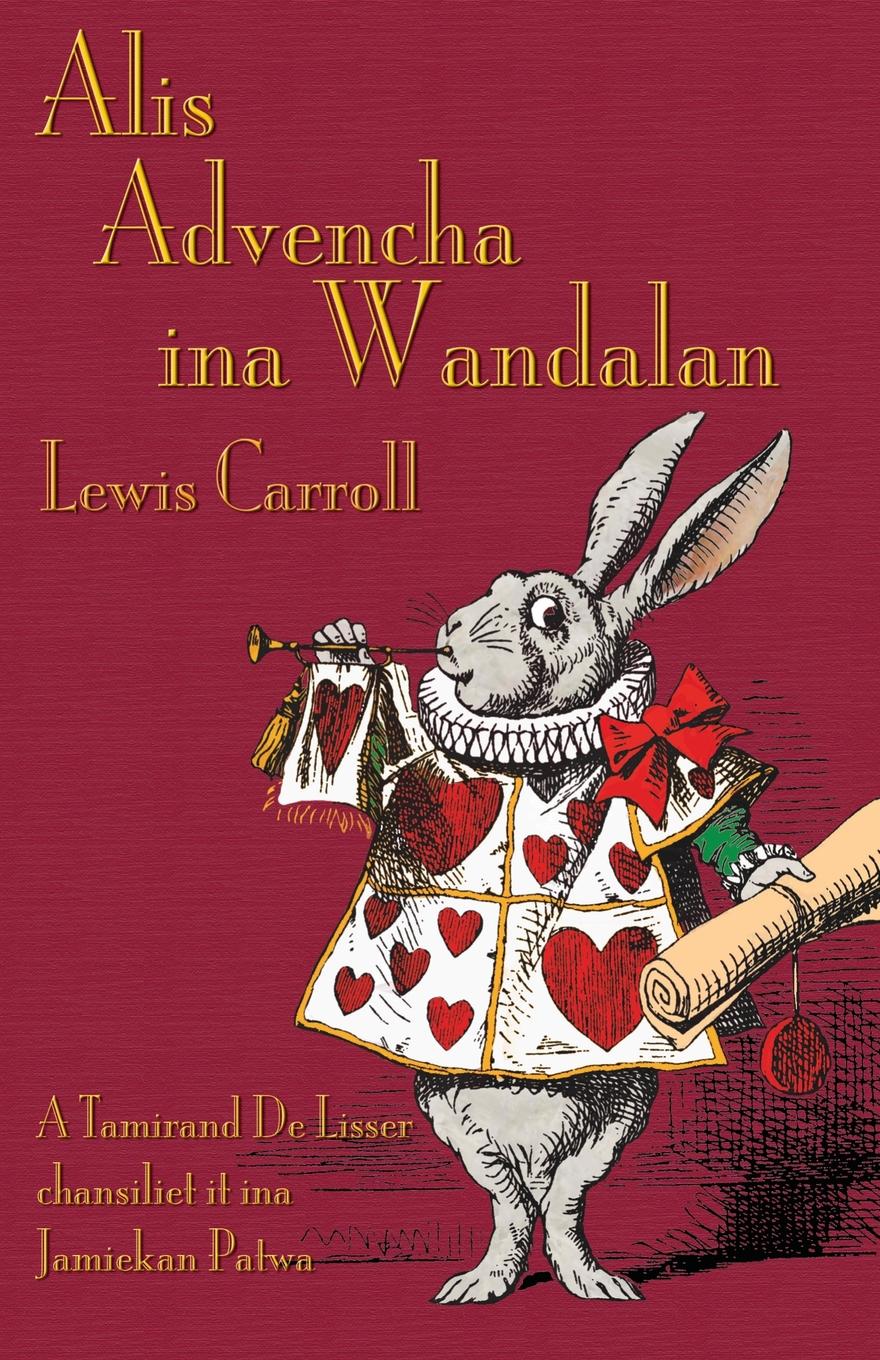
Alis Advencha ina Wandalan
By Lewis Carroll, translated into Jamaican Creole by Tamirand Nnena De Lisser
2016. ISBN 978-1-78201-154-5
It gud se Karal tap-a-tap buk de ina wahn neda langwij, bot ina dis ya kies ya, it beta fi di langwij. Jamiekan Kriyuol, wa piipl uu lov it kaal Jamiekan Patwa, a di langwij ina Jamieka alangsaid Ingglish, di langwij wa muos a di Patwa wod dem kom fram, bot fi ierz ya nou piipl maak it out fi bi wahn bad wie fi chat Ingglish. A onggl roun 40 ier abak piipl wa stodi langwij rekagnaiz se Jamiekan Patwa a wahn ful langwij ina itself. Jamiekan Patwa, wa spred woliip chuu wi myuuzik, de aal uova di worl an a wahn langwij wa wi lov woliip, wa shou uu wi bi an dat wi proud a we wi kom fram. Duo it de bout fi ova 300 ier ya nou, an bout 2.8 miliyan piipl a yaad chat it, an uova 1.8 miliyan muor abraad, stil muos a di taim a jos chat piipl yuuz it fa. Rait ya nou dem a du woliip a sitn fi tiich piipl uu chat Jamiekan Patwa fi riid an rait it tu. Frejrik Kyasidi did kom op wid wahn wie fi rait it fraa ina di 1960z an no tuu lang ago di Jamiekan Langwij Yuunit did chienj it op likl bit, an a it wi yuuz fi du dis ya buk ya nou. Wi put iin wahn likl sitn fi elp piipl uu waahn fi riid di buk bot uu no nuo ou fi riid di prapa wie ou it rait.
|
|
|
The Hunting of the Snark (𐐜 𐐐𐐲𐑌𐐻𐐮𐑍 𐐲𐑂 𐑄 𐐝𐑌𐐪𐑉𐐿): An Agony in Eight Fits: An edition printed in the Deseret Alphabet
By Lewis Carroll
2016. ISBN 978-1-78201-153-8
The Hunting of the Snark was first published in 1876, eleven years after Alice’s Adventures in Wonderland and four years after Through the Looking-Glass. It is a master piece of nonsense and is connected to Through the Looking-Glass by its use of vocabulary from the poem “Jabberwocky”.
The Hunting of the Snark is a strangely dark poem, and some critics believe that its themes—insanity and death—are rather too adult in nature for children’s literature. We know, nonetheless, that Lewis Carroll intended the poem to be enjoyed by children: he dedicated the book in acrostic verse to his young friend Gertrude Chataway, and signed some 80 presentation copies to other young readers. Many of those inscriptions were in the form of an acrostic based upon the name of the child to whom the book was presented. Part of the pleasure of reading this book is in the inevitable musing about what it means. Its author, often asked to explain his work, invariably replies that he does not know. It is therefore open to readers of the poem to decide the question for themselves... The Deseret alphabet was developed in the mid-19th century by the board of regents of the University of Deseret (later the University of Utah) under the direction of Brigham Young, second president of the Church of Jesus Christ of Latter-day Saints. It was intended to help make learning to write English easier. This wasn't very successful, though the alphabet does have interesting phonemic features, as well as being a fascinating part of Mormon history. This edition of "The Hunting of the Snark" is written entirely in that same alphabet, with fonts specially designed by John H. Jenkins and Michael Everson.
|
|
|
The Annotated Alice in Nurseryland: Lewis Carroll’s newly discovered suppressed precursor to The Nursery “Alice”
By Byron W. Sewell
2016 First edition, ISBN 978-1-78201-152-1
Need a good laugh? This obscure work by Carrollian author and illustrator Byron W. Sewell is an outrageous comic parody of one of Lewis Carroll’s stranger and lesser-known works, The Nursery “Alice”. It purports to be the recently discovered (in Dead Deer, Alberta, Canada) precursor of the actual work that was written by Carroll to be read by children “nought to five years old”. It seems likely that this is the first (and perhaps will be the final) time that anyone has done this. While Sewell is at it, he claims that Carroll was the inventor of the iconic “happy face”, which explains Sewell’s quirky illustrations of Carroll’s famous Wonderland characters. It also demonstrates just how ridiculous and untenable some recent theories about Carroll’s life and friendships are.
A very funny book indeed.
|
|
|
Алесіны прыгоды ў Цудазем’і
Second edition. By Lewis Carroll, translated into Belarusian by Max Ščur
2016. ISBN 978-1-78201-151-4
Льюіс Кэрал—гэта псэўданім; сапраўднае імя аўтара—Чарлз Латўідж Додсан, ён быў выкладчыкам матэматыкі ў коледжы Крайст-Чэрч у Оксфардзе. Додсан распачаў свой аповед 4 ліпеня 1862 г., калі ў веславым чоўне выправіўся з Оксфарду ў вандроўку па Тэмзе, разам з пастарам Робінсанам Дакўартам, дзесяцігадовай Эліс Лідэл (дачкой дэкана коледжу) і ейнымі дзьвюма сёстрамі, трынаццацігадовай Ларынай і васьмігадовай Ідыт. Як ясна вынікае зь верша на пачатку кнігі, дзяўчаткі папрасілі Додсана расказаць ім казку, і ён, спачатку неахвотна, пачаў апавядаць ім першы варыянт гісторыі. Ува ўсім тэксьце шмат прыхаваных адсылаў да пяці ўдзельнікаў паездкі; сама кніга была ўрэшце апублікаваная ў 1865 г. Гэтая публікацыя - першае беларускамоўнае выданьне Льюіса Кэрала ў кніжнай форме.
|
|
|
L’Avventure d’Alice ’int’ ’o Paese d’ ’e Maraveglie
By Lewis Carroll, translated into Neapolitan by Robert D'Ajello
2016. ISBN 978-1-78201-155-2
Lewis Carroll è nu scangianomme: ’o nomme vero ’e ll’autore era Charles Lutwidge Dodgson, e isso era prufessore ’e Matemateca ’int’ ’a Christ Church, a Oxford. Dodgson accummenciaie ’o cunto ’o 4 ’e luglio d’ ’o 1862, ’ntramente se faceva na varchiata ncopp’ ’o sciummo Thames a Oxford, nzieme cu ’o Reverenno Robinson Duckworth, cu Alice Liddell (ca teneva riece anne), ’a figlia d’ ’o Rettore d’ ’a Christ Church, e cu ’e ddoie sore d’essa, Lorina (’e trìrece anne), e Edith (d’otto anne). Comm’è ditto chiaro dint’ ’a puisia che sta ô pprincipio d’ ’o libbro, ’e ttre guagliuncelle cercàieno a Dodgson ’e le cunta’ nu fattariello, e isso, doppo nu poco ’e resistenza, ll’accumminciaie a ddìcere ’a primma versione d’ ’o cunto. Dint’ ’o scritto ’e ’stu libbro, c’a la fine fuie prubbecato ’o 1865, ce stanno nu cuófeno ’e mieze revettielle referute a cchisti cinche ’e lloro. ’Sta traduzzione appresenta a ’o leggetore muderno ’a primma traduzzione maie prubbecata ’int’ ’a lengua Napulitana, ca se parla a Napule, ’n Campania e bona parte d’ ’o Sud, e è stata dechiarata patrimmonio ’e ll’UNESCO.
|
|
|
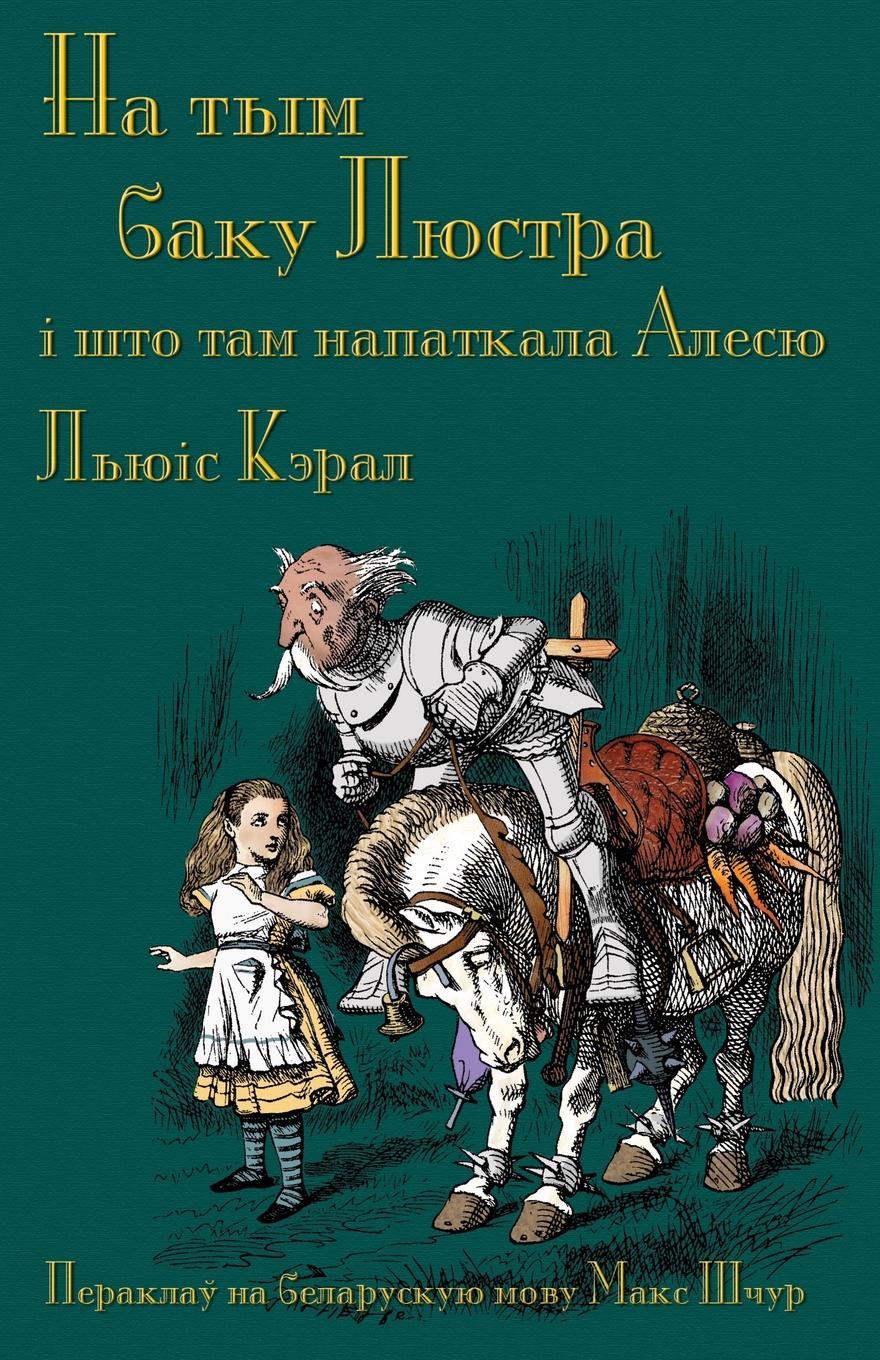
На тым баку Люстра і што там напаткала Алесю
By Lewis Carroll, translated into Belarusian by Max Ščur
2016. ISBN 978-1-78201-149-1
"Alice's Adventures in Wonderland" is a summer tale published by Lewis Carroll (Charles Lutwidge Dodgson) for the first time in July 1865. Many of the characters and adventures in that book have to do with a pack of cards. "Through the Looking-Glass and What Alice Found There" is a winter tale, which Carroll first published in December 1871. In this second tale, the characters and adventures are based on the game of chess. Both "Alice's Adventures in Wonderland" and "Through the Looking-Glass and What Alice Found There" were widely known and enjoyed in Belarus in Russian translations a long time before the first Belarusian translation appeared. The main character, Alice, was quite popular due to a number of films and cartoons. The delay with a Belarusian Alice translation can be attributed to the government's cultural politics during Soviet times, when translations of "bourgeois" Western writers, even the classic ones, into a small national language were not encouraged.
|
|
|
Folly in Fairyland: Tales inspired by Lewis Carroll’s Wonderland
By Carolyn Wells, Illustrated by Wallace Morgan
2016. ISBN 978-1-78201-148-4
Folly, whose real name is Florinda, travels to Fairyland to discover how the fairies live there, what their houses are like, and how they amuse themselves. There, travelling with her guide Puss in Boots, she meets Aladdin, Cinderella, and the Queen of Hearts in their castles, as well as the Three Bears in their woodland home, and the Old Woman who lived in a Shoe. Folly encounters Scheherezade and the Popular Popinjays, and pays an interesting visit to Sleeping Beauty in the Wood, where she experiences the strange sensation of wandering through a palace where everybody was asleep. And what happened there-well, it was just what one might expect! Carolyn Wells was known for her poetry, humour, and children's books, and Folly in Fairyland, one of her earlier works, is a splendid example of her crisp and original story-telling, the tale enhanced by her rhythmical, jingly rhymes.
|
|
|
The Westminster Alice: A political parody based on Lewis Carroll’s Wonderland
By Hector Hugh Munro (Saki)
2010. ISBN 978-1-78201-147-7
Saki was the pen-name of Hector Hugh Munro (1870–1916). He was an author and playwright best known for his subtle and witty short stories. He wrote for periodicals such as the Westminster Gazette, the Daily Express, the Bystander, the Morning Post, and the Outlook. The Westminster Alice vignettes were collected together and published in Westminster Popular No. 18 in 1902
Charles Geake (1867–1919) was, from 1892 to 1918, the head of the Liberal Publication Department, which had been established in 1887 by the National Liberal Federation (a union of all English and Welsh (but not Scottish) Liberal Associations), and the Liberal Central Association (an organization which had been founded in 1874 to facilitate Liberal Party communication throughout United Kingdom). Francis Carruthers Gould (1844–1925) was a political cartoonist and caricaturist who contributed to the Pall Mall Gazette until he joined the Westminster Gazette when it was founded. He later became an assistant editor for that publication. In addition to illustrating Saki’s Westminster Alice in a series of publications from 1900 to 1902, Gould also illustrated Charles Geake’s parody John Bull’s Adventures in the Fiscal Wonderland, published in 1904.
|
|
|
Alice's Adventures in Wonderland: Illustrated by Harry Furniss
By Lewis Carroll, with a Introduction by Selwyn Goodacre and Edward Wakeling
2016. ISBN 978-1-78201-135-4
Lewis Carroll is a pen-name: Charles Lutwidge Dodgson was the author's real name and he was lecturer in Mathematics at Christ Church, Oxford. Dodgson began the story on 4 July 1862, when he took a journey in a rowing boat on the river Thames in Oxford together with the Reverend Robinson Duckworth, with Alice Liddell (ten years of age) the daughter of the Dean of Christ Church, and with her two sisters, Lorina (thirteen years of age), and Edith (eight years of age). As is clear from the poem at the beginning of the book, the three girls asked Dodgson for a story and reluctantly at first he began to tell the first version of the story to them. There are many half-hidden references made to the five of them throughout the text of the book itself, which was published finally in 1865. The text for this edition makes some alterations to Lewis Carroll's final revised text in order to correct some inconsistencies which remained, or which appear to have been introduced, by Carroll in 1897. In the Evertype definitive text the aim has been to establish (or re-establish) clarity and consistency where it was lacking, while conserving the idiosyncrasies of Carroll's writing which have delighted readers for a century and a half. The illustrations in this volume were prepared in 1908 by Harry Furniss, who had previously illustrated Carroll's "Silvie and Bruno". The book has an introduction about Furniss's work by noted Carrollian scholars, Selwyn Goodacre and Edward Wakeling.
|
|
|
Close Encounters of the Snarkian Kind: A Portmanteau inspired by Lewis Carroll’s The Hunting of the Snark
By Byron W. Sewell
2016. ISBN 978-1-78201-134-7
Your ticket on this Snark hunting expedition through the snarkish imagination of Byron Sewell is good for several stops on planet Earth and far-off Jupiter! Our first stop is at Olosega, a volcanic doublet in the Manu'a group of the Samoan Islands, over a century ago, to learn about the true story of Robert Louis Stevenson's tragic encounter with a Boojum. From there our next two stops are in today's West Virginia to attend a meeting of the West Virginia Snark Hunting Society, followed by a deadbeat dad's encounter with someone intent on painting his trailer and pick-up truck with neon-pink polka dots. From there you will travel to Cologne where someone is visiting a psychiatrist seeking help for his ability to see live snarks that everyone attempts to convince him are just illusions. Our last stop is a close encounter on one of Jupiter's moons, eventually colonized after the sudden onset of an ice age across Earth's northern hemisphere, where the words of an ancient tale have the power to rip open a seam in the fabric of space-time and reveal a terrifying world where Boojums abound. Be sure to bring along a fork and some soap.
|
|
|
Les Aventures d’Alice au pays des merveilles
By Lewis Carroll, translated into French by Henri Bué
2015. ISBN 978-1-78201-131-6
Cette édition de Les Aventures d'Alice au pays des merveilles présente la première traduction en français de 1869 pour le lecteur moderne. La traduction d'Henri Bué fut la deuxième traduction d'Alice dans une autre langue. Bué demanda l'avis de Lewis Carroll pour cette traduction, que l'on qualifia de traduction autorisée . Un petit nombre de modifications ont été apportées au texte, de manière à rendre le livre plus accessible au lecteur moderne.
|
|
|
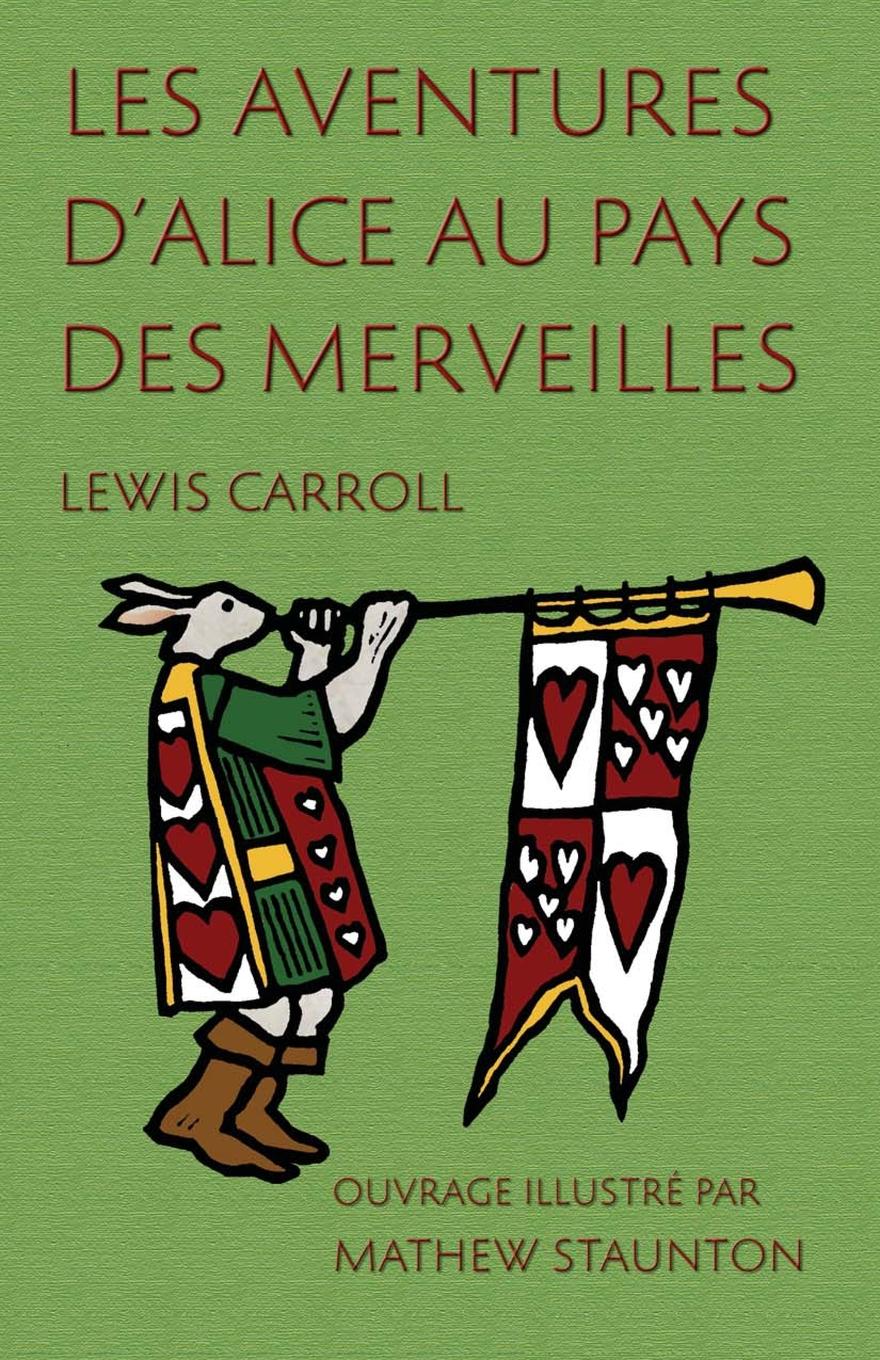
Les Aventures d’Alice au pays des merveilles: Ouvrage illustré par Mathew Staunton
By Lewis Carroll, translated into French by Henri Bué
2015. ISBN 978-1-78201-130-9
Lewis Carroll est un nom de plume : l'auteur s'appelait en réalité Charles Lutwidge Dodgson,et donnait des cours de mathématiques à Christ Church, Oxford. L'histoire a pris naissance dans lecerveau de Dodgson le 4 juillet 1862, sur la Tamise à Oxford, au cours d'un voyage en barque avec lepasteur Robinson Duckworth, Alice Liddell (dix ans), la fille du doyen de Christ Church, et ses deux sœurs, Lorina (treize ans), et Edith (huit ans). Comme indiqué dans le poème servant d'introduction au livre, les troisdemoiselles prièrent Dodgson de leur raconter une histoire, et il leur en conta, à contrecoeur au début, la première version. Les illustrations de ce volume, ludiques etpleines de fraicheur, sont les créations de Mathew Staunton, qui s'est basé sur les images d'Alice et desdifférents personnages qu'elle rencontre qu'a fait naitre en lui sa première lecture de l'ouvrage il y abien des années, et qui ont été inspirées en partie par sa fille Aoife, qui a posé pour les illustrations.
|
|
|
Alice’s Adventures in a Dyslexic Wonderland: An edition printed in a font that simulates Dyslexia
By Lewis Carroll
2015. With a foreword by Daniel Britton. ISBN 978-1-78201-129-3
In 2013, Daniel Britton initiated a project at the London College of Communication to recreate the feeling of reading with dyslexia-to try and instil a sense of empathy between non-dyslexics and dyslexics. To accomplish this, he designed a typeface that would be almost illegible and slow down the reading pace of a non-dyslexic person to the speed of a dyslexic, recreating the frustration and embarrassment of reading with the condition. Britton's typeface design doesn't simulate letters jumping around on the page or anything like that-it just breaks the reading time of a non-dyslexic down to the speed of a dyslexic. With fonts specially produced by Michael Everson, this edition has been typeset in keeping with Britton's design objectives.
|
|
|
Alice's Adventures in Wonderland: Illustrated by Mathew Staunton
By Lewis Carroll, with a Foreword by Michael Everson
2015. ISBN 978-1-78201-128-6
The text for this edition makes some alterations to Lewis Carroll's final revised text in order to correct some inconsistencies which remained, or which appear to have been introduced, by Carroll in 1897. In the Evertype definitive text the aim has been to establish (or re-establish) clarity and consistency where it was lacking, while conserving the idiosyncrasies of Carroll's writing which have delighted readers for a century and a half. The playful and fresh illustrations in this volume were prepared by Mathew Staunton, on the basis of very personal mental images of Alice and the different characters she meets which developed when he first read the book many years ago, and were inspired in part by his daughter Aoife, who acted as model for the book.
|
|
|
Eachtra Eibhlíse i dTír na nIontas
By Lewis Carroll, translated into Irish by Pádraig Ó Cadhla
2015. ISBN 978-1-78201-127-9
Seoid de chuid litríochta na bpáistí atá in Alice's Adventures in Wonderland, a foilsíodh den chéad uair sa bhliain 1865. Foilsíodh aistriúchán Gaeilge le Nicholas Williams sa bhliain 2003, agus cuireadh amach an dara heagrán de in 2007. Is sa bhliain 1922, áfach, a foilsíodh an chéad leagan Gaeilge, a rinne Pádraig Ó Cadhla (1875-1948), ach is deacair teacht ar chóip den leabhar sin inniu, agus is beag duine a bhfuil sé léite aige. Is sa bhliain 2015 atá an t-atheagrán seo d'aistriúchán Uí Chadhla á fhoilsiú, 150 bliain tar éis chéadfhoilsiú Alice's Adventures in Wonderland. --- The book Alice's Adventures in Wonderland is a jewel of children's literature, first published in 1865. An Irish translation by Nicholas Williams was published in 2003, with a second edition in 2007. But the first Irish translation by Pádraig Ó Cadhla (1875-1948) was published in 1922 though the book is difficult to acquire these days and few have read it. This new edition of Ó Cadhla's translation appears in 2015, the 150th anniversary of the first publication of Alice's Adventures in Wonderland.
|
|
|
Alice’s Adventures in Wonderland: An edition printed in Dyslexic-Friendly Fonts
By Lewis Carroll
2015. ISBN 978-1-78201-126-2
The fonts used in this edition of Alice's Adventures in Wonderlandhave been designed with the intention of making reading easier for people with dyslexia. OpenDyslexic3 (used for the body text) and OpenDyslexic (used for its italics) were designed by Abelardo Gonzalez and Lexia Readable (used for the chapter titles drop-caps, and headers) was designed by Keith Bates. Research suggests that dyslexic-friendly fonts are not always effective for all readers; it hoped nevertheless that this edition may help at least some readers to enjoy Alice's adventures.
|
|
|
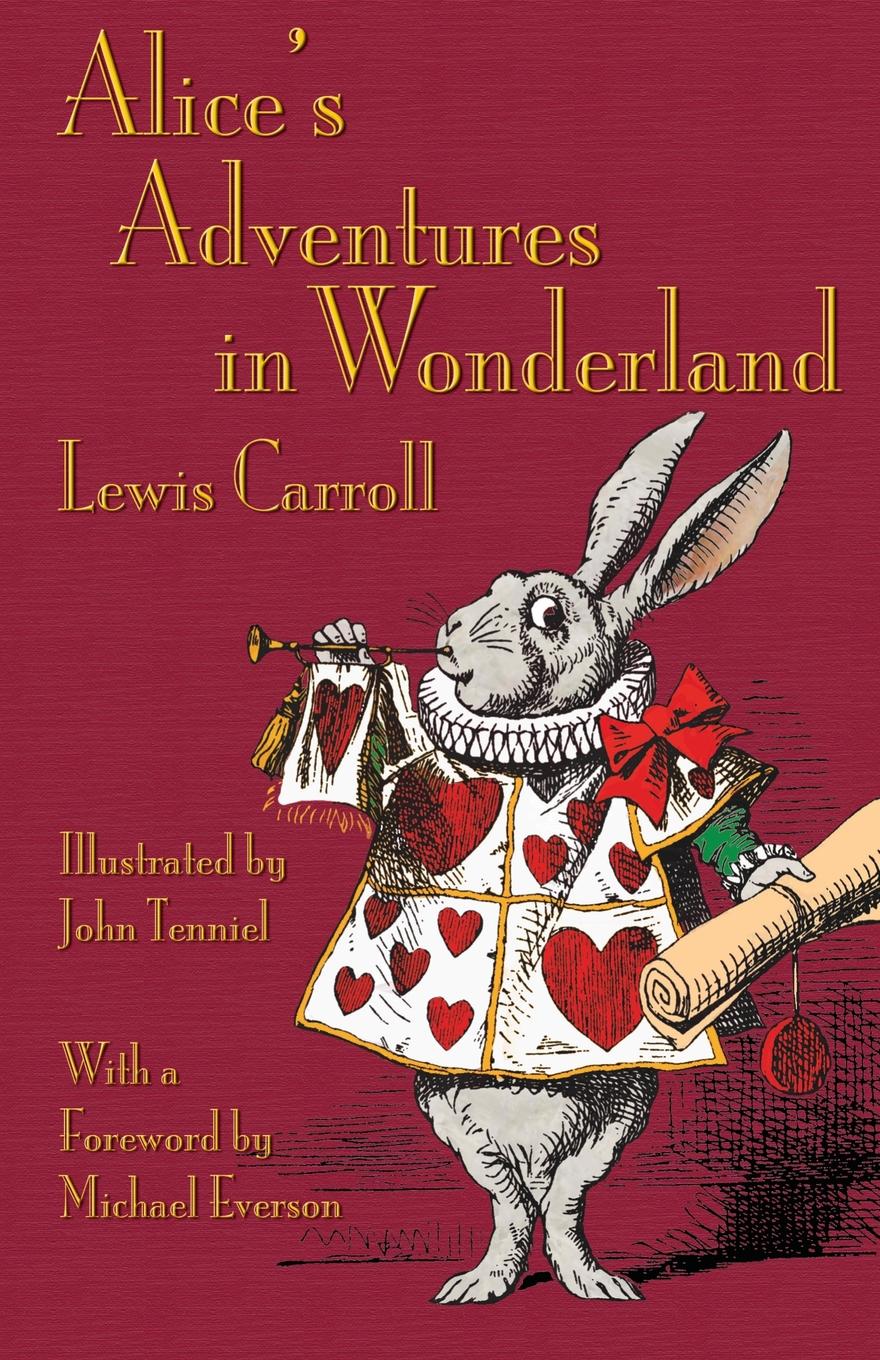
Alice's Adventures in Wonderland
By Lewis Carroll, with a Foreword by Michael Everson
2015. ISBN 978-1-78201-125-5
The text for this edition is based on that established in Selwyn Goodacre’s version of Lewis Carroll’s final revised text of 1897; Goodacre’s edition is augmented “with certain corrections, and elimination of errors”. To that text I have made a number of further alterations in order to correct some inconsistencies which remained, or which appear to have been introduced, in Carroll’s final revised text. This establishes a definitive text for Evertype publications. It aims to introduce (or re-introduce) clarity and consistency where it was lacking, while conserving the idiosyncrasies of Carroll’s writing which have delighted readers for a century and a half.
|
|
|
Mbalango wa Alice eTikweni ra Swihlamariso
By Lewis Carroll, translated into Shangani by Peniah Mabaso and Steyn Khesani Madlome
2015. ISBN 978-1-78201-123-1
Lewis Carroll i vito ro duvulela: kasi Charles Lutwidge Dodgson a ku ri rona vito ra mutsari ra xiviri naswona a a ri muleteri wa swa tinhlayo eChrist Church, edorobeni ra Oxford. Dodgson u sungurile marungula lama hi siku ra vumune ra n'hweti ya Mawuwani hi lembe ra 1862, loko va khomile rendzo ra byatso enambyeni wa Thames eOxford na Mufundhisi Robinson Duckworth, na Alice Liddell (loyi a ri na khumi wa malembe) n'wana wa Muangameri wa Kereke ya Christ Church, xikan'we na sesi na ndzisana, lava ku nga Lorina (wa malembe ya khumenharhu), na Edith (wa malembe nhungu). Tanihilaha swi paluxiweke hakona eka xitlhokovetselo emasungulweni ya tsalwa, vanhwana lava nharhu va komberile Dodgson leswaku a va garingetela kambe yena eku sunguleni a va nyika ntsheketo hi ndlela yin'wana ya khale. XiTsonga i ririmi ro tlula mindzilekano leri vulavuriwaka eka matiko ya mune ya Afrika wa Dzonga lama ku nga: Zimbabwe, Swaziland, Afrika-Dzonga, na Muzambiki. Eka matiko lama hinkwawo ririmi leri ri vitaniwa hi mavito yo hambana. Etikweni ra Afrika-Dzonga ri vuriwa XiTsonga; eMuzambiki, ntlawa wukulu i XiTsonga kambe ehansi ka wona ku na mitlawa leyi vuriwaka XiChangana, XiTshwa na XiRhonga. EZimbabwe, ririmi leri ri tiveka tanihi XiChangana hi xitalo. Hambiswiritano ku ni ririn'wana leri vulavuriwaka i ra XiHlengwe kumbe leri kuceteriwaka hi XiTshwa.
|
|
|
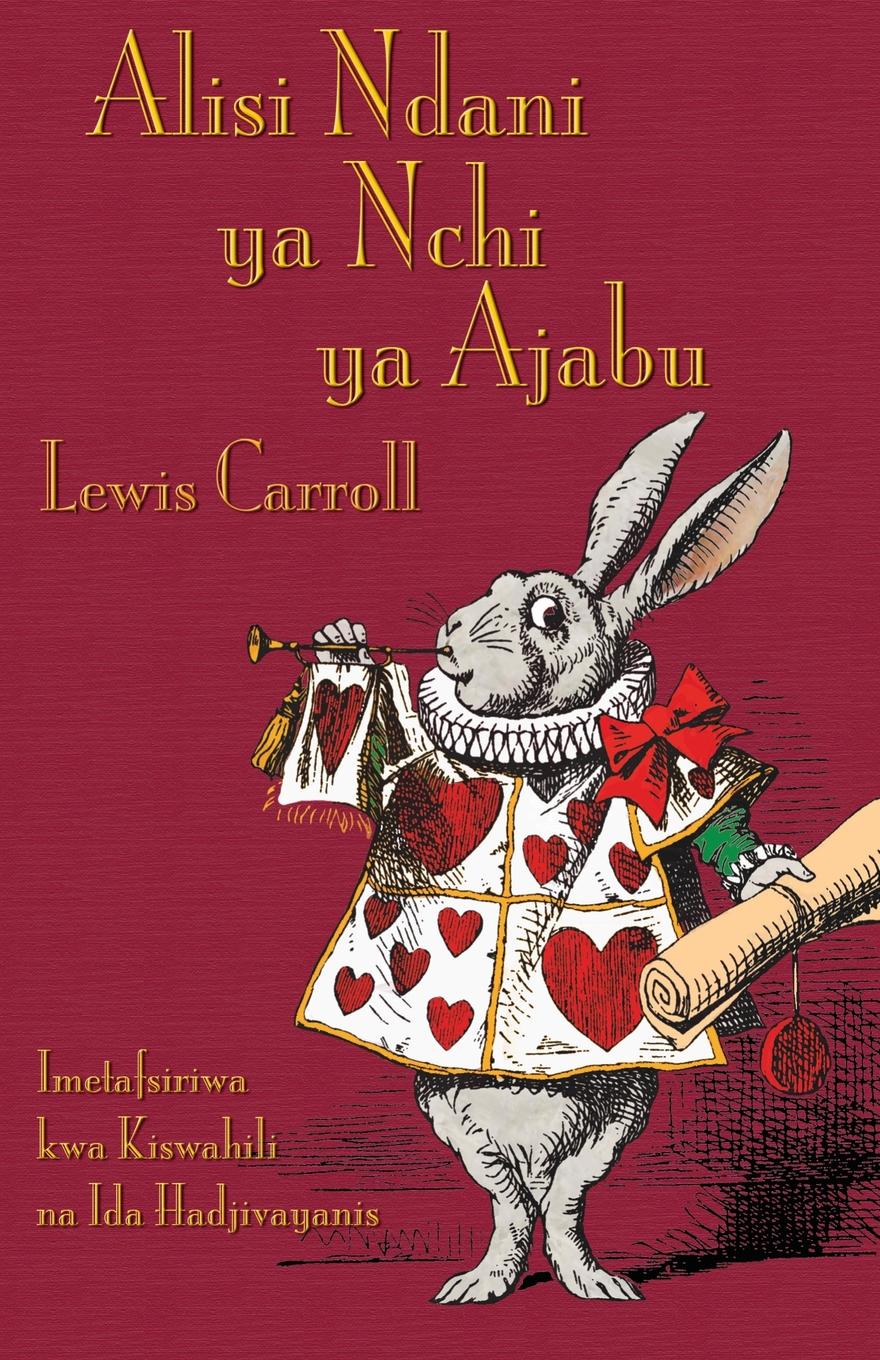
Alisi Ndani ya Nchi ya Ajabu
By Lewis Carroll, translated into Swahili by Ida Hadjuvayanis
2015. ISBN 978-1-78201-122-4
Kiswahili ni lugha ya Kibantu inayozungumzwa huko Tanzania, Kenya, Uganda, Rwanda, Burundi, DRC, Somalia na nchi nyingine zilizo jirani na nchi hizi za Afrika ya mashariki. Kiswahili kimekirimu tafsiri za kigeni kwa karne nyingi na pia tafsiri imekuwa na jukumu muhimu la kukuza lugha hii kisiasa, kijamii, kiuchumi na kiutamaduni. Pia katika karne ya 19, tafsiri ilikuwa ndiyo chanzo cha riwaya ndani ya fasihi ya Kiswahili, hivyo imeweza kuathiri waandishi muhimu. Tafsiri hii ni ya kifasihi zaidi, pia imelengea kiuaminifu zaidi hadithi ya awali. "Alisi" ilitafsiriwa kwa mara ya kwanza mwaka 1940 ambapo mfasiri alifupisha hadithi hiyo na kuiita "Elisi katika Nchi ya Ajabu". Pia alimgeuza mhusika mkuu kuwa mtoto wa Kiafrika aliyemwita Elisi. Hii tafsiri mpya iliyofanywa na Ida Hadjivayanis, imetolewa kama mojawapo ya kazi zinazosherehekea kuazimia kwa miaka 150 tangu kuchapishwa kwa toleo la kitabu hiki la mwaka 1865. Tafsiri hii itamwezesha msomaji wa 'Alisi' wa Kiswahili apate hisia zilizokusudiwa na mwandishi hapo awali.
|
|
|
Охота на Снарка в Восьми Напастях
By Lewis Carroll, translated into Russian by Victor Fet
2016. ISBN 978-1-78201-121-7
Lewis Carroll's "The Hunting of the Snark" is perhaps the most frequently translated and parodied English language poems into Russian. It is quite possible that no other country has managed to inspire so many translators to have a go at the difficult translation. Somehow, Lewis Carroll's poem has spoken to the Russian soul. The first person to produce a full Russian translation of the Snark is Victor Fet, who managed this feat in 1975. Not only a translator, Fet is also a Russian poet himself, a biology professor, a world-class expert on scorpions, and a particularly effective literary sleuth. He has located and described, with analysis both trenchant and humorous, no fewer than 36 different published full translations in Russian, by 33 translators (1991-2015), plus many partial translations-even down to single-stanza and single-line quotes. In this book is the final (1981) version of Fet's Russian translation of Lewis Carroll's The Hunting of the Snark as well as а facsimile of its 1976 version (a Samizdat typescript), a detailed Foreword, and additional materials including a comprehensive annotated bibliography in English. There is no doubt that it will stand as the foundation for Russian Snarkology.
|
|
|
“Alice” Condado aos Mais Pequenos
By Lewis Carroll, translated into Portuguese by Rogério Miguel Puga
2015. ISBN 978-1-78201-118-7
“Alice” Contada aos Mais Pequenos destina-se a crianças em idade pré-escolar, “dos zero aos cinco anos”. Com um total de cerca de 7 000 palavras, esta 'versão' é significativamente mais curta do que As Aventuras de Alice no Subsolo (15 500 palavras) e Alice no País das Maravilhas (27 500 palavras). A maior parte da narrativa consiste em interpelações do autor ao jovem ouvinte e em explicações sobre a história através de referências às ilustrações. O efeito dessa estratégia é cativante, sobretudo quando Carroll brinca com aspectos das ilustrações de Tenniel elegantemente coloridas. Curiosamente, nessas obras de arte, o vestido de Alice é amarelo e o avental branco, com um laço azul, mas actualmente a maioria dos artistas pinta o vestido de azul e branco.
|
|
|
The Nursery “Alice”
By Lewis Carroll
2015. Second edition, ISBN 978-1-78201-117-0
The Nursery “Alice” is intended for pre-school children “aged from Nought to Five”. Running to just under 7,000 words, it is considerably shorter than both Alice’s Adventures under Ground (15,500 words) and Alice’s Adventures in Wonderland (27,500 words). Much of the narrative consists of the author’s addressing the young listener, explaining the story by reference to the illustrations. The effect is rather charming, particularly where Carroll pokes fun at features in Tenniel’s illustrations. These were quite skilfully and attractively coloured. Interestingly, Tenniel coloured Alice’s dress yellow with a blue trim and white apron, whereas nowadays most artists colour the dress in blue and white only.
|
|
|
Crystal's Adventures in a Cockney Wonderland
By Lewis Carroll, translated into Cockney Rhyming Slang by Charlie Lovett
2015. ISBN 978-1-78201-115-6
Cockney Rhyming Slang, as anyone who has stood at the till in a London souvenir shop could tell you, is a set of slang expressions based on taking the original word (say, “stairs”) and rhyming it with the final word of a short phrase (“apples and pears”), and then, in some cases, shortening the new expression (“apples”). This can lead to a sentence such as: “Careful you don’t slip and fall down the apples”. While the slang is often cited as the “secret language” of the Cockney population of London, many of its expression have entered into general usage, not just in the UK, but throughout the English-speaking world. This is not a translation of “Alice’s Adventures in Wonderland” in the purest sense. It is, rather, the result of a linguistic game—another sort of translation. What Charles Dodgson would have loved most about Cockney Rhyming Slang, and what makes it suited for application to “Alice”, is that it is, as John Ayto writes in his introduction to “The Oxford Dictionary of Rhyming Slang”, “all really part of a giant ongoing word game, whose product is much more droll artefact that linguists’ lexeme”. It is with this idea of Cockney Rhyming Slang as word game, and with the goal of creating “droll artefact”, that this translation has been approached.
|
|
|
I Avventur de Alìs ind el Paes di Meravili
By Lewis Carroll, translated into Western Lombard by GianPietro Gallinelli
2015. ISBN 978-1-78201-114-9
Lewis Carroll l'è on pseudònim: Charles Lutwidge Dodgson l'è el nòmm real de l'autor, che l'era on professor universitari de Matematica a la Christ Church a Òxfòrd. El Dodgson l'ha cominciaa la stòria el 4 de luj del 1862, quand l'aveva faa ona escursion in barca a remm in sul fiumm Tamigi a Òxfòrd, insema al Reverend Robinson Duckworth, con l'Alìs Liddell (de des ann de età) la tosa del Decan de la Christ Church, e cont i sò dò sorell, Lorina (de tredes ann de età), e Edith (de vòtt ann de età). Come l'è anca ciar da la poesia al inizzi del liber, i trè tosann gh'hann domandaa al Dodgson de cuntagh sù ona stòria e lù on poo contrari al princippi, l'ha cominciaa a mett giò quella che la sariss diventada la prima version del esempi. In tutt el raccont, ch'el sarà pubblicaa a la fin ind el 1865, gh'hinn di mezz allusion a qui cinch persònn. Questa edizion la porta a l'attenzion di lettor del dì d'incoeu la prima traduzion del liber I Avventur de Alìs ind el Paes di Meravili in Lombard Occidental, vun di pussee important dialett de la Penisola Italiàna, sviluppaa dal Latin e che l'è parlaa ind ona area che la corrispond pù o manch a la part occidentala de la Lombardia, a di part del Piemont, el Canton Tessin in Svizzera, e di arei a sud del Fiumm Pò.
|
|
|
Insumansumane Zika-Alice
By Lewis Carroll, translated into Zimbabwean Ndebele by Dion Nkomo
2015. ISBN 978-1-78201-113-2
Insumansumane Zika-Alice liqoqo lenganekwane ezabhalwa nguCharles Lutwidge Dodgson ebhala enguLewis Carroll, okuligama elisetshenziswa emibhalweni yakhe. OkaDodgson wabhala inganekwane zakhe ezibhalela amantombazana amathathu ayizelamani, enye igama layo ingu-Alice. Lelo qoqo lenganekwane ladindwa okokuqala ngo-1865 anduba libe ngolunye lwengwalo zabantwana ezidume kakhulu emhlabeni wonke jikelele. Selatolikelwa endimini ezinengi kakhulu labuye lahlelwa ukuthi lidlalwe kumabonakude. Lolu gwalo olutolikelwe esiNdebeleni saseZimbabwe lungomunye wemizamo yokuqala yokuthi ugwalo lukaDodgson lutholakale endimini zesiNtu ngesikhathi kuthakazelwa ikhulu lamatshumi amahlanu eminyaka kusukela insumansumane zika-Alice zidindwa ngokokuqala olimini lwesiNgisi.
|
|
|
Æðelgýðe Ellendǽda on Wundorlande
By Hlóðwíg Carroll, translated into Old English by Peter S. Baker
2015. ISBN 978-1-78201-112-5
Old English (or “Englisc”) is the English language as recorded from around the year 700 to 1100. Spoken by King Alfred the Great and Lady Godiva, the Venerable Bede and Edward the Confessor, it is the language of such classics as Beowulf, The Dream of the Rood, and The Seafarer. After 1100 the language went through a period of change so rapid that, by the time two centuries had passed, few could read these old texts. For those interested in learning the oldest variety of English, this translation of Alice’s Adventures in Wonderland may provide a pleasurable study aid: just set the modern text and this one side by side and compare the two. But be careful! In this book, Lewis Carroll’s classic tale has been transported into the distant past, before the English had ever heard of tea, imagined a device as sophisticated as a watch, or even seen a rabbit (a later invasive species). Instead, they drank beer, mead, or (when they could get it) wine; an exceptionally learned scholar might have known how to tell time with an astrolabe; and the most familiar long-eared animal was the hare.
|
|
|
Alice’s Adventchers in Wunderland
By Lewis Carroll, translated into Scouse by Marvin R. Sumner
2015. ISBN 978-1-78201-107-1
“Scouse” is the name of the unique dialect of English spoken in Liverpool. It is a relatively new dialect, dating to the 19th century, showing some influence of speakers from England, Scotland, Wales, and Ireland. The Beatles are perhaps the most famous speakers of Scouse, or at least the first speakers who came to public prominence outside the Liverpool region. This book contains a brief sketch of the orthographic principles used in presenting the Liverpudlian dialect in this edition. The Scouse translation was first prepared by Marvin R. Sumner in 1990, and is now published for the first time in anticipation of the “Alice 150” celebrations being held this year.
|
|
|
Elucidating Alice: A Textual Commentary on Alice’s Adventures in Wonderland
By Lewis Carroll, with an introduction and Notes by Selwyn Goodacre
2015. ISBN 978-1-78201-105-7
This textual commentary looks at Alice's Adventures in Wonderland quite simply, as a children’s novel, investigating the book’s narrative structure, analysing how Carroll successfully constructed a pioneering book for children that was to stand the test of time, remaining remarkably relevant to the present day. There are many depths and subtleties in this book that can only be properly appreciated by examining the text line by line. The writing is supremely skilful, and will stand the closest scrutiny-even virtually to every line of the narrative. Most books would crumble under such close analysis. It is testimony to the strength, depth, and quality of Alice that the book comes through such intense examination and survives triumphantly. Selwyn Goodacre has a large Lewis Carroll collection including over 2000 copies of the Alice books. He is a past chairman of the Lewis Carroll Society, and edited the Society journal from 1974-1997. For years he has pursued a special interest in the text of the Alice books, which has led to his current commentary on, and analysis of, the way they were written.
|
|
|
آلیس در سرزمین عجایب (Âlis dar Sarzamin-e Ajâyeb)
By Lewis Carroll, translated into Dari by Rahman Arman
2015. ISBN 978-1-78201-104-0
Dari is spoken natively by the majority of the population in Afghanistan and is one of the two official languages of the country, the other being Pashto. In Afghanistan, Dari has served as the lingua franca for many years, and is the main language of communication between people in most Afghan cities. Many Dari speakers, especially those in Central and Northern Afghanistan, identify themselves as belonging to the Tajik ethnic group. Many members of other ethnic groups-including Hazara, Pashtun, Uzbek, and Pamiris-speak Dari as a second language as well. Dari has a number of dialects such as Shamali (Northern), Herati, Hazaragi, and Kabuli which is the basis of the standard language. Dari, along with Persian spoken in Iran and Tajik spoken in Tajikistan, is one of the three literary languages that stem from a common language spoken in the Middle Ages called Pārsi (Arabized as Fārsi). Together with Persian and Tajik, Dari belongs to the West Iranian branch of Indo-European languages. The term “Dari” is derived from the word “dar” which meant ‘court’ in the classical language. So Dari is “the language of the court”.
|
|
|
Alice’s Ventures in Wunderland
By Lewis Carroll, translated into Cornu-English by Alan M. Kent
2015. ISBN 978-1-78201-102-6
Cornu-English is that form of English spoken by the majority of native residents in Cornwall. It has also spread overseas to be spoken in areas of the world where Cornish migrants lived and worked-in such diverse locations as Australia, the United States of America, New Zealand, Mexico and South Africa. It may be said to be one of three major linguistic groups operating within Cornwall, a Celtic territory in the west of the island of the Britain. The three are Cornish, English and Cornu-English. Within Cornu-English, it is necessary to point out that although the broad vocabulary and grammar remain the same there are some variations in accent. These can be graded from east to west, and from north to south. In general, the accent in the west of Cornwall (in West Penwith, in particular) has remained quite distinctive, with some observers believing this is because of the later persistence of the Cornish language there. This edition of Alice's Adventures in Wonderland is translated with a nod towards the Cornu-English accent of mid Cornwall; in particular that found in the working-class china-clay mining villages to the north of St Austell. This accent and locate remain interesting because for many years there were perceived as not being as picturesque as others parts of Cornwall, and so received less immigration and loss of Cornu-English speakers.
|
|
|
Selections from the Lewis Carroll Collection of Victoria J. Sewell
Compiled by Byron W. Sewell
2014. ISBN 978-1-78201-101-9
The year 2015 marks the celebration of the 150th anniversary of the first publication of Alice's Adventures in Wonderland. As part of the the sesquicentennial commemorations, a number of American exhibitions will be held under the auspices of the Lewis Carroll Society of North America, designated Alice150. One participating museum is the Huntington Museum of Art in West Virginia, which will host "Selections from the Lewis Carroll Collection of Victoria J. Sewell" in their main gallery during the summer. This full-colour volume catalogues the more than 180 items on display, fully annotated by Byron W. Sewell and with an insightful Foreword by prominent English Carrollian, Edward Wakeling.
|
|
|
Balþos Gadedeis Aþalhaidais in Sildaleikalanda
By Lewis Carroll, translated into Gothic by David Alexander Carlton
2015. ISBN 978-1-78201-097-5
Gothic (Gutiska razda or Gutrazda) was a continental Germanic language spoken by the Visigoths and Ostrogoths in many areas (most notably Spain and Italy) throughout antiquity and the early Middle Ages; while Gothic appears to have become functionally extinct sometime in the eighth century, some form of the language may have continued to be spoken in the Crimea until the sixteenth or seventeenth century. The Gothic Bible, translated from a lost Greek exemplar sometime ca. 360 CE by the Gothic bishop Wulfila, represents the earliest substantive text in any Germanic language. Gothic itself remains the only significant representation of the East Germanic branch of languages, which have since died off completely. Other extant works in Gothic include an exegesis of the Gospel of John known as Skeireins, a partial calendar, and some minor fragments. Unfortunately, all extant texts are incomplete, so it remains unknown to what extent the extant fragments are written in idiomatic Gothic, as well as exactly what dialect of Gothic they might represent.
|
|
|
Der an Gweder Meras ha Myns a Gafas Alys Ena
By Lewis Carroll, translated into Cornish by Nicholas Williams
2015. ISBN 978-1-78201-096-8
Whedhel a'n hâv yw Aventurs Alys in Pow an Anethow dyllys gans Lewis Carroll (Charles Lutwidge Dodgson) rag an kensa prës in mis Gortheren an vledhen 1865. Yma lies onen a'n bobel hag a'n wharvedhyansow i'n lyver ow pertainya dhe back cartednow. Whedhel a'n gwâv yw Der an Gweder Meras ha Myns a Gafas Alys Ena, hag y feu dyllys gans Carroll rag an kensa prës in mis Kevardhu 1871. Yth yw pobel ha wharvedhyansow an secùnd whedhel-ma grôndys war wary gwëdhpoll. Y fëdh gwelys i'n lyver-ma delînyansow meurgerys Syr John Tenniel, a omdhysqwedhas rag an kensa prës in dyllans gwredhek an whedhel in Sowsnek. Orth dyweth an lyver y kefyr an wharvedhyans "ankevys" "Gùhien an Fâls-Blew", neb a veu porposys gans Carroll avell radn a Der an Gweder Meras. Nyns esa an darn-na ow plêsya John Tenniel, neb a brovias an delînyansow rag kensa dyllansow an dhew lyver, ha rag hedna y feu va gesys in mes. An pyctour spladn warlergh gis Tenniel usy dhe weles i'n chaptra-ma a veu gwrës gans Ken Leeder in 1977.
|
|
|
Aventurs Alys in Pow an Anethow
By Lewis Carroll, translated into Cornish by Nicholas Williams
Second edition. 2014. ISBN 978-1-78201-095-1
Alice’s Adventures in Wonderland, jowal bian a lien an flehes, a veu dyllys rag an kensa prës in 1865. Trailyansow dhe lies tavas re apperyas dhia an vledhen-na. Yma an lyver-ma screfys i'n spellyans aswonys avell Kernowek Standard. Pòr ogas yw an lytherednans-na dhe'n Furv Scrifys Savonek (Grafow Hengovek), saw nebes fowtys bian i'n Furv Scrifys Savonek re beu amendys in spellyans an lyver-ma, hag y fëdh sinys diacrytek ûsys i'n spellyans kefrës dhe dhysqwedhes dyffransow inter geryow kehaval bò dhe notya vogalednow a yll bos leverys in dyw fordh dhyvers. Pynag oll a allo redya an Furv Scrifys Savonek, a vëdh abyl dhe redya an versyon-ma heb caletter vëth oll. Pan dheuth an kensa dyllans in mes a Alice's Adventures in Wonderland, yth feu gwelys inho delînyansow tednys gans John Tenniel. Yma telînyansow Tenniel i'n trailyans-ma kefrës.
|
|
|
Ahlice’s Adveenturs in Wunderlaant
By Lewis Carroll, translated into Border Scots by Cameron Halfpenny
2015. ISBN 978-1-78201-087-6
This is the first translation into the Border Scots dialect of Alice’s Adventures in Wonderland. Scots was at its peak as a European language of scholars in the 16th century, but its scope and influence has declined since English became Scotland's formal written language in the 17th century. Border Scots has subsequently become primarily an oral dialect, spoken by more than 100,000 people at home, work and play, but not regularly committed to paper for use in a formal context. Recognizing the oral nature of the dialect was an important step in deciding how this first translation of Alice was to be carried out. Border Scots differs from other Scots dialects in terms of its anglicized and unusual flat vowel pronunciations, earning it the moniker of the “yow an mei” dialect. There was an opportunity to echo this sound in the very name of Ahlice, where the drawn out and flattened first syllable acts as an aural clue to the deep timbre this dialect emits in its spoken form. To further achieve this aural effect the common Scots custom of dropping consonants at the end of words and syllables has also been deployed. In particular, applying it to the progressive participle ending -ing to make it -in flattens the sound to a more authentic Borders’ pitch. Elliot Cowan Smith observed nearly a century ago that the Borders dialect will “pass gradually into oblivion” if its spirit is allowed to be lost. It is hoped that the publication of Ahlice’s Adveenturs in Wunderlaant will kindle the spirit and confidence to record the dialect in print more widely, and establish a future role for it in the development of Borders life.
|
|
|
Ko Ngā Takahanga i a Ārihi i Te Ao Mīharo
By Lewis Carroll, translated into Maori by Tom Roa
2015. ISBN 978-1-78201-086-9
He ingoa kārangaranga a Lewis Carroll: Ko Charles Lutwidge Dodgson te ingoa tūturu. He kaikauwhau i te Pāngarau i Christ Church, Oxford. Nō te 4 o Hūrae 1862 ka tīmata ai a Dodgson te kōrero nei. I te tere waka rātou ko ana hoa hoe i te Awa o Thames. Ko Reverend Robinson Duckworth tērā, me Alice Liddell (tekau ngā tau), tana tuakana a Lorina (tekau mā toru ngā tau), me tana teina a Edith (ka waru ngā tau), ngā tamāhine a te Amokapua o Christ Church. Kei te waiata mai i te tīmatatanga o te pukapuka te whakamārama, nā te pīnono a ngā tamawāhine e toru nei ki tētehi pakimāero ka whakauaua te whakapuakina e Dodgson te tīmatatanga o te kōrero nei. He kōrero huna huri noa o te pukapuka mō te tokorima nei. Nō te tau 1865 ka tāngia ai.
|
|
|
Alison’s Jants
in Ferlieland
By Lewis Carroll, translated into West-Central Scots by James Andrew Begg
2014. ISBN 978-1-78201-084-5
Lewis Carroll is the pen-name o Charles Lutwidge Dodgson, the screiver o Alice’s Adventures in Wonderland, an a lecturer in Mathematics at Christ Church, Oxford. Dodgson stertit his famous bairns’ tale on 4 July 1862, when, on a bonny simmer’s efternuin, he tuik a lang jant in a rowin boat on the Thames Watter in Oxford, alangside his freen the Reverend Robinson Duckworth, Alice Liddell (ten year-auld) the dochter o the Dean o Christ Church, an her twae sisters, Lorina (aged thirteen), an Edith (juist aicht). Frae the poem at the stert o the buik, it’s plain that thae three wee lassies threipt on at puir Mr Dodgson tae tell thaim a tale. Tho sweirt at the stert, he wycely gied in, an by the en o their day oot, he had gethert thegither the makins o an awfy guid splore aboot a steirin wee lass caad Alice. Spreid richt throu the feenishd wark, furst-published in 1865, are a wheen hauf-hidden references tae the five folk on that boat on that happy day.
|
|
|
Alice’s Adventures in Wonderland (ˈÆlɪsɪz Ədˈventʃəz ɪn ˈWʌndəˌlænd): An edition printed in the International Phonetic Alphabet
By Lewis Carroll, Illustrated by John Tenniel
2014. ISBN 978-1-78201-083-8
The International Phonetic Alphabet is a system of phonetic notation based primarily on the Latin alphabet. It was devised by the International Phonetic Association as a standardized representation of the sounds of spoken language. The IPA is used by lexicographers, foreign language students and teachers, linguists, speech-language pathologists, singers, actors, constructed language creators, and translators. This edition of Alice’s Adventures in Wonderland is written entirely in that same alphabet, with fonts specially designed by Michael Everson.
|
|
|
Alis bu Cëlmo dac Cojube w dat Tantelat
By Lewis Carroll, translated into Ṣurayt by Jan Beṯ-Ṣawoce
2015. ISBN 978-1-78201-082-1
Ṣurayt (also called Ṭuroyo) is the Aramaic vernacular of Syriac Christians from Turabdin in south-eastern Turkey. Unlike the other Eastern Neo-Aramaic languages (e.g. Alqosh, Til-kepe, Nerwa (Jewish), and Urmia) Ṭuroyo had no writing tradition until recent times. It has been handed down from generation to generation only as a spoken language in Turabdin, while the writing and liturgical language is still Classical Syriac, the Edessean Aramaic language of Syriac Christianity. This translation of Alice's Adventures in Wonderland has been published on the occasion of the 150th anniversary of the book.
|
|
|
Patimatli ali Alice tu Vãsilia ti Ciudii
By Lewis Carroll, translated into Aromanian by Mariana Bara
2015. ISBN 978-1-78201-081-4
Cumu s’nu ti hãrseascã aestã carti tsi ari hãrsitã ahãntea bãrni di njits, tu tutã dunjaua! Tora u avemu ti prota oarã tu limba armãneascã. Limba nã easti arhundã sh axi ti apridutseri, ti atsea va s’aflats aua, tu patimatli ali Alice, unã pirifanã dizvãrteari, unã bunã furnjii ti anvitsari, ama sh ti adutseari aminti zboarã di zãmani. Autorlu easti genialu Lewis Carroll (1832–1898), tsi ari anvitsatã Oxford, deapoa fu profesoru Oxford di matematicã sh di logicã, unlu di atselji di prota cãdrãgeadz di portreti tu Europã, nica ditu 1856. Ari alãsatã tsintsi albumi di caduri sh multi cãrtsã. Editsia di tora fu andreaptã ti yiurtia, tu 2015, a 150-loru anj di la prota tipuseari.
|
|
|
Murder by Boojum: A Mystery in Eight Fits inspired by Lewis Carroll’s The Hunting of the Snark
By Byron W. Sewell
2014. ISBN 978-1-78201-079-1
A brutal serial killer stalks members of the Southern California branch of The American Lewis Carroll Society, targeting members of a mysterious and highly secretive Snark Club within the Society that meets once a year in San Diego’s fabled Hotel del Coronado to celebrate and appreciate Carroll’s epic nonsense poem, The Hunting of the Snark. After the first few murders, the killer, who intentionally leaves Snarkian clues, is tagged by the media as “The Boojum”, since the monster’s victims, collectors of rare editions of Carroll’s classic nonsense work, figuratively “vanish” when the killer strikes. Who is the Boojum? What is the Boojum’s motive? Will all ten hapless members of this strange group die before the police can stop this Snarkian reign of terror? Is it even safe for anyone in the Society to own more than one copy of Carroll’s darkest work?
|
|
|
In the Boojum Forest: A Portmanteau inspired by Lewis Carroll’s The Hunting of the Snark
By Byron W. Sewell
2014. ISBN 978-1-78201-078-4
In this snark-skin portmanteau are four stories about various species of Boojum that have haunted Byron Sewell’s obsessively snarkian imagination. In the first novella, “Atchafalya Boojum”, four teenagers and two alligator hunters encounter a terrifying Boojum deep in the Atchafalaya Swamp near Morgan City, Louisiana. In the short story “Blue Boojum” we enter the aftermath of a dirty bomb that diverted the channel of the Mississippi River, a terrorist act that ultimately triggers a worldwide apocalypse. “In the Boojum Forest” we follow an American desert plant collector on a quest for rare dwarf Boojum Trees, whose seeds are powerfully hallucinogenic. In the Sonora Desert in northern Mexico he hires a shape-shifting Yaqui brujo guide who knows the location of the trees. They manage to collect a handful of seeds, but encounter three very real Boojums that enter the natural world from a spirit world controlled by an equally powerful bruja who is determined to protect the trees for herself and kill the brujo and Boojum Tree collector. For dessert in the desert we find a sweeter snarky tale about a young man in the deep South who hears Boris Karloff’s iconic recording of The Hunting of the Snark on NPR. Later that evening he comically retells the famous poem to his girlfriend while they flirt with each other on her porch swing, enjoying an RC Cola and dreaming of Moon Pies.
|
|
|
Alisa-ney Aventuras in Divalanda
By Lewis Carroll, translated into Lingwa de Planeta by Anastasia Lysenko; poems translated by Dmitry Ivanov
2014. ISBN 978-1-78201-071-8
Lewis Carroll es nam do kalam. Autor-ney reale nam es Charles Lutwidge Dodgson. Ta bin matematika-lektier in talimguan Christ Church, Oxford. Fama-ney rakonta es begin-ney pa dey 4 mes 7 yar 1862, wen ta fai rema-botaney safara pa riva Tems in Oxford pa hunta kun kirka yuan Robinson Duckworth e tri yunge gela: Alice Liddell (do shiyar-ney yash) to docha de sobreyuan de Christ Church, e elay dwa sista, Lorina (do shi-tri yar) e Edith (ot yar). Kom faklare fon poema pa beginsa de kitaba, sey tri gela pregi Dodgson om rakonta, e ta, un-nem sin yao, begin rakonti a li den un-ney version de historia. Ye mucho haf-ahfen ansha a li pet wan tra ol texta de kitaba. Kitaba chu pa fin in yar 1865.
|
|
|
Alice’s Adventirs in Wunnerlaun
By Lewis Carroll, translated into Glaswegian Scots by Thomas Clark
2014. ISBN 978-1-78201-070-8
Lewis Carroll wis the pen-name ae Charles Lutwidge Dodgson, a professor o mathematics at Christ Church, Oxford. His weel-kent story came aboot while he wis oan a rowin trip up the watter ae the Thames in Oxford oan 4 July 1862. Dodgson wis accompanit oan this outin bi the Rev. Robinson Duckworth an three young lassies: Alice Liddell, the ten-year-auld daughter ae the Dean ae Christ Church, an Alice’s two sisters, Lorina and Edith, who wir thirteen an eight. As ye kin tell fae the poem at the stairt, the three lassies begged Dodgson fir a story, an so he went oan tae tell them, wioot a hale loat ae enthusiasm tae begin wi, an early version ae the story that wis tae become Alice’s Adventirs in Wunnerlaun. Acause ae this, there’s a fair few refrences tae the five traivellers in the boat hauf-hidden away throo-oot the text ae the book, which wis published eventually in 1865.
|
|
|
Alice’s Adventures in Wonderland: An edition printed in the Unifon Alphabet
By Lewis Carroll, Illustrated by John Tenniel, Foreword by Michael Everson
2014. ISBN 978-1-78201-067-8
Unifon was developed in the 1950s as an auxiliary phonetic alphabet designed to help English-speaking children to learn to read, by starting them on a writing system that worked by sound. Tests showed that children were able to learn to read rather quickly using this system, and, having made that breakthrough, were able to learn traditional English spelling with relative ease. This edition of Alice’s Adventures in Wonderland is written entirely in that same alphabet, with fonts specially designed by Michael Everson.
|
|
|
Alice muNyika yeMashiripiti
By Lewis Carroll, translated into Shona by Shumirai Nyota and Tsitsi Nyoni
2015. ISBN 978-1-78201-066-1
Lewis Carroll izita rokunyora raishandiswa naCharles Lutwidge Dodgson, mudzidzisi weMasvomhu pakoreji yeChrist Church paOxford. Dodgson akatanga kunyora rungano rwuno musi wa4 Chikunguru mugore ra1864 apo akatanga rwendo neigwa murwizi rweThames rwuri muOxford, achifamba naMufundisi Robinson Duckworth nevana vanoti Alice Liddel uyo aiva nemakore gumi okuberekwa zvakare ari mwana weMukuru weChrist Church, mukoma wake Lorina aiva nemakore gumi nematatu uye munin'ina wake Edith aiva nemakore masere. Sezvatinoona panhetembo iri kwekutanga kwebhuku, vasikana vatatu ava vakakumbira Dodgson kuti avaitire rungano. Saka achikokoma kwekutanga,akatanga kutaura rungano urwu semanyorerwo arwakaita pakutangatanga. Apo neapo panodimikirwa nezvavo vari vashanu mubhuku rose zvaro iro rakazodhindiswa muna 1865.
|
|
|
U-Alice Ezweni Lezimanga
By Lewis Carroll, translated into Zulu by Bhekinkosi Ntuli
2014. ISBN 978-1-78201-065-4
Indaba ethi Alice’s Adventures in Wonderland ngumphumela wogqozi lukaMfundisi Charles Lutwidge Dodgson owazalwa ngoMasingana ngonyaka we-1832 eDaresbury, eCheshire. Izincwadi zobucikomazwi wazikhipha ngegama lakhe losiba likaLewis Carroll. Wedlula emhlabeni ngo-1898. Incwadi yakhe esidume ngelika-Alice in Wonderland yashicilelwa okokuqala ngo-1865. Ukungena kwale ndaba enkundleni yezincwadi kwavusa isasasa elikhulu kubafundi bezincwadi, kangangoba nabakhuluma ezinye izilimi bafisa ukuba ihunyushelwe ezilimi zabo. Emva kweminyaka eyishumi nanye nje ishicilelwe ngesiNgisi, yase itholakala nangezinye izilimi, njengesiJalimane, isiFulentshi, isiSwidi, isiNtaliyane, isiDashi, nesiRashiya. Eminyakeni yawo-1900, kwavela imvula yezihumusho. Nangayo le minyaka yawo-
2000 isahushunywa. Nokho sazi ukuthi okokuqala ukuba kushicilelwe isihumusho sesiZulu.
|
|
|
Alice’s Adventures in Wonderland (𐐈𐑊𐐮𐑅’𐑆 𐐈𐐼𐑂𐐯𐑌𐐽𐐲𐑉𐑆 𐐮𐑌 𐐎𐐲𐑌𐐼𐐲𐑉𐑊𐐰𐑌𐐼): An edition printed in the Deseret Alphabet
By Lewis Carroll, Illustrated by John Tenniel, Foreword by John H. Jenkins
2014. ISBN 978-1-78201-064-7
The Deseret alphabet was developed in the mid-19th century by the board of regents of the University of Deseret (later the University of Utah) under the direction of Brigham Young, second president of the Church of Jesus Christ of Latter-day Saints. It was intended to help make learning to write English easier. This wasn’t very successful, though the alphabet does have interesting phonemic features, as well as being a fascinating part of Mormon history. This edition of Alice’s Adventures in Wonderland is written entirely in that same alphabet, with fonts specially designed by John H. Jenkins and Michael Everson.
|
|
|
Di Avantures fun Alis in Vunderland
By Lewis Carroll, translated into Yiddish by Joan Braman
2015. ISBN 978-1-78201-063-0
The translator has avoided the temptation to make this translation a "Yiddishized" one, in which the characters live, move, and have their being in a now-vanished traditional Eastern European Jewish world. To do so would be an exercise in nostalgia and would, perhaps, deprive the original of its ageless, fairytale charm. For Alice's world is that of proper, middle class Victorian England, with its manners, morals, prejudices, and idiosyncrasies, and the world she visits is that same world turned on its head, so to speak. In the transliteration from Hebrew to Latin letters, this book makes use of the standardized spelling adopted in 1936 at a conference in Vilna sponsored by the YIVO Institute for Jewish Research. Although there are no capital letters in Yiddish print or script, they are naturally required in a Romanization.
|
|
|
ʻAlisi ʻi he Fonua ʻo e Fakaofoʹ
By Lewis Carroll, translated into Tongan by Siutāula Cocker & Telesia Kalavite
2014. ISBN 978-1-78201-062-3
Ko Luisi Keloloʹ ko e hingoa fakangāue ia ʻo Sālesi Lutiuiki Totisoni (1832-1898), ko e tangata faʻu tohi talanoa fakaoli mo ha mataotao fika ʻi he Siasi ʻo Kalaisi ʻi he ʻUnivesiti ʻo ʻOkisifootiʹ, ʻi ʻIngilani. Ko e kaungāmeʻa ofi foki eni ʻo e fāmili Liteliʹ, ʻa ia ko Henelī Liteli ko e pule lahi ia ʻo e ʻunivesitiʹ. Naʻe tokolahi ʻa e fānau ʻa Henelī pea naʻe faʻa tala foki ʻe Kelolo ʻa e ngaahi talanoa ki he fānau fefine ʻe toko tolu ʻa Henelī ʻa ia ko ʻAlisi (fāʻeleʻi he 1852) pea mo hono ongo taʻokete ko Lolina mo ʻEtifi. ʻI he ʻaho ʻe taha—4 Siulai 1882—naʻe fononga atu ai a Kelolo pea mo hono kaumeʻa ko Faifekau Lopinisoni Takiuate pea mo e kiʻi fānau fefine ko eniʹ ʻo fai ʻenau ʻeveʻeva, kaimeʻakai mo ʻaloʻalo vaka ʻi ha vaitafe. Naʻe fakahoko heni ʻe Kelolo ʻa ʻene talanoa ki he kiʻi taʻahine ko ʻAlisi mo e ngaahi meʻa fakaofoʹ ʻi heʻene fononga atu ha luoki lāpisi ki he Fonua ʻo e Fakaofoʹ. Naʻe kole ʻe ʻAlisi Liteli ki a Salesi Totisoni ke ne lekooti muʻa ʻa e talanoa ni maʻana pea naʻe lava hono faʻu ʻo e tohi ni ʻo pulusi ʻi he 1865. Naʻe talu mei ai ʻa e mafola ʻa e talanoa ni ʻi hono ngaahi tala kehekehe ʻi he ngaahi lea kehekehe pea ko hono liliu Faka-Tongaʹ eni.
|
|
|
Las Aventuras de Alisia en el Paiz de las Maraviyas
By Lewis Carroll, translated into Ladino by Avner Perez
2014. ISBN 978-1-78201-061-6 OUT OF PRINT
Lewis Carroll es un psevdonimo: Charles Lutwidge Dodgson era el nombre real del autor i el era profesor de matematika en Christ Church, Oxford. Dodgson empeso el kuento el 4 de djulio de 1862, kuando viajo en una barka de remos en el rio Thames en Oxford djunto kon el reverendo Robinson Duckworth, kon Alice Liddell (diez anyos de edad) la ija del dekano de Christ Church, i kon sus dos ermanas, Lorina (tredje anyos de edad), i Edith (ocho anyos de edad). Komo lo vemos klaramene en el poema al prinsipio del livro, las tres djovenas pidieron a Dodgson ke les kontara un kuento; i sin gana, al prinsipio, este empeso a kontarles la primera version del kuento. En el livro ke finalmente fue publikado en 1865, existen munchas referensias a estos sinko personajes, ke aparesen medio-eskondidas a lo largo de todo el teksto.
|
|
|
Alice’s Mishanters in e Land o Farlies
By Lewis Carroll, translated into Caithness Scots by Catherine Byrne
2014. ISBN 978-1-78201-060-9
To tackle a translation of the first book into the Caithness dialect of Scots was a challenge. Catherine Byrne met it by imagining how her mother, reading the book aloud, would have sounded—“hearing my mother’s voice in my head”, as she put it in an e-mail to this writer. The result is engaging and amusing, and those familiar with the Caithness accent will recognize the achievement at once. James Miller has outlined the history and the main characteristics of the dialect in the essay written for Jon Lindseth’s accompanying volume on translations. Suffice it to say here that Caithness dialect is a form of Scots but has some unique features that reflect the cultural and political geography of the north of Scotland in the Middle Ages when the county was a frontier zone, the area where Norse and Gaelic societies met.This conjunction has left its mark on place-names and on the common speech of the inhabitants.
|
|
|
Alice’s Adventures in Wonderland (Alis’z Advnčrz in Wunḍland): An edition printed in Ñspel Orthography
By Lewis Carroll, transcribed into Ñspel Orthography by Francis K. Johnson
2015. ISBN 978-1-78201-051-7
Francis K. Johnson devised Ñspel (pronounced "Ingspell") as a comprehensive and radical reform of English spelling, because he believes that, in the case of such a magnificently complex and subtle language as English, piecemeal and conservative proposals cause more problems than they solve. Ñspel is largely phonemic, but also has a remarkable conciseness, owing much to the earlier traditions of shorthands. This edition of Alice's Adventures in Wonderland is aimed at highlighting the question of spelling reform and to add an extra charm to the reader's journey, alongside Alice, to Wonderland.
|
|
|
Ia Aventures as Alice in Daumsenland
By Lewis Carroll, translated into Sambahsa by Olivier Simon
2013. ISBN 978-1-78201-047-0
Lewis Carroll eet id autornam os Charles Lutwidge Dodgson, mathematique docent in Christ Church, Oxford. Eys maschourst narno gnahsit unte un eremsayr ep id Tems in Oxford dien 4 Jul 1862. Dodgson eet hamrahn unte tod excursion ab Reverend Robinson Duckworth ed tri yun piegs: Alice Liddell, iam decatu dugter ios Decan os Christ Church, ed Alices dwo swesters, Lorina ed Edith, quas eent tridemat ed octat. Kam deict id introductor poem, ias tri piegs iskweer un storia ud Dodgson, quige iabs binarrit, preter protievol-ye, un auwal version ios storia quod vahsit bihe Ia Aventures as Alice in Daumsenland. Itak sont pelu pwolkohlen references ad i penkwe naukmussafers eni idpet texte ios buk, quod buit vipublien in 1865.
|
|
|
Alisis pīdzeivuojumi Breinumu zemē
By Luiss Kerols, translated into Latgalian by Evika Muizniece
2015. ISBN 978-1-78201-046-3
Luiss Kerols (Lewis Carroll) beja Čarlza Latvidža Dodžsona (Charles Lutwidge Dodgson), matematikys pasnīdzieja Kristus bazneicys koledžā Oksfordā, pseidonims. Juo slavanuo puorsoka roduos laivu braucīnī pa Temzu Oksfordā 1862. goda 4. julī. Dodžsonu tymā pavadeja bazneickungs Robinsons Dakverts (Robinson Duckworth) i treis meitinis, Kristus bazneicys dekana meitys: desmitgadeiguo Alise Lidele i juos muosys – treispadsmitgadeiguo Lorina i ostoņus godus vacuo Edite. Kai palīk skaidrs nu īvoda poemys, tod muosys lyudza Dodžsonu stuostēt kaidu stuostu, jis, nu suokuma cīš nagribeigi, suoce stuostēt, i tai roduos pyrmuo verseja stuostam Alisis pīdzeivuojumi Breinumu zemē. Pīcu laivys braucieju izteiktuos atzinis sasakuortuoja gruomotā, kas dīnys gaismi īraudzeja 1865. godā.
|
|
|
The Aventures of Alys in Wondyr Lond
By Lewis Carroll, translated into Middle English verse by Brian S. Lee, with illustrations by Byron W. Sewell
2013. ISBN 978-1-78201-031-9
Middle English is the name commonly given to the forms of English current from about 1100 to roughly 1500, between pre-Conquest Old English, which is hardly intelligible today without special study, and the early modern English of Shakespeare and his contemporaries. Of course it changed considerably during that period, and different dialects existed in various geographical areas. The form of Middle English used in this translation is for the most part the East Midland and London dialect of writers like Chaucer in the fourteenth century, which is the direct ancestor of our modern standard form of English. It is not hard to read with a little practice, but an extensive glossary has been provided to assist the reader where necessary. Imagining what Londoners of the fourteenth or fifteenth centuries might have made of Lewis Carroll's "Alice's Adventures in Wonderland" provides a historical perspective not only on Chaucer's fourteenth century and Carroll's nineteenth, but on our own time as well.
|
|
|
Алесіны прыгоды ў Цудазем’і
By Lewis Carroll, translated into Belarusian by Max Ščur
2013. ISBN 978-1-78201-044-9 OUT OF PRINT
Льюіс Кэрал—гэта псэўданім; сапраўднае імя аўтара—Чарлз Латўідж Додсан, ён быў выкладчыкам матэматыкі ў коледжы Крайст-Чэрч у Оксфардзе. Додсан распачаў свой аповед 4 ліпеня 1862 г., калі ў веславым чоўне выправіўся з Оксфарду ў вандроўку па Тэмзе, разам з пастарам Робінсанам Дакўартам, дзесяцігадовай Эліс Лідэл (дачкой дэкана коледжу) і ейнымі дзьвюма сёстрамі, трынаццацігадовай Ларынай і васьмігадовай Ідыт. Як ясна вынікае зь верша на пачатку кнігі, дзяўчаткі папрасілі Додсана расказаць ім казку, і ён, спачатку неахвотна, пачаў апавядаць ім першы варыянт гісторыі. Ува ўсім тэксьце шмат прыхаваных адсылаў да пяці ўдзельнікаў паездкі; сама кніга была ўрэшце апублікаваная ў 1865 г. Гэтая публікацыя - першае беларускамоўнае выданьне Льюіса Кэрала ў кніжнай форме.
|
|
|
De Lissel ehr Erlebnisse im Wunnerland
By Lewis Carroll, translated into Palatine German by Franz Schlosser
2013. ISBN 978-1-78201-042-5
Lewis Carroll ist ein Pseudonym: Charles Lutwidge Dodgson war der wirkliche Name des Autors, und er war Mathematikdozent in Christ Church, Oxford. Dodgson begann seine Erzählung am 4. Juli 1862, als er zusammen mit Reverend Robinson Duckworth und der zehnjährigen Alice Liddell, der Tochter des Dekans der Christ Church und ihren beiden Schwestern, Lorina (dreizehn Jahre) und Edith (acht Jahre) auf der Themse eine Bootsfahrt machte. Wie aus dem Gedicht am Anfang des Buches deutlich wird, baten die drei Mädchen Dodgson um eine Geschichte, und er begann, zunächst widerstrebend, ihnen die erste Version davon zu erzählen. Es gibt immer wieder halb versteckte Hinweise darauf im Laufe des gesamten Buches, das 1865 schließlich veröffentlicht wurde.
|
|
|
Соня въ царствѣ дива: Sonja in a Kingdom of Wonder.
By Lewis Carroll
2013. ISBN 978-1-78201-040-1
The first Russian translation of Alice's Adventures in Wonderland appeared in Moscow in 1879, fourteen years after the publication of original. It bore the title Sonja in a Kingdom of Wonder and was printed by Mamonov's Press. The text was printed in Old Russian orthography, using the old letters (that is, і, ѣ, ъ after consonant endings, etc.) that were annihilated or changed for the present ones early in the twentieth century. No name of the author, illustrator, or translator appeared on the title page, and the identity of the translator is to this day a matter of speculation. There are now many Russian translations of Alice, but Sonja is the first, and the only one done within Carroll's lifetime, presumably with his knowledge, and thereby must be accorded a place of honour in the canon. This book has been published in two editions: a limited hardcover black-and-white facsimile printed for the Lewis Carroll Society of North America, and this paperback colour facsimile, part of Evertype's ever-growing set of translations of the Alice books.
|
|
|
Alice’s Adventures in Wonderland, illustrated by June Lornie
By Lewis Carroll, illustrated by June Lornie
2013. ISBN 978-1-78201-037-1
As a child, June Lornie spent much of her life in hospital. She had to lay on her back, so she used a mirror to see what was going on around her -- and as a result, she always saw the world back to front. Because she had a mirror, she was told a story, Through the Looking-Glass, about a little girl who went through a mirror -- that little girl was called Alice. As the years went by June remained fascinated with Alice. Later in her career, June became director of the Liverpool Academy of Arts. Her illustrations for Alice started with a single work: "The Mad Tea-Party". This was soon joined by others, then, after she had had an exhibition of this first group and saw them all hanging on a wall together, she felt inspired to complete a full set of illustrations for the story, work which occupied her off and on for a further two years. She has held many exhibitions displaying her illustrations for Alice's Adventures in Wonderland, and plans to start illustrating Through the Looking-Glass as well.
|
|
|
Alice’s Adventures in Wonderland (·𐑨𐑤𐑦𐑕’𐑩𐑟 𐑩𐑛𐑝𐑧𐑯𐑑𐑿𐑮𐑟 𐑦𐑯 ·𐑢𐑳𐑯𐑛𐑼𐑤𐑨𐑯𐑛): An edition printed in the Shaw Alphabet
By Lewis Carroll, Illustrated by John Tenniel, Foreword by Thomas Thurman
2013. ISBN 978-1-78201-036-4
In his will, George Bernard Shaw left instructions (and some funds) for the development of a new regular alphabet for the English language. A design by Ronald Kingsley Read was chosen. In 1962, Shaw’s play Androcles and the Lion was printed in what became known as the Shaw Alphabet, or Shavian. This edition of Alice’s Adventures in Wonderland is written entirely in that same alphabet, with fonts specially designed by Michael Everson.
|
|
|
Alice’s Adventures in Wonderland: An edition printed in the Ewellic Alphabet
By Lewis Carroll, Illustrated by John Tenniel, Foreword by Doug Ewell
2013. ISBN 978-1-78201-035-7
Doug Ewell devised the Ewellic alphabet in 1980, as a form of secret writing. A decade later, after Ewell had become a supporter of the Unicode Standard, he worked to improve his alphabet’s character repertoire and encoding. Ewellic is a phonemic alphabet, like Shavian, Unifon, and shorthands such as Pitman and Gregg. With fonts specially designed by Michael Everson, this edition of Alice’s Adventures in Wonderland is written entirely in this unique featural alphabet.
|
|
|
Aliz kalandjai Csodaországban
By Lewis Carroll, translated into Hungarian by Anikó Szilágyi
2013. ISBN 978-1-78201-034-0
Lewis Carroll álnéven írt: Charles Lutwidge Dodgson volt az igazi neve, és matematikát tanított az Oxfordi Egyetem Christ Church kollégiumában. Dodgson 1862. július 4-én kezdte el a mesét, amikor csónakkirándulásra ment a Temzén Robinson Duckworth tiszteletessel, a tízéves Alice Liddell-lel, a kollégium esperesének lányával és Alice két testvérével, a tizenhárom éves Lorinával és a nyolcéves Edith-tel. Ahogy a versben olvasható a könyv elején, a három kislány megkérte Dodgsont, hogy mondjon nekik egy mesét, ő pedig eleinte vonakodva kezdte mesélni nekik a történet első változatát. Sok félig elrejtett utalás található ennek az ötfős társaságnak a tagjaira a könyv szövegében, amely végül 1865-ben jelent meg.
|
|
|
Ailis’s Anterins i the Laun o Ferlies
By Lewis Carroll, translated into Synthetic Scots by Andrew McCallum
2013. ISBN 978-1-78201-026-5
Ailis's Anterins i the Laun o Ferlies is a translation of Lewis Carroll's classic tale into synthetic Scots. Synthetic Scots is the name given by the poet Hugh MacDiarmid to a project that sought to rescue Scots as a serious literary language from the cloying sentimentalism and the music-hall self-mockery into which it had degenerated by the early 20th century. This project was prefigured in the work of writers like Violet Jacob and Marion Angus, Robert Louis Stevenson and George Douglas Brown. Alongside MacDiarmid, the project was pursued by Robert Garioch, Alastair Mackie, Alexander Scott and Sydney Goodsir Smith. Ailis's Anterins i the Laun o Ferlies is offered as a contribution to the canon of synthetic Scots texts. Because the original is such a popular and well-loved tale, skillfully crafted in simple, clear and undemanding language, but losing none of its literary excellence for all that, the hope is that Ailis will contribute to making Scots more accessible to both Scottish and non-Scottish readers alike.
|
|
|
Ævintýri Lísu í Undralandi
By Lewis Carroll, translated into Icelandic by Þórarinn Eldjárn
2013. ISBN 978-1-78201-025-8
Lewis Carroll er dulnefni: Réttu nafni hét höfundurinn Charles Lutwidge Dodgson og var stærðfræðikennari við Christ Church í Oxford. Dodgson hóf söguna 4. júlí 1862 þegar hann var í róðrartúr á Tempsá í Oxford ásamt séra Robinson Duckworth, Alice Liddell (tíu ára) dóttur rektors Christ Church og tveimur systrum hennar, Lorinu (þrettán ára) og Edith (átta ára). Eins og fram kemur í ljóðinu fremst í bókinni höfðu stúlkurnar þrjár beðið Dodgson að segja sér sögu. Hann var tregur til en hóf þó frásögn sem varð fyrsta gerð sögunnar. Margar hálfduldar tengingar til þessara fimm bátsverja má finna víðsvegar í texta bókarinnar sjálfrar sem prentuð var í lokagerð 1865.
|
|
|
ʻO Tāfaoga a ʻĀlise i le Nuʻu o Mea Ofoofogia
By Lewis Carroll, translated into Samoan by Luafata Simanu-Klutz
2013. ISBN 978-1-78201-023-4
ʻO lēnei fāgogo—ʻO Tāfaoga a ʻĀlise i le Nuʻu o Mea Ofoofogia—na tūsia e Charles Lutwidge Dodgson i lalo o lona igoa fai, o Lewis Carroll, ma na uluaʻi lolomiina ʻiā Iulai 1865. Na soifua mai Lewis Carroll ʻiā Ianuari 27, 1832 i le nuʻu o Daresbury, Chesire, i le atunuʻu o Egelani. ʻO ona tuaʻā o ni faifeʻau ma ʻo ia o le ulumatua a ona mātua; e toʻasefulu ona uso ma tuafāfine. E ui ʻina sa iai ni faʻalētonu o lona tino, lana tautala, ma le faʻalogo, ʻae na iā te ia le tāleni o le faifāgogo ma le tusitala, ma ʻo le tusi muamua lenei na taʻutaʻua ai ʻo ia i Egelani; i le tausaga e 1932, o se tasi lēnei o tala aupito taʻutaʻua i le lalolagi ʻātoa. Na āʻoga Lewis Carroll i le āʻoga e taʻua o Christ Church lea foʻi sa faiāʻoga ai i le matāʻupu o le Matematika. ʻO ia ʻo se tagata matamuli ʻae sa fiafia e fatu ni fāgogo mo tamaiti. Na maliu ʻo ia i le tausaga e 1898.
|
|
|
Ma Loko o ke Aniani Kū a me ka Mea i Loaʻa iā ʻĀleka ma Laila
By Lewis Carroll, translated into Hawaiian by R. Keao NeSmith
2012. ISBN 978-1-78201-022-7 OUT OF PRINT
He moʻolelo ʻo Nā Hana Kupanaha a ʻĀleka ma ka ʻĀina Kamahaʻo no ke kau wela i hoʻopuka ʻia e Lewis Carroll (Charles Lutwidge Dodgson) no ka manawa mua ma Iulai o ka 1865. Ua pili nā kānaka he nui o loko o ia puke i ka pāʻani pepa. He moʻolelo ʻo Ma Loko o ke Aniani Kū a me ka Mea i Loaʻa iā ʻĀleka ma Laila no ke kau anu i hoʻopuka ʻia e Carroll no ka manawa mua i Kēkēmapa o ka 1871. Ma kēia moʻolelo ʻelua, ua pili nā kānaka o ka moʻolelo i ka pāʻani he mū kākela. Ma ka pau ʻana o ka puke, aia kekahi māhele o ka moʻolelo i hoʻokāpae ʻia, ʻo “Ka Nalo Hopeʻō ma ka Lauoho Kuʻi”. I kinohi, ua manaʻo ʻia e lilo ia i māhele o Ma Loko o ke Aniani Kū. ʻAʻole naʻe i hoihoi ʻo John Tenniel, ka mea nāna i kaha i nā kiʻi o ka puka mua ʻana o nā puke ʻelua, i kēia māhele, a no laila, ua kāpae ʻia akula. Ua kaha ʻia ke kiʻi uʻi e hoʻowehiwehi nei i kēia mokuna ma ke ʻano kaila o Tenniel e Ken Leeder ma ka 1977.
|
|
|
Der Alice ihre Obmteier im Wunderlaund
By Lewis Carroll, translated into Viennese German by Hans Werner Sokop
2012. ISBN 978-1-78201-020-3
Des Wienerische is a ost-mittelbairischer Dialekt, reich aun Lehn- und Fremdwerter ausm Behmnischn, Italienischn, Lateinischn, Ungarischn, Frenzesischn und Jiddischn. Es is a mehrschichtiger Dialekt mit an gehobanan Stü, wiar er am Habsburger-Hof und von de Odelign gredt wurn is (Schönbrunner Wienerisch), ober aa an Oitogsstü, wiar er im Gschäftslebn und bei de eher afocheren Leit bei ihrer Oabeit oder ihre sunstign Aktivitätn Verwendung gfundn hot. De Ibersetzung vom Hans Werner Sokop – de ollererschte auf Wienerisch – is Teu aner traditionelln Mundoatdichtung, zu der insbesondere de berühmtn Autorn Josef Weinheber und H. C. Artmann zöhn. Sokop hot z.B. aa Die Göttliche Komödie auf Hochdeitsch sowie Max und Moritz, Der Struwwelpeter, und Der kleine Prinz auf Wienerisch ibersetzt.
|
|
|
L’Aventuros d’Alis in Marvoland
By Lewis Carroll, translated into Neo by Ralph Midgley
2013. ISBN 978-1-78201-019-7
Lewis Carroll sar plumnam. Charles Lutwidge Dodgson sir lo vera nam del autor, ki sir profesor de matematio she Christ Church, Oxford. Dodgson ensir et istorel lo 4. Jul nel anyo 1862 van il fir un jit in ropabatel ol flum Thames in Oxford, kompanat pel Rev. Robinson Duckworth, kon Alice Liddell (isanya), fel del Dekan de Christ Church, e la du soros, notye: Lorina (istreanya) ed Edith (otanya). Sar evidenta dal poem al enso del libro, ke lo tre yuninos askir Dodgson rakonti a zel un istorel. Toprime, epete ezitanda, il ensir en rakonti a zel lo prima versyon. Totye nel texto del libro, ki sir ende publikat nel anyo 1865, il riferar a zel mulyes nel libro, mo lesmode semiskelat.
|
|
|
Alice in Beeland
By Lillian Elizabeth Roy
2012. ISBN 978-1-78201-018-0
Little Alice Wells is exploring her garden when she spies Bombus, a bumblebee, and follows him to overhear him conversing with Madam Zumm and a young bee named Buzz. They give her a special nectar which enables her to enter the Bee world, where she learns much about Bees and their life and society. Lillian Elizabeth Roy was born Lillian Elizabeth Becker in 1868 and died in 1932. She is best-known for her “Polly Brewster” series of books, published between 1922 and 1930, an interesting series about a strong-headed girl who early on declaims on the rights of women, before heading out on many adventures around the world. Alice in Beeland was published in 1919. Julia Greene illustrated a number of books beginning in 1917, including a special edition of Alice's Adventures in Wonderland with Cut-Out Pictures. Later in her career (1918 through 1932) she illustrated the fourteen volumes of the “Curlytop” series by Howard R. Garis, who was most famous for his “Uncle Wiggily” series.
|
|
|
Behind the Looking-Glass: Reflections on the Myth of Lewis Carroll
By Sherry L. Ackerman, with a foreword by Karoline Leach.
2012. ISBN 978-1-78201-017-3
Behind the Looking-Glass offers a fresh perspective in the ongoing, contemporary deconstruction of the Carroll Myth. Through rigorous examination of numerous myths that have been hitherto unquestioned, Ackerman skilfully positions Lewis Carroll in the theological and philosophical contexts of his time. She uncovers a Carroll whose radical religio-philosophical counter-response to patriarchal materialism moved his intellectual journey, intentionally or otherwise, deep into the waters of mysticism. The image of Carroll as a dreary Victorian conservative gives way to that of a man with wide intellectual parameters, an inquiring mind and bold, far-sighted vision. Behind the Looking-Glass demonstrates how nineteenth century currents of spiritualism, theosophy and occult philosophy co-mingled with Carroll's interest in revived Platonism and Neoplatonism, showcasing the Alice and Sylvie and Bruno books as unique points of conjunction between Carroll's intellect and spirituality. The scholarship in this work, while rigorous, is softly mixed with the kind of academic frivolity that Carroll himself might have enjoyed. Ackerman exposes a Carroll who, having lost belief in the theological and mythological master plots of earlier eras, turned toward the imaginative fiction of wonderlands rife with philosophical content in response to his instinctive hunger for cosmic coherence and existential order.
|
|
|
Ailice’s Anters in Ferlielann
By Lewis Carroll, translated into North-East Scots by Derrick McClure
2012. ISBN 978-1-78201-016-6
The North-East dialect of Scots, locally called the "Doric", has a long and distinguished history as the medium of one of the liveliest and most individual local literatures in Scotland. It first emerged in literary form during the Vernacular Revival of the eighteenth century; an outstanding practitioner of the mid-nineteenth century was Lewis Carroll's friend George MacDonald, who, though his lasting renown is mainly founded on his children's books and fantasy stories, wrote many domestic novels set wholly or partly in his North-Eastern calf-ground, in which the dialect is skilfully presented. In translating Alice, Derrick McClure has endeavoured to find some kind of counterpart for every literary and linguistic trick in the original: that is an ambitious aim, but any translation above the level of a mere crib is a tribute to its source, and an original of such ingenuity as this book deserves the highest tribute possible, in a translation which pays full attention to all the clever and delightful tricks with which Carroll adorned his text. It is the author's hope that the translation will be read not simply as a linguistic curiosity or a test case for some of the problems of literary translation, but as a not unworthy addition to the corpus of Doric literature and Scots children's writing.
|
|
|
Eachdraidh Ealasaid ann an Tìr nan Iongantas
By Lewis Carroll, translated into Scottish Gaelic by Moray Watson
2012. ISBN 978-1-78201-015-9
’S e ainm-pinn a th’ ann an Lewis Carroll: b’ e Charles Lutwidge Dodgson ainm ceart an ùghdair agus bha e na òraidiche le Matamataig ann an Colaiste Chrìosd, an Oilthigh Ath nan Damh. Thòisich Dodgson an sgeulachd air a’ 4mh latha den Iuchar 1862, nuair a chaidh e sgrìob ann am bàta-ràimh air an abhainn Thames ann an Ath nan Damh còmhla ris an Urramach Robinson Duckworth, còmhla ri Alice Liddell (a bha deich bliadhna a dh’aois) an nighean aig Deathain Cholaiste Chrìosd, agus còmhla ris an dithis pheathraichean aice, Lorina (a bha trì bliadhna deug), agus Edith (a bha ochd bliadhna a dh’aois). Mar a tha soilleir san dàn aig toiseach an leabhair, dh’iarr na triùir nigheanan air Dodgson sgeulachd innse dhaibh agus thòisich e, gu h-aindeonach an toiseach, a’ chiad dreach den sgeulachd innse dhaibh. Tha tòrr iomraidhean den chòignear aca an leth-fhalach ann am faclan an leabhair fhèin, a chaidh fhoillseachadh mu dheireadh thall ann an 1865. ’S e an leabhar seo a’ chiad eadar-theangachadh làn gu Gàidhlig, agus tha an leabhar a’ cleachdadh litreachadh a rèir nan gnathasan as ùire ann an Gàidhlig, na Gaelic Orthographic Conventions (2005)
|
|
|
Alice’s Carrànts in Wunnerlan
By Lewis Carroll, translated into Ulster Scots by Anne Morrison-Smyth
Second edition. 2013. ISBN 978-1-78201-011-1
This buk is the furst translation o Alice’s Adventures in Wonderland intae Ulster Scots, a language that comes frae the Lowlans in Scotlan an thin wus brocht intae Norlin Airlan in the early 17th Century. Es it’s a dialect o Scots it haes close links wi standart Inglesh, but thur’s monie differences in baith grammer an vocabulary between the twa languages. The orthography used in this book’s based on the spellins that ir maistly used bae native taakers o Ulster Scots.
|
|
|
Alice’s Adventures in an Appalachian Wonderland
By Lewis Carroll, translated into Appalachian English by Byron W. Sewell and Victoria J. Sewell
2012. ISBN 978-1-78201-010-4
Lewis Carroll’s classic Alice’s Adventures in Wonderland has been translated into over a hundred languages, from French to Japanese to Esperanto. In this translation into the rich dialect of the Appalachian Mountains, the translators have treated the story as a folktale, in order to create the sense that the reader is listening as an adult tells the story to a child. The story has been transported from Victorian English to post-Civil-War West Virginia, into an Appalachian setting appropriate for the dialect. The spelling used aims towards a literary orthography, rather than towards a phonemic respelling of the language entirely, and so it avoids unnecessary “eye-dialect” (funkshun instead of function, and so forth). The sounds of the language used in Alice’s Adventures in an Appalachian Wonderland will certainly be familiar to most readers, but a short glossary has also been included.
|
|
|
Alice’s Bad Hair Day in Wonderland: A Tangled Tale
By Byron W. Sewell, Illustrated by the author
2013. ISBN 978-1-78201-009-8
In this retelling of Lewis Carroll's classic tale, Alice's fall down the rabbit hole turns into a terrifying descent through the centre of the earth, accelerating her to terminal velocity, hopelessly snarling her long hair into a tangled mess, and nearly setting it alight. Things go from bad to worse as she sets out through Wonderland's familiar, yet strangely-altered places, where she encounters characters whose personalities have also radically changed. There is no timid mouse in the pool of tears she creates when weeping over the absolute mess of her hair-but rather a French sewer rat. Climbing out of the pool she encounters the last of the Dodos, the lonely, love-sick, sole survivor of his species, ended up in Wonderland by diving down another hole, narrowly managing to evade starving, voracious Dutch sailor. Travelling from place to place seeking a haircut (and at times, a shave), Alice also encounters the Queen of Hearts, who resembles an overweight Spanish beauty and who performs for Alice an energetic flamenco, leaving her Majesty too exhausted to play croquet. Instead of a Hatter, Alice meets a Hairdresser, and at one point has a close encounter of the worst kind with the Wasp from Looking-glass Land-who takes her for a tasty-looking larva. In the end, Alice's hair takes centre stage in a surprising and hilarious climax.
|
|
|
Alice’s Adventirs in Wonderlaand
By Lewis Carroll, translated into Shetland Scots by Laureen Johnson
2012. ISBN 978-1-78201-008-1
Lewis Carroll is a pen-name: da writer’s richt name wis Charles Lutwidge Dodgson, an he wis a lecturer in Mathematics in Christ Church, Oxford. Dodgson began da story apo da fort o July 1862, whin he guid aff in a rowin boat apo da river Thames in Oxford, alang wi da Reverend Robinson Duckworth, wi ten year aald Alice Liddell, da dochter o da Dean o Christ Church, an her twa sisters, thirteen year aald Lorina, an Edith, at wis eight. As we see fae da poem at da begennin o da book, da tree lasses axed Dodgson for a story an, tho at first he wis kinda laith ta dö it, he began to tell dem da first version o da story. He aften smoots in some peerie half-hoidit mention o da five o dem, aa trow da text o da book itsel, at wis published at da lang an da lent in 1865. Dis book is da first owersettin o Alice’s Adventures in Wonderland inta Shetland Scots, a kind o Scots spokken in Shetland at’s been influenced bi da Nort Germanic language Norn, at dee’d oot ida eighteent century. Bein a dialect o Scots, hit’s a closs freend ta standard English, but der a lock o differ atween da twa tongues baith ida grammar an ida wirds. In ony language, der aye different opeenions aboot dialect spellin; da spellin at Laureen Johnson uses here is aafil reglar, an staands weel for da language-shö’s written in her midder tongue for mony a year noo.
|
|
|
Lès-avirètes da Alice ô payis dès mèrvèyes
By Lewis Carroll, translated into Walloon by Jean-Luc Fauconnier
2012. ISBN 978-1-78201-005-0
Èl walon, i vént du latin come sès cous´ dèl famîye d’oïl èy’ on l’ divisse an Walonîye, in boukèt dèl Bèljique qu’èst dins l’ sûd du payis, dins l’ pârtîye dèl Bèljique èyu ç’ qui l’ lingâdje oficièl c’èst l’ francès èt qu’on lome Fédération Wallonie-Bruxelles; lôvô, lès pârlâdjes réjionâls—langues régionales endogènes—come èl champènwès, èl lorin, èl picârd èyèt l’ walon, is-ont l’ chance d’awè ène èrcon’chance oficiéle dispûs 1991. Insi, is poul’nut yèsse disfindus sins qu’on-eûche a l’ fé a muchète èy’ is poul’nut mompliyi pus ôjî’mint. Èç traducsion ci a stî scrite an walon du coûtchant, èl cén dèl réjion di Châlèrwè. C’è-st-ène réjion qu’i-gn-a toudis yeû branmint dès-industrîyes—tchèrbonâdjes, vèr’rîyes, laminwêrs—èyu ç’ qui dins l’ tins, lès-ouvrîs, su leû b’sogne, is n’ d’visît rén qu’an walon, dès-ouvrîs qui v’nît di tous lès quate cwins dèl réjion èt qu’ont mètu a dalâdje, pyane a pyane, ène koinè; c’èst djustumint dins ç’ koinè la qu’on-a scrît l’ traducsion.
|
|
|
Snarkmaster: A Destiny in Eight Fits. A tale inspired by Lewis Carroll’s The Hunting of the Snark
By Byron W. Sewell
2012. ISBN 978-1-78201-002-9
Although the author (with many previous unique Snarkian works under his belt) describes "Snarkmaster" as the final work in a trilogy, it stands alone quite distinctly as a unique, gripping tale of a power struggle between good and evil, concluding with the development of an unusual intermediate state. Most of the story takes place prior to the traditional Snark voyage (described in verse in Lewis Carroll's The Hunting of the Snark), but becomes inextricably linked with it-unless it isn't... The literary structure of "Snarkmaster" reveals some influence of Carroll's "Sylvie and Bruno" tales, as the characters (including the great Charles Dodgson himself) experience dream states and the appearance of at least one fairy. The comprehensive glossary and painstakingly hand-detailed maps of each of the islands in the archipelago may not be essential to follow the story, but they certainly enhance it. The meticulously hand-inked illustrations emphasize some of the important aspects of the story and provide a tropical ambiance for the text. While not necessarily a prerequisite, knowledge of Carroll's original poem is likely to make Snarkmaster more enjoyable for most readers.
|
|
|
Trans la Spegulo kaj tion Alico trovis tie
By Lewis Carroll, translated into Esperanto by Donald Broadribb
2012. ISBN 978-1-78201-001-2
Alice’s Adventures in Wonderland estas somera rakonto, unue publikigita de Lewis Carroll (plumnomo de Charles Lutwidge Dodgson) en julio 1865. Multaj el la personoj kaj aventuroj en tiu libro baziĝas sur ludkartaro, ekzemple la malbonhumora Reĝino de Keroj. Through the Looking-Glass and What Alice Found There, alimane, estas vintra rakonto, unue publikigita de Carroll en decembro 1871, en kiu la plejmulto de la personaro kaj aventuroj baziĝas sur ŝakludo. (Du personoj el la unua historio, la Marta Leporo kaj la Ĉapelisto, denove aperas en la dua sub aspekto de mesaĝistoj de la Blanka Reĝo, Haigha kaj Hatta.) En Through the Looking-Glass Carroll ankaŭ pli celas al plenaĝaj legantoj ol en sia antaŭa libro, uzante pli da vortludado kaj logikaj paradoksoj. Ĉe la fino de tiu ĉi libro oni ankaŭ trovos la “subpremitan” epizodon “La Vespo en Peruko”. Carroll originale intencis ke ĉi tio estu parto de Ĉapitro VIII de Through the Looking-Glass, sed li forigis ĝin nelonge antaŭ publikigado pro la instigo de John Tenniel, ilustristo de la unuaj eldonoj de ambaŭ verkoj. La specifaj cirkonstancoj pri ĉi tiu situacio estas pli detale priskribitaj en la Enkonduko al la epizodo, trovebla sur paĝoj 143–144.
|
|
|
Alice Through the Needle’s Eye: The Further Adventures of Lewis Carroll’s Alice
By Gilbert Adair
2012. ISBN 978-1-78201-000-5
Lewis Carroll's stories of Alice have entranced children - and grown-ups - for nearly 150 years. And more than one reader, turning the last page of "Through the Looking-Glass", must have been saddened by the thought that her adventures had well and truly come to an end. Not so! Setting himself the daily task of believing "as many as six impossible things before breakfast" (or at least before lunch), Gilbert Adair has written a delightful successor to Carroll's two immortal fantasies. Here, with the aid of Jenny Thorne's Tenniel-inspired illustrations, you will find characters as nonsensical as any ever encountered by Alice. The Siamese-Twin Cats joined at the tail, the kindly old Grampus and its Auto-Biography, the Welsh Rabbit with its toasted cheese and Worcestershire Sauce and many, many, more. And perhaps you too will gradually discover, as Alice does, the mysterious pattern which shapes the destiny of her dream. "Alice Through the Needle's Eye" is both a literary tour de force and an enchantingly funny tail for children of, as they say, all ages.
|
|
|
The Haunting of the Snarkasbord: A Portmanteau inspired by Lewis Carroll’s The Hunting of the Snark
By Alison Tannenbaum, Byron W. Sewell, Charlie Lovett, and August A. Imholtz, Jr
2012. ISBN 978-1-904808-98-5
A dark, humorous parody of The Hunting of the Snark concerning what followed the Baker’s vanishing and the Crew’s continued hunt for a snark on Snark Island. Alison Tannenbaum wrote the poetry in Snarkasbord: A Crewsome Choice and also wrote notes on Byron W. Sewell’s illustrations for it. An introduction and Gardnerian-style notes have been written by August A. Imholtz, Jr in his inimitable style. This edition marks the first public publication of the poems “The Booking”, “The Recrewting”, and “The Sailing”—the three “Missing Fits” composed by Charlie Lovett. These were originally written for a secret English Snarkian Society, and were mentioned by Selwyn Goodacre in his “The Listing of the Snark” in Martin Gardner’s final version of The Annotated Hunting of the Snark. Hitherto, they have only ever been seen by the members or guests of the Society. In addition to his wonderful illustrations, Byron W. Sewell has contributed an original short story, “Forks and Soap”, which tells what happened to the Baker from the viewpoint of the Boojum. Like Lovett’s parodies, this short story has never before been seen by the public; it was issued in a very limited number to his Carrollian friends.
|
|
|
Nā Hana Kupanaha a ʻĀleka ma ka ʻĀina Kamahaʻo
By Lewis Carroll, translated into Hawaiian by R. Keao NeSmith
2012. ISBN 978-1-904808-97-8 OUT OF PRINT
ʻO Lewis Carroll ka inoa kākau puke o Charles Lutwidge Dodgson (1832-1898), he mea kākau puke ʻo ia ma ke ʻano hoʻopohihihi ʻōlelo a he loea makemakika pū ʻo ia ma Christ Church ma ke Kulanui o Oxford ma ʻEnelani. He hoa kamaʻāina ʻo ia no ka ʻohana Liddell: Ua nui nā keiki a Henry Liddell, a ʻo ia ke Poʻo o ke Kulanui. He hahaʻi moʻolelo ka hana a Carroll i ke kaikamahine ʻōpiopio loa, ʻo Alice (hānau ʻia i ka 1852), a me kona mau kaikuaʻana ʻelua, ʻo Lorina lāua ʻo Edith. I kekahi lā-ʻo ia ka lā 4 o Iulai 1862-ua hele aku ʻo Carroll, kona hoaloha, ʻo ke Kahu, ʻo Robinson Duckworth, a me nā kaikāmahine ʻekolu i ka huakaʻi hoehoe waʻapā no ka pāʻina awakea ma kapa muliwai. Ma kēia huakaʻi ma ka muliwai, ua hahaʻi aku ʻo Carroll i kekahi moʻolelo no kekahi kaikamahine, ʻo Alice kona inoa, a me kāna mau hana kupanaha i lalo o kekahi lua lāpaki. Ua noi aku ʻo Alice iā ia e kākau i ia moʻolelo nāna, a i ke au ʻana o ka manawa, ua paʻa ka mana hoʻāʻo mua o ka moʻolelo. Ma hope o ke kākau hou ʻana, ua puka akula ka puke ma ka 1865, a mai ia manawa mai, ua puka nā mana like ʻole o Alice's Adventures in Wonderland ma nā ʻōlelo like ʻole he nui.
|
|
|
L’Travèrs du Mitheux et chein qu’Alice y dêmuchit
By Lewis Carroll, translated into Jèrriais by Geraint Williams
2012. ISBN 978-1-904808-96-1
Lewis Carroll ’tait l’nom d’plieunme à Charles Lutwidge Dodgson (1832–1898), un auteu Angliais d’niolîn et un cartchuleux au Collège Christ Church dé l’Unnivèrsité d’Oxford. I’ pâssait du temps auve la fanmil’ye Liddell: Henry Liddell, lé Douoyen du Collège, avait eune racachie d’mousses, et Carroll soulait raconter d’s histouaithes à la p’tite Alice (née en 1852) et à ses deux soeurs, Lorina et Edith. Ch’tait pouor Alice qué Carroll êcrivit l’s Aventuthes d’Alice en Êmèrvil’lie tchu fûtent publiées en 1865. En 1871 Carroll publyit eune s’gonde èrprînse des aventuthes d’Alice—chutte fais-chîn l’travèrs d’un mitheux. L’idée d’la gamme d’êchecs vînt d’s histouaithes qué Carroll soulait raconter ès soeurs Liddell quand il’ apprannaient la gamme. Mais ch’tait d’la caqu’téthie auve eune aut’ Alice, eune janne couôsinne à li tch’avait nom Alice Raikes, tch’înspithit l’thème du mitheux qu’Carroll fit sèrvi. Tout coumme ch’est les noms à Alice Liddell qué nou r’trouve dans les preunmié et dreine poésies du Travèrs du Mitheux. Ches deux livres, les Aventuthes d’Alice en Êmèrvil’lie et l’Travèrs du Mitheux, ont ’té translatés en un fliotchet d’langues. Et achteu, né v’chîn eune vèrsion Jèrriaise du s’gond.
|
|
|
La aventuras de Alisia en la pais de mervelias
By Lewis Carroll, translated into Lingua Franca Nova by Simon Davies
2012. ISBN 978-1-904808-88-6
Lingua Franca Nova (LFN) es un lingua aidante con un gramatica simple, creolin, e lojical. Lo ia es creada par Dr C. George Boeree de la Universia de Shippensburg, Pennsylvania, comensante en 1965. Inspirada par la Lingua Franca istorial usada sirca la Mediteraneo, lo prende se vocabulo de catalan, espaniol, franses, italian, e portuges. En 1998, LFN ia es publicida a la interede, e se parlores ia continua developa e boni la lingua tra la anios seguente. On trova aora disionarios, gramaticas, e multe otra traduis en la rede a lfn.wikia.com. La tradui raconta la aventuras de Alisia en la tempo presente, an si Carroll ia scrive los en la pasada. Esta cualia simplinte es alga comun en naras en LFN cuando la avenis es fantasin e se loca en la tempo no importa: pratical, lo evita un repete suprafluente de la paroleta “ia”. Per coere con la otra volumes en la serie, esta edita numeri se capitoles par numeros roman, an si LFN evita normal estas. On ia cambia la puntua, xef sirca parlas direta, per la mesma razona.
|
|
|
Lès-Aventûres d’Alice ô Pèyis dès Mèrvèy
By Lewis Carroll, translated into Borain Picard by André Capron
2012. ISBN 978-1-904808-87-9
Alice’s Adventures in Wonderland a sté tradwit in branmint dë langues mès, dëqu’à mèt’nant, djamins dins én dialèkte picârd. Ç’ tradukcion-ci, in picârd borégn dëvrot réparer ça. Ël langue qu’on utilîse dins ç’ tradukcion-ci, c’èst l’ dialèkte qu’on pale ô mitan dou Borinâje : 9 vilâjes avé à pô près 100.000 abitants. À côse dë cèrtégn canjemints su l’ plan économike ét social—surtout l’éducacion obligatwâre in francès—ël borégn come branmint d’ôtes dialèktes, ès’t-in trégn dë morî, môgré lès courageûs èfôrts dë deûs-twâs djins qui cach’té à l’ ravikier. I n’a pus branmint d’ Borégn qui sèt´ tënî ’ne convèrsacion in borégn, mès i d’a co ’ne masse qui counwate leû dialèkte passîv’mint. Pou l’ortografe, on a chwâzi l’ « notation Feller ».
|
|
|
La Aventuroj de Alico en Mirlando
By Lewis Carroll, translated into Esperanto by Donald Broadribb
2012. ISBN 978-1-904808-86-2
La traduko de Donald Broadribb, Alico en Mirlando, estis unue eldonita en 1996 de Bookleaf Publishing (Bakers Hill, Okcidenta Aŭstralio). Ĉi tion sekvis dua korektita eldono publikigita en 1999 de la rusa eldonejo Sezonoj, kiu poste produktis trian eldonon en 2004. Alia eldono estis publikigita en 2000, post la apero de la dua Sezonoj-eldono sed antaŭ tiu de la tria. Ĉi tiu versio estis memeldonita interrete de Broadribb mem en PDF-formato sub la plena titolo La Aventuroj de Alico en Mirlando, kun multe da korektoj kaj plibonigoj al la teksto, inkluzive de pli klara sistemo de interpunkcio por parolata dialogo. Sezonoj ŝajne ne sciis pri ĉi tiu PDF-teksto kiam ili produktis sian eldonon de 2004, ĉar en ĉi lasta mankas la ŝanĝoj faritaj en la interreta versio. Tial, kvankam oni povus ĝuste nomi la PDFon de Broadribb la tria eldono laŭ ĝia dato de publikigo, estas plej oportune nomi ĝin la “kvara eldono”, pro tio ke Sezonoj jam uzis la nomon “tria eldono” por sia teksto de 2004. La libro kiun vi nun tenas enmane estas la kvina eldono, sen ambiguo. Ĝi baziĝas sur la PDF-teksto de 2000 kaj korektas kelkajn preserarojn kaj negravajn malkonformaĵojn kiuj restis (aŭ nove aperis) en tiu teksto; krome, vortoj nun estas kursivigitaj multloke por konformi al uzo de kursivo por montri vortemfazon en la angla originalo.
|
|
|
Phyllis in Piskie-land
By J. Henry Harris
2012. ISBN 978-1-904808-84-8
J. Henry Harris 1848-1917 was a journalist, novelist, and short-story writer, probably best known for his collection of Cornish folklore, Cornish Saints and Sinners (1906). In his book Phyllis in Piskie-land, inspired by Lewis Carroll's Wonderland, a little English girl visiting Cornwall is taken into their world and has many adventures. This rare book has been brought out again to delight Carrollians and Cornishmen alike. Phyllis in Piskie-land is in part a vehicle for Harris’ interest in Cornish folklore, but it is clear that his interest in Carroll’s work goes beyond the syntax of the title of his book. In many episodes Phyllis is taught and entertained by the denizens of Piskie-land, and like Alice she endeavours to be polite to them. Harris’ clearest homage to Carroll is in the beginning of Chapter XI, “The Charmed Shoes”, where the nonsense echoes both Alice’s Adventures in Wonderland and Through the Looking-Glass quite strongly, leading up to the Cornish folktale which concludes the chapter.
|
|
|
Dee Erläwnisse von Alice em Wundalaund
By Lewis Carroll, translated into Mennonite Low German by Jack Thiessen
2012. ISBN 978-1-904808-83-1
Mennonitenplaut (ooda de plautdietsche Dialektgrupp) woat enn Kanada, enne Stäts, Mexiko, Brasilien, Bolivien, Paraguay, Honduras, Belize, Argentinien von ruhm 300,000 Mennoniete jerät. Disse Zohl nemmt enn Dietschlaund too, wiels väle Mennoniete von Ruβlaund kaume nohdem de Sowjetunion utenaunda foll. Mennoniete jeheare too eene relijeese Grupp, woohne uasprinjlijch von Hollaund enn Belgien enne 1500’ Joahre flijchte, wiels see relijees vefoljt worde; mette Tiet muake see sich emm nadapraiβchem Ruhm emm Ooste tusig. Nohäa waundada väle Mennoniete noh Nuadamerika ut—besondasch noh Kanada enn noh dee Stäts—-enn noh Latienamerika—besondasch noh Paraguay enn Mexico—de measchte wohne oppem Laund, habe oba atelje spohnsche Weada enn ähre eajne Sproak oppjenohme.
|
|
|
L’s Aventuthes d’Alice en Êmèrvil’lie
By Lewis Carroll, translated into Jèrriais by Geraint Jennings
2012. ISBN 978-1-904808-82-4
Lé Jèrriais est la langue Nouormande dé Jèrri, la langue dé Wace et achteu d’Alice étout. Quand Alice êcoute la Souothis tchi pâle dé l’histouaithe dé Dgilliaume lé Contchérant, ch’est qu’Dgilliaume, not’ Duc, pâlait l’Nouormand, et qu’l’histouaithe des Ducs dé Nouormandie fut racontée en Nouormand par Wace. Et les Jèrriais tchi d’visent acouo dans not’ langue pouôrront liéthe les aventuthes d’Alice et y r’connaître lé bouôn vièr niolîn.
|
|
|
The Carrollian Tales of Inspector Spectre
By Byron W. Sewell, with contributions by Edward Wakeling and August A. Imholtz, Jr
2011. ISBN 978-1-904808-81-7
In the first of these two crime fiction tales, R.I.P. (Restless in Pieces), modern grave-robbers steal the bones of Charles Dodgson (also known as Lewis Carroll), expecting to hold them for ransom. But they also discover a rare first edition of Alice’s Adventures in Wonderland as well as one of Dodgson’s missing Diaries in the casket. This sets off a series of events, both deadly and comical, across England, Wales, and North Korea. Inspector Ian Spectre of Scotland Yard is brought in to solve the case, assisted by none other than Dodgson’s ghost. The second tale, The Oxfordic Oracle, is set in Victorian Oxford. Inspector Spectre goes undercover to investigate numerous reported strange events during the meetings of the Oxford Phantasmalogical Society, where an actress prophesies under the influence of ethene gas escaping into the basement of the building. Charles Dodgson also makes a first time appearance at the Society meeting, which gets out of hand as too much ethene escapes and everyone begins to prophesy nonsense which becomes the inspiration for some of the famous poems in Carroll’s Sylvie and Bruno books.
|
|
|
Alice’s Carrànts in Wunnerlan
By Lewis Carroll, translated into Ulster Scots by Anne Morrison-Smyth
2011. ISBN 978-1-904808-80-0 OUT OF PRINT
This buk is the furst translation o Alice’s Adventures in Wonderland intae Ulster Scots, a language that comes frae the Lowlans in Scotlan an thin wus brocht intae Norlin Airlan in the early 17th Century. Es it’s a dialect o Scots it haes close links wi standart Inglesh, but thur’s monie differences in baith grammer an vocabulary between the twa languages. The orthography used in this book’s based on the spellins that ir maistly used bae native taakers o Ulster Scots.
|
|
|
Alice’s Adventures in Wonderland: An edition printed in the Nyctographic Square Alphabet devised by Lewis Carroll
By Lewis Carroll, Illustrated by John Tenniel, Foreword by Alan Tannenbaum
2011. ISBN 978-1-904808-78-7
Charles Lutwidge Dodgson, a.k.a Lewis Carroll, invented a special writing instrument he called “the Nyctograph” on 24 September 1891, in frustration at the process of “getting out of bed at 2 a.m. in a winter night, lighting a candle, and recording some happy thought which would probably be otherwise forgotten”. This edition of Alice's Adventures in Wonderland is written entirely in the author's unique night-time alphabet.
|
|
|
Áloþk’s Adventures in Goatland
By Byron W. Sewell, Illustrated by Mahendra Singh
2011. ISBN 978-1-904808-76-3
Róaž Wiðz (1882–1937), the locally-admired though otherwise little-known Zumorgian translator, spent seventeen years of his miserable life (when he wasn’t tending to his beloved goats) translating Lewis Carroll’s classic “Alice’s Adventures in Wonderland” into Zumorigénflit and transposing it into Ŋúǧian culture. Sadly, Ŋúǧ was swallowed up by the Soviet Union in 1947. For those interested in such esoteric things, Áloþk üjy Gígið Soagénličy was first published by the Itadabükan Press in the capital city of Sprutničovyurt in 1919. The city, which was mistakenly thought to be a German forward supply area, was literally flattened and burned to the ground by Royal Air Force saturation bombing in 1943, and all that remains of it are a few remnants of the ancient Palace’s foundations and a gigantic reinforced concrete statue of Joseph Stalin, whose face has been shattered by what was probably machine gun target practice. The original story has here been updated to modern times, as if this strange, harsh, and dangerous land still existed in the modern world. It doesn’t, except in my imagination and that of Mahendra Singh, whose heart swells with the Song of the Goat. -- Byron W. Sewell
|
|
|
Alix’s Adventures in Wonderland: Lewis Carroll’s Nightmare
By Byron W. Sewell, Illustrated by the author
2011. ISBN 978-1-904808-72-5
Charles Dodgson had had a difficult day photographing young Victor Alexander Parnell, one of Queen Victoria's godsons. Dodgson wasn't at all certain of how either the boy's parents or the Queen would regard the photograph if he let them see it. The image showed a boy with the cold and calculating gaze of a gunman that one might encounter in a saloon in the American West. It had taken no fewer than six attempts to get this image of Alexander, and Dodgson was thoroughly exhausted. The boy had twitched and squinted, blinked and shifted, ruining one plate after another. The trip back to Oxford, with all of the heavy boxes of photographic equipment, had been the final strain of a long and tiring day. By the time he finally reached his rooms he was ready for a simple meal of bread, cheese and a small glass of claret, then immediately off to bed. He would unpack the boxes later in the week, when he had recovered a bit from the expedition. Dodgson pulled the heavy curtains of his rooms together without looking out of the windows onto the quadrangle. He was under the covers and asleep in less than five minutes. And this is what he dreamed...
|
|
|
Alicia in Terra Mirabili
By Lewis Carroll, translated into Latin by Clive Harcourt Carruthers
2011. ISBN 978-1-904808-69-5 OUT OF PRINT
Hōc in librō offertur lēctōrī nova ēditiō fābulae Alicia in Terrā Mīrābilī in Latīnum annō 1964ō ā Clive Harcourt Carruthers conversae. Differt ā prīmā ēditiōne duābus praecipuīs rēbus: cum quod discrīmen nunc servātur inter i litteram vōcālem et j litteram vim cōnsonantis habentem, tum quod omnēs vōcālēs longae sunt līneolīs superscrīptīs ōrnātae. Omnium vōcālium longitūdinēs dīligenter exquīsītae sunt, etiam in syllabīs positiōne longīs. In pauciōribus syllabīs, quārum vōcālium longitūdinēs aut nunc incertae sunt, aut manifestē etiam antīquīs temporibus vacillābant, vōcālēs sine līneolīs scrīptae sunt.
|
|
|
The Admiral’s Caravan
By Charles Edward Carryl
2011. ISBN 978-1-904808-66-4
The Admiral’s Caravan appeared first in serialized form in the children's periodical St Nicholas beginning in 1891; it was published in book form first in 1892 and remained in print for many years. The Admiral’s Caravan is one of the last important works of nineteenth-century American children's fantasy published before The Wizard of Oz appeared in 1900. The story takes place—as such stories often do—on Christmas Eve when young Dorothy embarks on an adventure with the Admiral, the Highlander, and Sir Walter Rosettes, three wooden statues who come alive on that magic evening...
|
|
|
Davy and the Goblin
By Charles Edward Carryl
2011. ISBN 978-1-904808-65-7
Davy and the Goblin appeared first in serialized form in the children’s periodical St Nicholas beginning in 1884; it was published in book form first in 1885 and remained in print for over 40 years.
The book’s use of nonsense and punning places it firmly amongst those works influenced by Lewis Carroll’s Wonderland; its fastpaced, kaleidoscopic narrative gives it an American flavour which foreshadows much fantastic literature of the twentieth century.
|
|
|
Ailice’s Àventurs in Wunnerland
By Lewis Carroll, translated into Scots by Sandy Fleemin
2011. ISBN 978-1-904808-64-0
This beuk sets oot the first translation o Ailice’s Àventurs in Wunnerland intae Scots (that we aince caa’d “Inglis”). This leid haes cam doun fae Auld Northumbrian, the Auld English that wis spoken fae the Humber tae the Lothians. It’s a near relation o Staunart English, but there’s many a differ in baith grammar an vocabulary. The translator's uised tradeetional spellins the likes o wis set doun bi Burns, Scott, Slater an many ither, tho wantin the “apologetic apostrophes” ye aft see in thae beuks. This is gaes alang wi maist writins in Scots fae the aichteenth century on, an reads fine tae modren Scots spaekers bred up tae sic tradeetions.
|
|
|
Alice’s Adventures in Pictureland: Tales inspired by Lewis Carroll’s Wonderland
By Florence Adèle Evans, Illustrated by Albertine Randall Wheelan
2011. ISBN 978-1-904808-63-3
Published first in 1900, Florence A. Evans’ Alice’s Adventures in Pictureland is told about a young girl named Alice, whose mother’s younger sister was the famous Alice of Lewis Carroll’s Wonderland. The book, illustrated with delightful drawings by Albertine Randall Wheelan, begins with a set of vignettes exploring the exploits of a number of Wonderland characters, and continues with a series of tales told by story-book animals, some of which are reminiscent of Rudyard Kipling’s Just-So Stories.
|
|
|
Alice ẹhr Ẹventüürn in’t Wunnerland
By Lewis Carroll, translated into Low German (Low Saxon) by Reinhard F. Hahn
2010. ISBN 978-1-904808-62-6
The Low Saxon translation in this book is based on Carroll’s English original, with rare glances at the handling of names and wordplay in Antonie Zimmermann’s German translation.
To the best of my knowledge this edition presents the first translation of Alice’s Adventures in Wonderland into Low Saxon (also known as Low German and by its German name Plattdeutsch). This language is a descendant of Old Saxon, one of the ancestors of English. Middle Saxon (also known as Mittelniederdeutsch “Middle Low German” in modern German parlance) served as the international lingua franca of the Hanseatic Trading League and as such influenced many language varieties along the Baltic and North Sea coasts, especially those of Scandinavia, the Baltic Countries and Northern Poland.
|
|
|
Alices Äventyr i Sagolandet
By Lewis Carroll, translated into Swedish by Emily Nonnen
2010. ISBN 978-1-904808-61-9
This book is a new edition of the first translation into Swedish, presented for the modern reader. The third translation of Alice into any language, Emily Nonnen’s 1870 version was originally published in a spelling typical of the nineteenth century. In preparing this edition, the spelling has been modernized according to the rules of current Swedish orthography.
|
|
|
Eileen’s Adventures in Wordland
By Zillah K. Macdonald
2010. ISBN 978-1-904808-60-2
Zillah Katherine Macdonald was born in 1885 in Halifax, Nova Scotia, and is noted for her children’s books, as well as for a series of “career romances for young moderns”.
Eileen’s Adventures in Wordland is Macdonald’s first novel for children, and is a real delight for lovers of words and wordplay. Eileen’s companion “X” leads her to encounters ranging from a meeting with Blighty, a word born during the first World War, to meeting with Grandmother Indo-European, who introduces Eileen to a number of her “language children”. Embellished by Stuart Hay’s charming illustrations, this “life story of our Word friends” will appeal to readers young and old who delight in the sounds and sense of language.
|
|
|
Rollo in Emblemland
By John Kendrick Bangs and Charles Raymond Macauley
2010. ISBN 978-1-904808-58-9
John Kendrick Bangs (1862–1922) was born in Yonkers, New York, and is known for his work as an author, editor, and satirist. He worked for Life, a number of Harper’s periodicals, and Puck, perhaps the foremost American humour magazine of its day.
Inspired by the fantasy of Lewis Carroll’s Alice, Bangs wrote Rollo in Emblemland together with Charles Raymond Macauley in 1902. The story tells of a young boy named Rollo who visits a strange country peopled with symbols and icons—emblems of culture like John Bull, Uncle Sam, the Owl, the Stork, Puck, Mr Punch, Father Time, Cupid, and others. Macauley’s line drawings are charming and some of the verse in the book is reminiscent of Carroll’s.
|
|
|
Gladys in Grammarland & Alice in Grammarland
By Audrey Mayhew Allen and by Louise Franklin Bache
2010. ISBN 978-1-904808-57-2
The two tales in this book are not related to one another, though both are responses to Lewis Carroll’s Wonderland, and both are somewhat didactic in nature.
Audrey Mayhew Allen was born in 1870, and so was about 27 years of age when she wrote Gladys in Grammarland. In this story, Gladys becomes sleepy after class and finds that a Verb Fairy has taken an interest in her education.
Louise Franklin Bache wrote several plays for the Junior Red Cross News, and later published a book Health Education in an American City. The charming Alice in Grammarland was written as a play for “Better Speech Week”, 5–8 November 1923, and “American Education Week”, 18–24 November 1923, and was published in Junior Red Cross News in that month and year. In it, Carroll’s Alice returns to meet her old friends the Hatter and the White Rabbit, together with the King and Queen of Grammarland.
|
|
|
Alice in Blunderland: An Iridescent Dream
By John Kendrick Bangs
2010. ISBN 978-1-904808-56-5
John Kendrick Bangs (1862–1922) was born in Yonkers, New York, and is known for his work as an author, editor, and satirist. He worked for Life, a number of Harper’s periodicals, and Puck, perhaps the foremost American humour magazine of its day. In Alice in Blunderland: An Iridescent Dream—first published in 1907—Bangs makes light of a range of economic issues familiar to his readers—these are quite topical and all-too familiar to today’s reader as well. High taxes, corporate greed, bribery, institutional corruption, and govern mental incompetence are amongst the themes of the book.
Bangs’ Alice in Blunderland relies more on absurdity than it does on nonsense, and some of the humour is indeed rather American. But Bangs’ success is to make his reader smile wryly rather than laugh out loud—for his satire is very much on target.
|
|
|
Le Avventure di Alice nel Paese delle Meraviglie
By Lewis Carroll, translated into Italian by Teodorico Pietrocòla Rossetti
2010. ISBN 978-1-904808-55-8
This edition presents the first translation into Italian of 1872 for the modern reader. The translation by Teodorico Pietrocòla Rossetti, whom Carroll describes as “my Italian friend”, was the fourth translation of Alice, made after the French, German, and Swedish translations. A fair number of changes have been made to the text, in order to make the book a bit more accessible to the modern reader. The intent, basically, was to retain the feel of the nineteenth-century translation while removing impediments to its enjoyment.
|
|
|
The Westminster Alice: A political parody based on Lewis Carroll’s Wonderland
By Hector Hugh Munro (Saki)
2010. ISBN 978-1-904808-54-1
Saki was the pen-name of Hector Hugh Munro (1870–1916). He was an author and playwright best known for his subtle and witty short stories. He wrote for periodicals such as the Westminster Gazette, the Daily Express, the Bystander, the Morning Post, and the Outlook. The Westminster Alice vignettes were collected together and published in Westminster Popular No. 18 in 1902
Charles Geake (1867–1919) was, from 1892 to 1918, the head of the Liberal Publication Department, which had been established in 1887 by the National Liberal Federation (a union of all English and Welsh (but not Scottish) Liberal Associations), and the Liberal Central Association (an organization which had been founded in 1874 to facilitate Liberal Party communication throughout United Kingdom). Francis Carruthers Gould (1844–1925) was a political cartoonist and caricaturist who contributed to the Pall Mall Gazette until he joined the Westminster Gazette when it was founded. He later became an assistant editor for that publication. In addition to illustrating Saki’s Westminster Alice in a series of publications from 1900 to 1902, Gould also illustrated Charles Geake’s parody John Bull’s Adventures in the Fiscal Wonderland, published in 1904.
|
|
|
New Adventures of Alice
By John Rae
2010. ISBN 978-1-904808-53-4
John Rae was an American author and illustrator who lived from 1882 to 1963. He wrote and illustrated New Adventures of Alice, Grasshopper Green and The Meadow Mice, and Granny Goose, and was noted for his portraits of Carl Sandburg and Albert Einstein.
This charming book, written in 1917, fulfils Rae’s own wish that Carroll had written another book about Wonderland. In it Alice’s new adventures consist of visits to a number of Mother Goose characters, as well as to a remarkable artist, a poet, and a printer—characters certainly familiar to John Rae himself.
|
|
|
Les Aventures d’Alice au pays des merveilles
By Lewis Carroll, translated into French by Henri Bué
2010. ISBN 978-1-904808-52-7 OUT OF PRINT
This edition presents the first translation into French of 1869 for the modern reader. The translation by Henri Bué was the second translation of Alice into any language. Bué consulted with Lewis Carroll on the translation, which was described as “authorized”.
|
|
|
John Bull’s Adventures in the Fiscal Wonderland
By Charles Geake and Francis Carruthers Gould
2010. ISBN 978-1-904808-51-0
John Bull is the personification of Great Britain (or at least of England). He was first created in 1712 by John Arbuthnot, and eventually became a common sight in British editorial cartoons of the 19th and early 20th centuries. John is a sort of British Everyman, endowed with common sense and good intentions, who likes a pint of beer. In his trip to the Fiscal Wonder land, John’s frustrations with the bewildering nonsensicality of economic politics are made apparent by the author and illustrator.
More than a century on, it is not always easy to identify the people caricatured by Gould. Still more arduous would be to attempt to explain the jokes and allusions by made by Geake—that would be material for an academic thesis. Nevertheless I can supply a few biographical summaries and photos to assist the reader to put the cartoon parodies into context and guide the reader who wishes to pursue an interest in any of these characters, or in the particulars of Tariff Reform, Free Trade, the Free Food League, etc.
|
|
|
Lost in Blunderland: The further adventures of Clara:
A political parody based on Lewis Carroll’s Wonderland
By Caroline Lewis (Edward Harold Begbie, J. Stafford Ransome, and M. H. Temple)
2010. ISBN 978-1-904808-50-3
Clara in Blunderland was written in 1902 and details the adventures of Arthur Balfour while being groomed to become Prime Minister—the Clara of Lost in Blunderland, published in 1903, is Balfour once he got the job. The two novels deal with British frustration and anger about the Boer War and with Britain’s political leadership at the time.
Caroline Lewis’ jokes and allusions are too rich and densely woven into this book to explain them all—more a theme for an academic thesis than for a foreword like this, and I am no expert in any case. But I can supply a few biographical summaries (to 1903) and photos to assist the reader to put the cartoon parodies into context, and guide the reader who wishes to pursue an interest in any of these characters, or in the particulars of Balfour’s early premiership.
|
|
|
Clara in Blunderland:
A political parody based on Lewis Carroll’s Wonderland
By Caroline Lewis (Edward Harold Begbie, J. Stafford Ransome, and M. H. Temple)
2010. ISBN 978-1-904808-49-7
Caroline Lewis is a pen-name, that of the team of Edward Harold Begbie (1871–1929), J. Stafford Ransome (born 1860), and M. H. Temple, who wrote both Clara in Blunderland and a sequel, Lost in Blunderland. These two novels deal with British frustration and anger about the Boer War and with Britain’s political leadership at the time. Much of Begbie’s work was as a journalist, though he also wrote non-fiction, biographies, and some twenty-five novels, ranging from children’s stories to explorations of personal psychology and spirituality. In 1917, he publicly agreed with the pacifists in their opposition to the war and defended the right conscientious objectors not to fight in it. Later he wrote some of his best-known investigative and satirical work under the pen-name “A Gentleman with a Duster”.
In the end, in 2010, Clara in Blunderland has to stand on its own in a way that it didn’t in 1902. In my opinion it survives the passage of a century surprisingly well. Politics and politicians haven’t changed much, it seems, in a century. That may be regrettable—but at least Caroline Lewis can still make us laugh about it!
|
|
|
Contoyrtyssyn Ealish ayns Çheer ny Yindyssyn
By Lewis Carroll, translated into Manx by Brian Stowell
2010. ISBN 978-1-904808-48-0
This is the third edition of Brian Stowell’s translation into Manx. The first appeared in 1990; the second in 2006 under the title Ealish ayns Çheer ny Yindyssyn, with illustrations by Eric Kineald. The text of the present edition differs very slightly from the previous editions. In places, italics and exclamation marks have been restored where Carroll used them for emphasis in his original text.
|
|
|
Anturiaethau Alys yng Ngwlad Hud
By Lewis Carroll, translated into Welsh by Selyf Roberts
2010. ISBN 978-1-904808-46-6
Selyf Roberts produced an abridged and rather formal translation in 1953 which nearly thirty years later in 1982 he felt needed to be replaced by a full-length fresh translation in a somewhat more natural style. This is a new edition of Selyf Roberts’ 1982 Welsh translation, freshly typeset and containing John Tenniel’s illustrations. In preparing this edition, minor alterations have been made to the spelling and syntax to conform with current Welsh practice.
|
|
|
Alice’s Abenteuer im Wunderland
By Lewis Carroll, translated into German by Antonie Zimmermann
2010. ISBN 978-1-904808-45-9
This edition presents the first translation into German of 1869 for the modern reader. The translation by Antonie Zimmermann was, in fact, the first translation of Alice into any language. It was originally published in a Fraktur typeface, and was written in a spelling typical of the nineteenth century. In preparing this edition, the spelling has been modernized with care and according to the rules of proven German orthography.
|
|
|
Alice’s Adventures in Wonderland, Retold in words of one syllable
By Lewis Carroll, retold by Mrs J. C. Gorham
2010. ISBN 978-1-904808-44-2
Mrs J. C. Gorham, alas, is known to us only by her married name—and this means, by the usual practice of the time, that her husband was named J. C. Nevertheless, Mrs Gorham is notable for having written three books in “Burt’s Series of One Syllable Books”, Gulliver’s Travels (1896) and Black Beauty (1905) being her other two, with some eleven other books in this “series of Classics, selected specially for young people’s reading, and told in simple language for youngest readers.
Retelling in words of one syllable is indeed a “clever game” and I dare say it isn’t easy to do—not convincingly, anyway. Mrs Gorham achieved it: her retelling in simple language for younger and early readers is still worth reading today.
|
|
|
The Nursery “Alice”
By Lewis Carroll
2010. First edition, ISBN 978-1-904808-42-8 OUT OF PRINT
The Nursery “Alice” is intended for pre-school children “aged from Nought to Five”. Running to just under 7,000 words, it is considerably shorter than both Alice’s Adventures under Ground (15,500 words) and Alice’s Adventures in Wonderland (27,500 words). Much of the narrative consists of the author’s addressing the young listener, explaining the story by reference to the illustrations. The effect is rather charming, particularly where Carroll pokes fun at features in Tenniel’s illustrations. These were quite skilfully and attractively coloured. Interestingly, Tenniel coloured Alice’s dress yellow with a blue trim and white apron, whereas nowadays most artists colour the dress in blue and white only.
|
|
|
Alice’s Adventures under Ground
By Lewis Carrolll
2009. ISBN 978-1-904808-39-8
On 26 November 1864, Dodgson gave Alice the handwritten manuscript of Alice’s Adventures under Ground, illustrated by Dodgson himself. At Christmas 1886 a facsimile edition of the manuscript was published. Several further facsimile editions have since appeared, and in them all, Dodgson’s careful handwriting can be seen.
This edition sets the text in type, thus making it easier to read than in facsimile. It is certainly well worth reading, although it is shorter than the final form of the story—Alice’s Adventures under Ground is just over 15,500 words in length, whereas Alice’s Adventures in Wonderland is nearly twice as long, containing about 27,500 words. Since this is a typeset edition, capital letters are used regularly at the beginning of quoted speech even though they are often omitted in the manuscript; some other punctuation has been normalized. Many of these changes are also found in Alice’s Adventures in Wonderland.
|
|
|
Through the Looking-Glass and What Alice Found There
By Lewis Carroll
2009. ISBN 978-1-904808-38-2
Alice’s Adventures in Wonderland is a tale of summer which Lewis Carroll (Charles Lutwidge Dodgson) published for the first time in July 1865. Many of the characters in the book belong to a pack of cards. This story is a winter’s tale, which Carroll first published in December 1871. Much of this second story is based on the game of chess.
The heroine of the two books is Alice Liddell, daughter of the Dean of Christ Church, Oxford, where Dodgson taught mathematics. Although Alice Liddell was born in 1852, twenty years later then Dodgson, she is kept in the two books as a little girl of seven years of age, the age she was when she Dodgson met her for the first time. It is clear from the pieces of poetry at the beginning and the end of this book that Carroll was very fond of Alice Liddell. One must remember, however, that Alice’s parents and Carroll fell out in 1864 and that he saw her very rarely after that date.
|
|
|
The Hunting of the Snark
By Lewis Carroll
2009. ISBN 978-1-904808-36-7
The Hunting of the Snark was first published in 1876, eleven years after Alice’s Adventures in Wonderland and four years after Through the Looking-Glass. It is a master piece of nonsense and is connected to Through the Looking-Glass by its use of vocabulary from the poem “Jabberwocky”.
The Hunting of the Snark is a strangely dark poem, and some critics believe that its themes—insanity and death—are rather too adult in nature for children’s literature. We know, nonetheless, that Lewis Carroll intended the poem to be enjoyed by children: he dedicated the book in acrostic verse to his young friend Gertrude Chataway, and signed some 80 presentation copies to other young readers. Many of those inscriptions were in the form of an acrostic based upon the name of the child to whom the book was presented.
|
|
|
A New Alice in the Old Wonderland
By Anna Matlack Richards
2009. ISBN 978-1-904808-35-0
First published in 1895 in Philadelphia, thirty years after the initial publication of Alice’s Adventures in Wonderland, Anna Matlack Richards’ A New Alice in the Old Wonderland is a splendid and worthy successor to Lewis Carroll’s original tales. Instead of Alice Liddell, it is Alice Lee who makes her way to Wonderland...
Richly illustrated in the style of John Tenniel by the author’s daughter, this book will delight any reader thirsting for a new adventure in Carroll’s wondrous world.
|
|
|
Wonderland Revisited and the Games Alice Played There
By Keith Sheppard
2009. ISBN 978-1-904808-34-3
Did Alice’s Adventures in Wonderland and Through the Looking-Glass leave you yearning for more? Join Alice on her new journey and meet the extraordinary inhabitants of Wonderland, both familiar and new. If your bed turned into a boat and you found yourself “drifting off” in an entirely unexpected manner how would you find your way home? The Jack of Diamonds says it’s Alice’s own fault for being fast asleep—had she slept more slowly she wouldn’t be so far from home. The Red Queen, the Mah-jong Dragons, even the Red King’s Gamekeeper, all seem helpful enough at first—but things never quite turn out the way Alice hopes!
Brimming with wordplay, nonsense verse, and a cast of eccentric characters each with their own peculiar logic, this adventure is faithful to the style of the originals, picking up the pen where Lewis Carroll put it down. Be swept away on a torrent of humour and madness. Alice is back!
|
|
|
Lastall den Scáthán agus a bhFuair Eilís Ann Roimpi
By Lewis Carroll, translated into Irish by Nicholas Williams
2009. ISBN 978-1-904808-29-9
Scéal samhraidh atá in Alice’s Adventures in Wonderland a d’fhoilsigh Lewis Carroll (Charles Lutwidge Dodgson) den chéad uair i mí Iúil 1865. D’fhoilsigh Nicholas Williams leagan Gaeilge de sin sa bhliain 2003 faoin teideal Eachtraí Eilíse i dTír na nIontas. Is le paca cártaí a bhaineann roinnt mhaith de charachtair agus d’eachtraí an leabhair. Scéal geimhridh is ea an scéal seo Lastall den Scáthán agus a bhFuair Eilís Ann Roimpi agus is aistriúchán Gaeilge é ar Through the Looking-Glass and What Alice Found There a d’fhoilsigh Carroll den chéad uair i mí na Nollag 1871. Ar chluiche fichille a bunaíodh formhór dá bhfuil sa dara scéal seo.
|
|
|
La Aventuroj de Alicio en Mirlando
By Lewis Carroll, translated into Esperanto by Elfric Leofwine Kearney
2009. ISBN 978-1-904808-20-6
La libro Alice’s Adventures in Wonderland estas trezoro de la angla porinfana literaturo kaj estis unue eldonita en 1865. La libro estas tradukita en multajn lingvojn. Ĉi tiu traduko en Esperanton de Elfric Leofwine Kearney estis unue eldonita en 1910. Ĉi tiu nova eldono enhavas la famajn ilustraĵojn de Sir John Tenniel, kiuj unue aperis en la originala angla eldono.
Lewis Carroll estas pseŭdonimo: Charles Lutwidge Dodgson estis la vera nomo de la aŭtoro, kaj li estis lekciisto pri Matematiko en Christ Church, Oxford. Dodgson komencis la rakonton je la 4a de Julio en la jaro 1862, dum remboata vojaĝo sur la rivero Tamizo en Oxford kune kun la Reverend Robinson Duckworth, Alice Liddell (dek jaraĝa filino de la Dean de Christ Church) kaj ŝiaj du fratinoj, Lorina (dek tri jaraĝa) kaj Edith (ok jaraĝa). Estas ankaŭ klara laŭ la poemo ĉe la komenco de la libro, ke la knabinoj petis rakonton de Dodgson, kaj kontraŭvole li komencis diri al ili la unuan version de la rakonto. Multaj duonkaŝitaj referencoj pri la kvinopo troviĝas en la libro, fine eldonita en 1865.
|
|
|
Alys in Pow an Anethow
By Lewis Carroll, translated into Cornish by Nicholas Williams
2009. ISBN 978-1-904808-19-0. OUT OF PRINT.
Alice’s Adventures in Wonderland, jowal bian a lien an flehes, a veu dyllys rag an kensa prës in 1865. Trailyansow dhe lies tavas re apperyas dhia an vledhen-na. Yma an lyver-ma screfys i’n spellyans aswonys avell Kernowek Standard. Pòr ogas yw an lytherednans-na dhe’n Furv Scrifys Savonek (Grafow Hengovek), saw nebes fowtys bian i’n Furv Scrifys Savonek re beu amendys in spellyans an lyver-ma, hag y fëdh sinys diacrytek ûsys i’n spellyans kefrës dhe dhysqwedhes dyffransow inter geryow kehaval bò dhe notya vogalednow a yll bos leverys in dyw fordh dhyvers. Pynag oll a allo redya an Furv Scrifys Savonek, a vëdh abyl dhe redya an versyon-ma heb caletter vëth oll. Pan dheuth an kensa dyllans in mes a Alice’s Adventures in Wonderland, yth feu gwelys inho delinyansow tednys gans John Tenniel. Yma telinyansow Tenniel i’n trailyans-ma kefrës.
|
|
|
Alice’s Adventures in Wonderland
By Lewis Carroll
2008. ISBN 978-1-904808-16-9 OUT OF PRINT
Lewis Carroll is a pen-name: Charles Lutwidge Dodgson was the author’s real name and he was lecturer in Mathematics in Christ Church, Oxford. Dodgson began the story on 4 July 1862, when he took a journey in a rowing boat on the river Thames in Oxford together with the Reverend Robinson Duckworth, with Alice Liddell (ten years of age) the daughter of the Dean of Christ Church, and with her two sisters, Lorina (thirteen years of age), and Edith (eight years of age). As is clear from the poem at the beginning of the book, the three girls asked Dodgson for a story and reluctantly at first he began to tell the first version of the story to them. There are many half-hidden references are made to the five of them throughout the text of the book itself, which was published finally in 1865.
|
|
|
Eachtraí Eilíse i dTír na nIontas
By Lewis Carroll, translated into Irish by Nicholas Williams
2007. ISBN 978-1-904808-13-8
Is seoid de litríocht na bpáistí an leabhar Béarla Alice’s Adventures in Wonderland a foilsíodh den chéad uair sa bhliain 1865. Is iomaí sin teanga a bhfuil aistriúchán den scéal le fáil inti. Foilsíodh aistriúchán Gaeilge le Pádraig Ó Cadhla (1875-1948) sa bhliain 1922 ach ní fhacthas leagan ar bith eile i nGaeilge go dtí anois. Is aistriúchán nua ar fad an leagan seo thíos. K. Verschoyle a rinne na léaráidí le haghaidh aistriúchán Uí Chadhla. Is iad na pictiúir cháiliúla a rinne Sir John Tenniel agus a bhí sa chéad eagrán Béarla atá le feiceáil sa leabhar seo.
|
| |